Unitree's Shanghai IPO more than 8,000 times oversubscribed by retail investors
Chinese robot maker Unitree said its Shanghai IPO was oversubscribed by about 8,288.82 times by retail investors, with a final lot-winning rate of roughly 0.018%.
Intelligence analysis by Llama
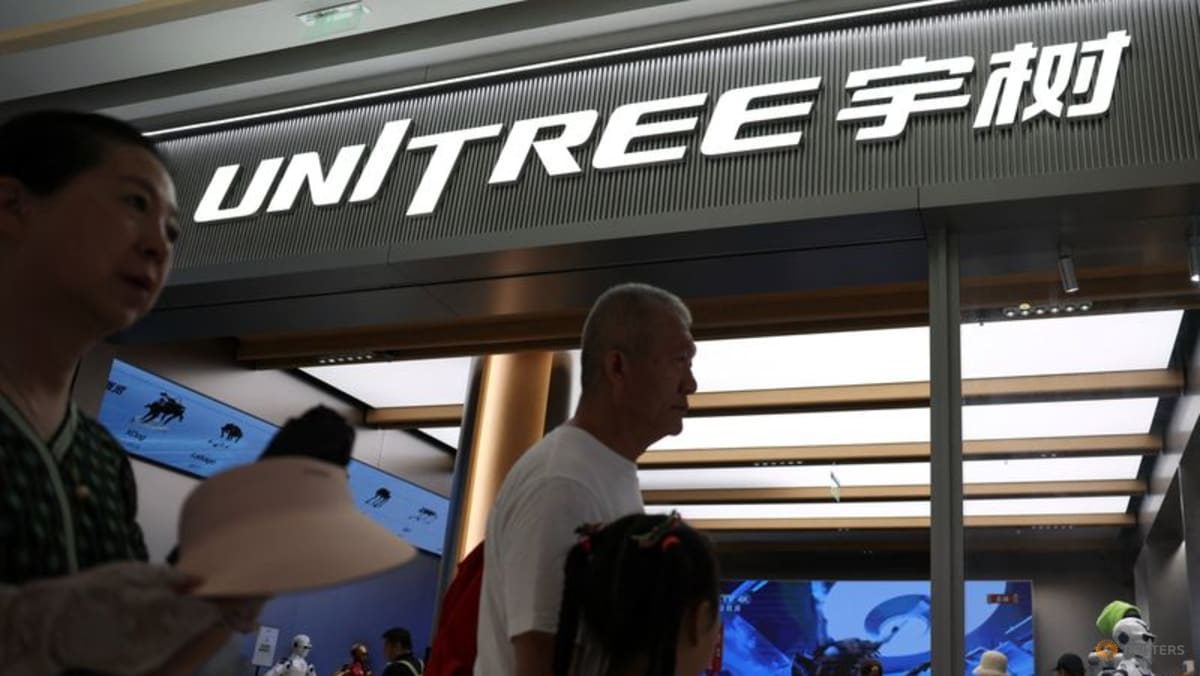
Chinese humanoid-robotics maker Unitree saw extraordinary retail demand for its Shanghai IPO, with the online tranche oversubscribed nearly 8,300 times and a winning rate of 0.018%, triggering a clawback.
Imagine a toy shop with only 100 robots to sell but 828,000 kids lined up to buy one. The shop has to use a special rule that gives more robots to the kids and fewer to the big stores, because so many kids wanted one. That's what happened with a Chinese robot company's stock sale — almost nobody who applied actually got any shares.
Analysis
8,288.82x oversubscription
Unitree's Shanghai initial public offering was oversubscribed by roughly 8,288.82 times in the retail-focused online tranche, according to the company's exchange filing reported by Reuters on August 10, 2026. By any standard, that is an extraordinary order book. It places Unitree among the most heavily oversubscribed Chinese IPOs of recent years and signals that domestic retail capital is being aggressively concentrated into a single robotics name rather than spread across the broader market.
The sheer scale matters because it points to a specific behavioural pattern in Chinese retail flows: small investors are willing to deploy marginal cash into thematic listings — robotics, AI, electric vehicles — at multiples that institutional books rarely reach. For analysts tracking retail positioning across Asia, the headline figure is more telling than the eventual IPO size, which the filing does not disclose.
0.018% online tranche allocation
The final lot-winning rate in the online tranche came in at roughly 0.018 per cent, Unitree said. In practical terms, that means a retail investor applying for a single allotment had, statistically, only a one-in-several-thousand chance of securing any shares at the issue price. The rate is the mechanical consequence of extreme retail oversubscription: the more demand exceeds supply, the thinner each successful allocation becomes.
The 0.018 per cent figure also serves as a useful benchmark. Comparable near-zero allocation rates in earlier Chinese IPOs — particularly in semiconductors, AI software and new-energy vehicles — have historically been followed by a sharp first-day pop, as supply remains constrained while latent retail demand is only partly satisfied by the offering itself.
Clawback mechanism triggered
The oversubscription automatically triggered Unitree's clawback mechanism, a regulatory feature that reallocates shares from the institutional book toward retail when retail demand crosses defined thresholds. The article does not detail the exact reallocation, but the mechanism's activation confirms the offering was structurally tilted toward retail at the margin.
For investors watching the Shanghai Star Market and the broader A-share pipeline, the activation of the clawback is the procedural detail to remember. It means the post-IPO float available to institutions and offshore buyers will be smaller than the initial allocation suggested, which tends to support aftermarket pricing — and underscores why pre-IPO positioning in such names remains largely a domestic Chinese retail story rather than a regional institutional one.
Key points
- Unitree's Shanghai IPO was oversubscribed by about 8,288.82 times by retail investors
- Final lot-winning rate in the online tranche was roughly 0.018 per cent
- The oversubscription automatically triggered a clawback mechanism that reallocates shares toward retail
- The figures were disclosed in an exchange filing reported on August 10, 2026
- The overall offering size and institutional book details were not disclosed in the filing
A successful debut and sustained aftermarket trading would validate China's deep robotics pipeline and reinforce Shanghai's standing as a venue for high-profile tech IPOs. If institutional allocation expands once trading begins, the float could broaden and improve long-term liquidity for offshore allocators.
Such extreme retail oversubscription often signals froth rather than fundamentals, and the 0.018 per cent allocation rate suggests a sharp first-day pop is already largely priced in. If post-IPO performance disappoints, the cohort of retail winners could face steep losses and the broader Chinese IPO pipeline could cool as regulators grow wary of speculative frenzies.