Unitree’s stock slump since IPO stokes fears of a bubble in Chinese humanoid robotics
Unitree Robotics' stock experienced a significant slump after its IPO, losing nearly half its market value, which has fueled concerns about a potential bubble in China's burgeoning humanoid robotics sector. Despite a recent rebound, its valuation remains high, raising que…
Intelligence analysis by Gemini 2.5 Flash
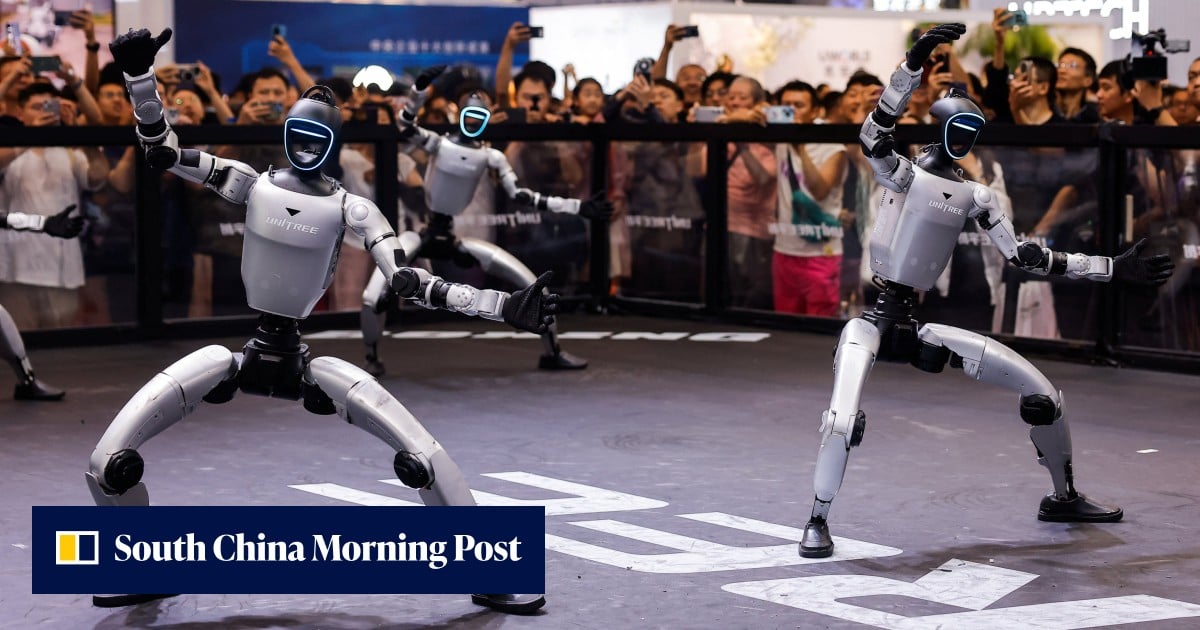
Unitree Robotics, the first listed Chinese humanoid robot maker, saw its stock plummet by 48% after its August 19 debut, wiping out 200 billion yuan. This sharp decline, despite a recent rebound, has intensified fears of an overvalued market bubble in the country's rapidly growing humanoid robotics industry, with analysts questioning Unitree's high valuation given the sector's nascent…
Imagine a new toy company that makes super cool walking robots. When they first started selling shares, everyone got super excited and the price of their shares shot up like a rocket! But then, after a few days, people started to wonder if the toys were *really* worth that much money, and the share price dropped a lot, like a balloon losing air. This made some grown-ups worry that maybe all the robot toy companies in China are being valued too highly, like a bubble that might pop.
Analysis
Unitree's Debut Volatility
Unitree Robotics, China's inaugural listed humanoid robot manufacturer, experienced a dramatic market entry on Shanghai's Nasdaq-style Star Market. After opening with an astonishing 629% surge on August 19, its shares quickly entered a five-day losing streak, shedding nearly half of their market value. This volatility saw the stock drop from a peak of 1,100 yuan to a record low of 571 yuan, erasing 200 billion yuan (US$30 billion) in market capitalization before a modest 4% rebound. The founder, Wang Xingxing, maintained a poker face during the bell-ringing ceremony, a demeanor that now seems prescient given the subsequent market gyrations.
Valuation Concerns
The significant post-IPO slump has intensified concerns among analysts regarding the justification of Unitree's high valuation. Even after the substantial sell-off, the company's market capitalization of 248.8 billion yuan (US$37 billion) remains more than four times the top range indicated by its lead underwriter, Citic Securities. Dong Chen, chief investment officer for Asia at Bank J. Safra Sarasin, explicitly stated that Unitree's high valuation is "probably not justified," citing its lofty price-to-earnings ratio and the inherent difficulties in maintaining a competitive edge within an "infant level" industry characterized by escalating competition.
Chinese Humanoid Robotics Bubble
Unitree's tumultuous stock performance is stoking fears of a broader bubble within the Chinese humanoid robotics sector. As the first major player to go public, its valuation was closely watched as a benchmark for other highly valued, private embodied-AI unicorns in China, such as Galbot, which already command valuations exceeding 20 billion yuan. The market's initial exuberance, followed by a sharp correction, suggests a potential disconnect between investor enthusiasm and the underlying commercial realities and maturity of the industry. This situation raises questions about the sustainability of current valuations for other unlisted companies in this rapidly developing but still nascent technological field.
Key points
- Unitree Robotics' stock dropped 48% from its IPO peak, wiping out 200 billion yuan in market value.
- The slump has fueled fears of a bubble in the Chinese humanoid robotics industry.
- Even after the sell-off, Unitree's market value is significantly higher than underwriter estimates.
- Analysts question the justification of Unitree's high valuation due to industry uncertainty and competition.
- Unitree's IPO was closely watched as a valuation benchmark for other private embodied-AI unicorns in China.
The recent rebound in Unitree's stock, despite the overall slump, could signal a market correction towards a more rational valuation, potentially stabilizing the company's position and offering a more realistic benchmark for future investments in the humanoid robotics sector.
The significant stock slump and analyst concerns about an "infant level" industry with intensifying competition suggest that Unitree's high valuation might not be sustainable, potentially leading to further declines and a broader market correction for other Chinese humanoid robotics companies.