UPSC Mains Answer Practice — GS 3: role of agrivoltaics and global environmental regulations (Week 178)
Discuss the role of agrivoltaics in promoting sustainable agriculture and improving the resilience of Indian farmers to climate change. How can India convert emerging global environmental regulations into an opportunity to enhance its export competitiveness.
Intelligence analysis by Qwen 2.5 (3B)
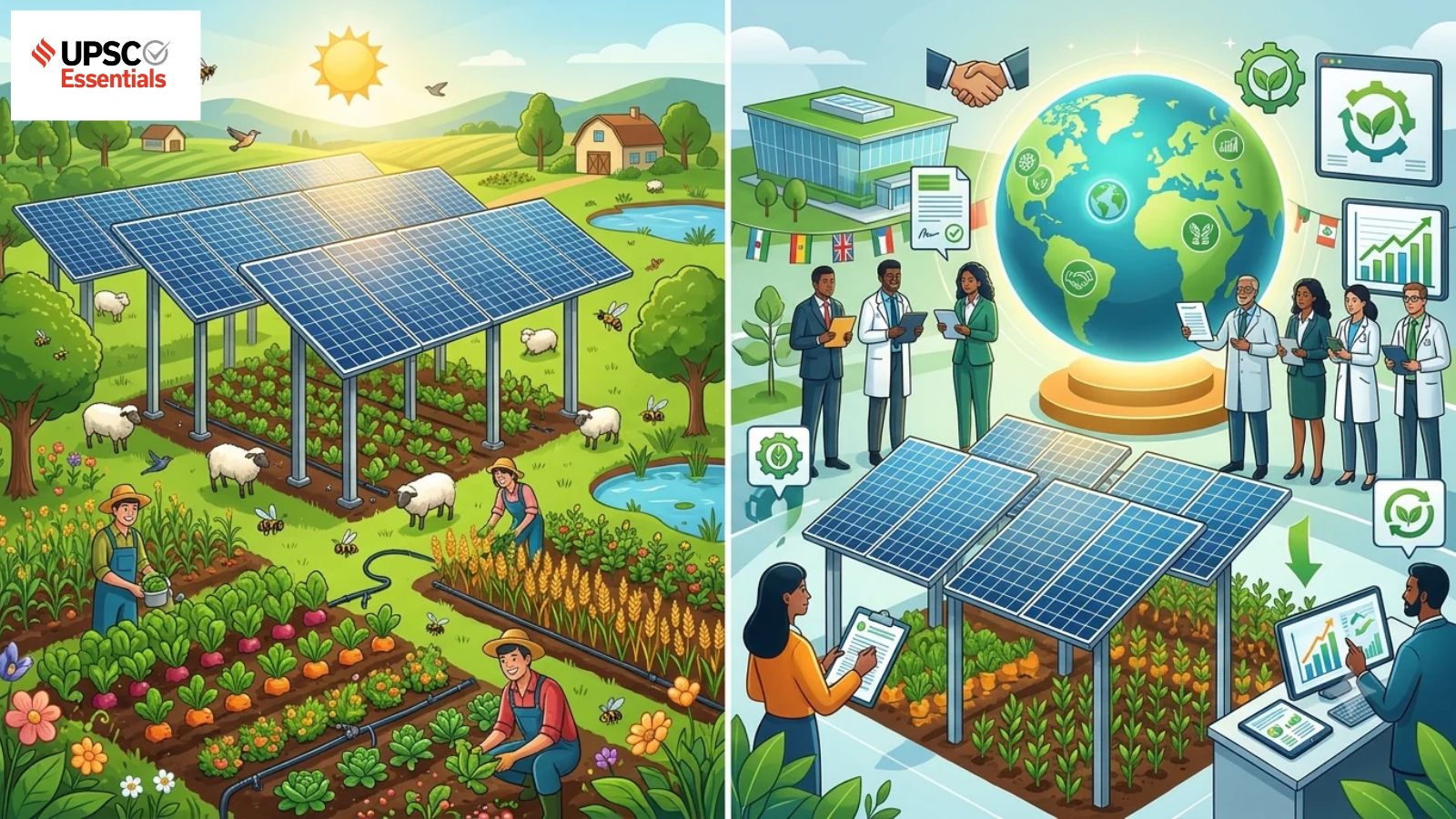
This article provides practice questions for the UPSC Mains answer writing practice, focusing on the role of agrivoltaics in sustainable agriculture and climate resilience, and how India can leverage emerging global environmental regulations to enhance its export competitiveness.
This article helps you practice writing answers for the UPSC Mains exam. It talks about how solar panels can help farmers grow food and make electricity, making farming more resilient to bad weather. It also explains how new rules about protecting the environment can help India sell more things to other countries.
Analysis
Agrivoltaics and Climate Resilience
Agrivoltaics combines solar power generation with agricultural practices, promoting sustainable and climate-resilient farming. It allows for food production and electricity generation on the same land, reducing conflicts and enhancing resilience to climate-related hazards. The article discusses how agrivoltaics can control microclimates, protect crops from extreme weather, and integrate with irrigation systems to maximize resource efficiency. However, its adoption may face challenges for small and marginal farmers due to cost and local conditions.
Global Environmental Regulations and Export Competitiveness
Global environmental regulations are reshaping international trade, influencing the competitiveness of export-oriented industries. India can leverage these regulations to enhance its export competitiveness by integrating sustainable practices and renewable energy. The article highlights the importance of technology missions in Indian agriculture and the benefits of integrated farming systems for small and marginal farmers.
Key points
- Agrivoltaics combines solar power generation with agricultural practices, promoting sustainable and climate-resilient farming.
- Global environmental regulations can help India sell more things to other countries.
- Agrivoltaics can help farmers grow more food and make more electricity, making farming more resilient to bad weather.
Agrivoltaics can help farmers grow more food and make more electricity, making farming more resilient to bad weather. Global environmental regulations can help India sell more things to other countries.
Agrivoltaics may not work well for small farmers because of costs and local conditions. Global environmental regulations might not always help India sell more things to other countries.