UPSC Weekly Current Affairs Quiz (August 16 – August 22): 10 key questions with detailed answers for Prelims 2027
The UPSC Weekly Current Affairs Quiz for August 16-22 covers key topics such as ethanol production, regional groups in the United Nations, Treaty of Rawalpindi, VERVE-102, Indo-Pacific Oceans Initiative, and more, with MCQs and detailed explanations.
Intelligence analysis by Llama
The UPSC Weekly Current Affairs Quiz for August 16-22 covers key topics such as ethanol production, regional groups in the United Nations, Treaty of Rawalpindi, VERVE-102, Indo-Pacific Oceans Initiative, and more, with MCQs and detailed explanations.
Imagine you're taking a test to become a civil servant in India. You need to know about current events, like how much sugar is used to make ethanol and which groups are represented in the United Nations. This quiz helps you practice and get better at answering questions like these.
Analysis
Ethanol Production in India
The government has rejected suggestions that the recent rise in sugar prices was linked to the diversion of sugar for ethanol production. Instead, the Ministry of Consumer Affairs, Food & Public Distribution attributed the increase to lower domestic output, rising festive-season demand, tighter global supplies, and hoarding. The proportion of sugar used for ethanol production has declined to around 9% in the 2025-26 season from about 12% in 2022-23. Nearly three-fourths of India's ethanol production now comes from grains, particularly maize.
Regional Groups in the United Nations
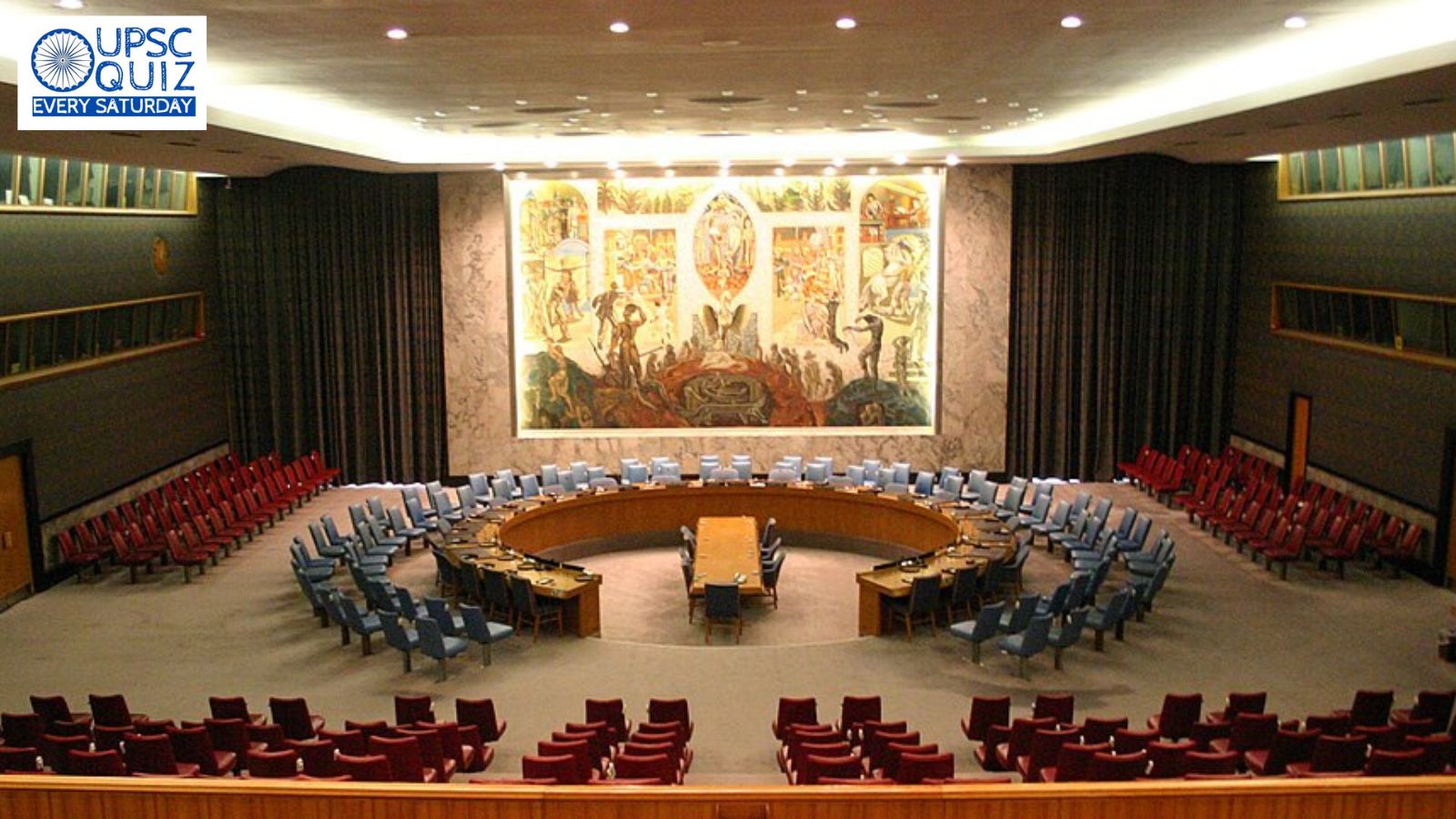
The United Nations is divided into five regional groups representing Asia, Africa, Latin America, Eastern Europe, and Western Europe & Others (WEOG). The latter comprises the United States, Canada, Australia, New Zealand, and Israel. The Eastern Europe group is reminiscent of the Cold War era, with the UNSC's permanent membership (P5) of the United States, United Kingdom, France, and Russia also representing the victorious Allied powers, plus China.
Treaty of Rawalpindi
The Treaty of Rawalpindi was signed in 1949 between India and Pakistan. The treaty aimed to resolve the Kashmir dispute and establish a ceasefire along the Line of Control. However, the treaty has been criticized for its failure to address the core issues of the Kashmir dispute.
Key points
- The government has rejected suggestions that the recent rise in sugar prices was linked to the diversion of sugar for ethanol production.
- The proportion of sugar used for ethanol production has declined to around 9% in the 2025-26 season from about 12% in 2022-23.
- Nearly three-fourths of India's ethanol production now comes from grains, particularly maize.
- The United Nations is divided into five regional groups representing Asia, Africa, Latin America, Eastern Europe, and Western Europe & Others (WEOG).
- The Eastern Europe group is reminiscent of the Cold War era, with the UNSC's permanent membership (P5) of the United States, United Kingdom, France, and Russia also representing the victorious Allied powers, plus China.
If the government continues to improve the availability of sugar and check prices, the rise in sugar prices may stabilize, and the proportion of sugar used for ethanol production may increase in the future.
If the government fails to address the root causes of the rise in sugar prices, such as lower domestic output and tighter global supplies, the situation may worsen, and the proportion of sugar used for ethanol production may decline further.