US Air Force Flies AI-Controlled F-16 in Autonomy Breakthrough
The US Air Force, in collaboration with DARPA, has successfully flown a real F-16 fighter jet controlled by an AI system called VENOM Autonomy Kit (VAK). A human pilot was present but only monitored the AI's performance during the flight tests at Eglin Air Force Base.
Intelligence analysis by Gemini 2.5 Flash Lite
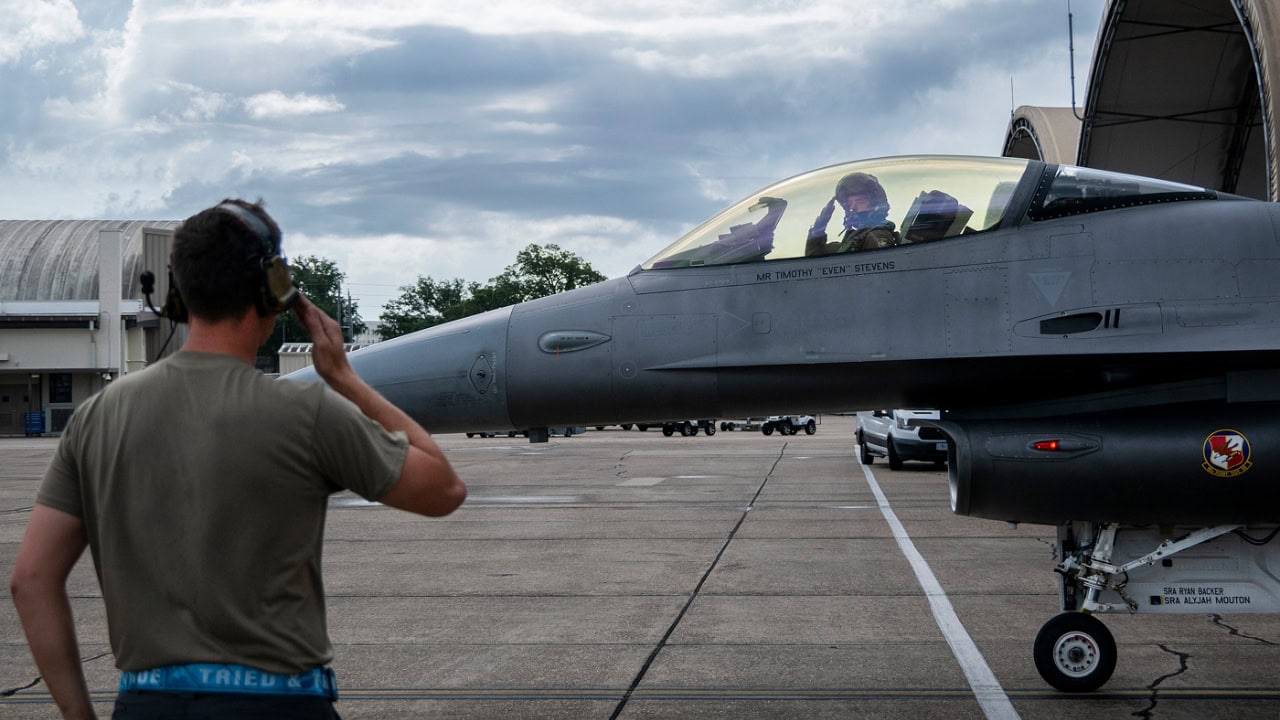
DARPA and the US Air Force achieved a significant milestone by using an AI system, VENOM Autonomy Kit, to pilot a standard F-16 fighter jet. This marks the first time an operational F-16 was used for AI flight testing, with a human pilot onboard solely for safety monitoring, paving the way for future autonomous combat missions.
Imagine a super-smart computer program that can fly a real fighter jet, like a super-fast airplane! This program, called VENOM, took the controls of an F-16 jet while a person sat in the pilot's seat just to watch. It's like having a robot co-pilot that can do all the tricky flying, making dangerous missions safer for people.
Analysis
VENOM Autonomy Kit
The VENOM Autonomy Kit (VAK) is the core AI software system that enabled the F-16 fighter jet to fly autonomously. Developed by DARPA, this system was integrated into a standard operational F-16 without altering the jet's fundamental software, effectively transforming a frontline combat aircraft into an AI testbed. This approach is particularly noteworthy as it bypasses the need for specialized experimental aircraft, allowing for more direct testing of AI capabilities on platforms that are currently in active service.
The VAK system allows for seamless switching between human and AI control, with a human pilot present in the cockpit throughout the test flights. This pilot's role was strictly that of a safety monitor, ensuring human oversight during the experimental phase. The system's design prioritizes safety and trust, crucial elements when deploying AI in high-stakes military scenarios. Engineers meticulously automated the F-16's flight controls and sensors, a complex task that required significant expertise to achieve without compromising the aircraft's existing systems.
This breakthrough builds upon previous DARPA AI flight tests, which utilized the specialized X-62A VISTA aircraft. The VISTA even hosted the first AI-versus-human dogfight in 2023. However, the use of an operational F-16 for the VENOM tests signifies a move towards validating AI autonomy on more representative military hardware. The tests involved extensive simulations, starting with one-on-one engagements in early 2024 and progressing to two-versus-two scenarios before airworthiness flights and autonomous control in July.
Key points
- An AI system, VENOM Autonomy Kit, successfully piloted a real F-16 fighter jet.
- The tests were conducted by DARPA and the US Air Force at Eglin Air Force Base.
- A human pilot was present in the cockpit but acted solely as a safety monitor.
- This marks the first time an operational F-16 was used for AI flight testing, without altering its core software.
- The technology aims to enhance aerial combat capabilities and reduce risks to human pilots.
The successful flight of an AI-piloted F-16 could accelerate the development of autonomous combat systems, enhancing military capabilities and potentially reducing human casualties in future conflicts. It opens the door for human pilots to command swarms of AI-controlled aircraft, vastly increasing operational reach and effectiveness.
Significant questions remain regarding the trustworthiness and performance of combat AI under extreme pressure and in the chaotic environment of modern warfare. Over-reliance on AI without robust validation could lead to unforeseen failures or ethical dilemmas in critical situations.