US can keep naval blockade on Iranian ports "indefinitely," Pentagon chief says
US Defense Secretary Pete Hegseth says the Navy can sustain a naval blockade of Iranian ports indefinitely by rotating ships in and out of the region, as Trump claims total control of the Strait of Hormuz.
Intelligence analysis by Llama
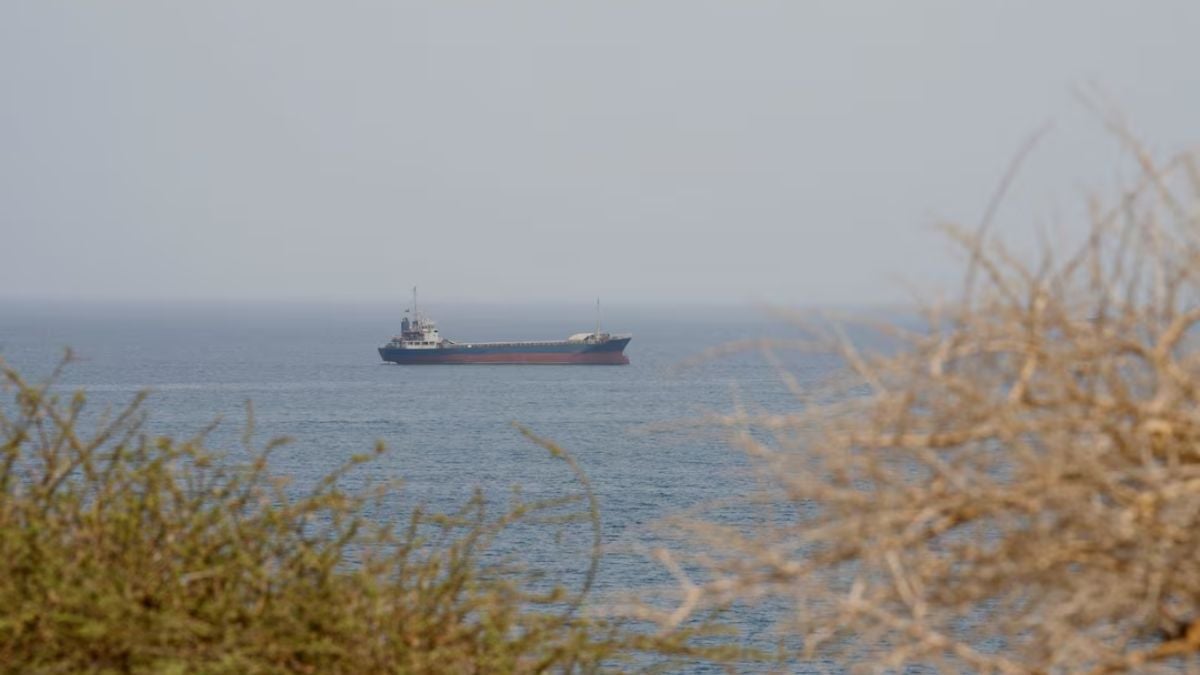
Pentagon chief Pete Hegseth told reporters in Panama that the US Navy can maintain its blockade of Iranian shipping and ports indefinitely through ship rotation, reinforcing President Trump's claim of total control over the Strait of Hormuz months into a war that began with US-Israeli strikes on February 28.
America's top military leader says the US Navy can keep blocking Iran's ports for as long as it wants, by swapping out ships so they don't get tired. Iran shut a narrow waterway where lots of the world's oil ships pass, and now the US is trying to force Iran to make peace by squeezing its trade.
Analysis
Pete Hegseth's rotation formula
Speaking to reporters in Panama City after addressing the crew of the USS Gridley, a guided-missile destroyer that had previously deployed to the Middle East, Defense Secretary Pete Hegseth framed the blockade as a sustainable, open-ended operation. "Indefinitely the United States Navy can maintain a blockade like that because we'll rotate ships in and out, as we have, and we'll continue to," he said. The pitch to President Donald Trump, according to the article, is that economic pressure can be applied on Iran for as long as needed to support negotiations that have so far failed to end a conflict now in its sixth month. Hegseth's language signals that the Pentagon views the blockade not as a temporary escalatory step but as a steady-state instrument of coercion, calibrated to outlast any single deployment cycle.
The 55-vessel blockade tally
The operational footprint behind Hegseth's claim is substantial. Washington has poured tens of thousands of troops and more than 20 warships into the Middle East since the war began, and the Navy has redirected more than 55 commercial vessels that attempted to run the blockade, disabling three ships and boarding two. Earlier in the week, a US Navy MH-60 helicopter fired two Hellfire missiles into a Panama-flagged ship's engine room after it ignored warnings. That level of enforcement intensity is what makes Hegseth's "indefinite" framing credible on a logistics level. It also illustrates the escalation ladder: the blockade has moved from interception to disabling ships to lethal strikes on engines, each step widening the definition of what counts as a defensive maritime operation.
The Strait of Hormuz stalemate since February 28
The strategic prize at the center of this posture is the Strait of Hormuz. After US-Israeli strikes on Iran on February 28, Tehran effectively shut the waterway, through which roughly a fifth of global oil and liquefied natural gas previously moved. Trump on Wednesday claimed on Truth Social that the US has "total control" over the strait and called the blockade a "WALL OF STEEL." Yet months of US strikes that have damaged Iran's leadership and large parts of its military, including its navy, have not broken Tehran's grip on the strait, and Iran has continued striking back with missiles and drones against Washington's regional allies and commercial ships transiting without its permission. Trump has oscillated between escalation threats and claims of an imminent peace deal, resisting ground troops, island seizures, and strikes on desalination plants, but the underlying stalemate leaves the blockade as the one tool that can be maintained without a fresh political decision. For Pakistan, a neighboring state dependent on imported energy and exposed to any widening of the conflict, that protracted posture is the part of the story most likely to shape fuel bills and regional risk calculations in the months ahead.
Key points
- Defense Secretary Pete Hegseth said the US Navy can maintain a naval blockade of Iranian ports indefinitely by rotating ships in and out of the region.
- President Trump claimed on Truth Social that the US has "total control" over the Strait of Hormuz, calling the blockade a "WALL OF STEEL."
- The US has redirected more than 55 commercial vessels attempting to run the blockade, disabling three ships and boarding two, and a US Navy helicopter recently fired Hellfire missiles into a Panama-flagged ship's engine room.
- The war began with US-Israeli strikes on Iran on February 28; Tehran effectively shut the Strait of Hormuz, through which roughly a fifth of global oil and LNG previously transited.
- Trump has resisted the most escalatory steps, such as deploying ground troops, seizing strategic islands, or bombing desalination plants, but faces domestic pressure to end an unpopular war ahead of November midterms.
If sustained naval pressure brings Tehran back to the negotiating table, the blockade could become a lever that ends the conflict without a ground invasion. A reopened Strait of Hormuz would relieve global energy markets, easing fuel costs for oil-importing economies like Pakistan and reducing the risk of further escalation in a region Pakistan shares a border with.
Hegseth's "indefinite" framing also raises the risk of a long, attritional conflict: Iran has continued striking US allies and commercial ships, and the Navy has already escalated from interceptions to lethal Hellfire strikes. Prolonged disruption of the Strait of Hormuz would keep oil and LNG prices elevated, and any spillover into Pakistan's western border or energy supply lines would compound the domestic political pressure on Trump ahead of November midterms, where high fuel prices are already a top voter concern.
Market signals
- OIL A naval blockade on Iran and continued disruption of the Strait of Hormuz, through which a fifth of global oil and LNG previously transited, sustains supply-side risk and upward pressure on crude prices.
- XAU Hegseth's framing of an indefinite blockade and Trump's escalation rhetoric reinforce geopolitical risk, supporting safe-haven demand for gold.
- NGS The article notes that roughly a fifth of global LNG previously moved through the Strait of Hormuz, so sustained blockade-related disruption supports LNG prices.
AI-generated analysis of potential market relevance. Not financial advice.