US, China seek Xi-Trump summit deliverables in New York talks
US and Chinese officials held final preparatory talks in New York to iron out deliverables for an upcoming summit between Presidents Xi Jinping and Donald Trump in Washington.
Intelligence analysis by Gemini 2.5 Flash
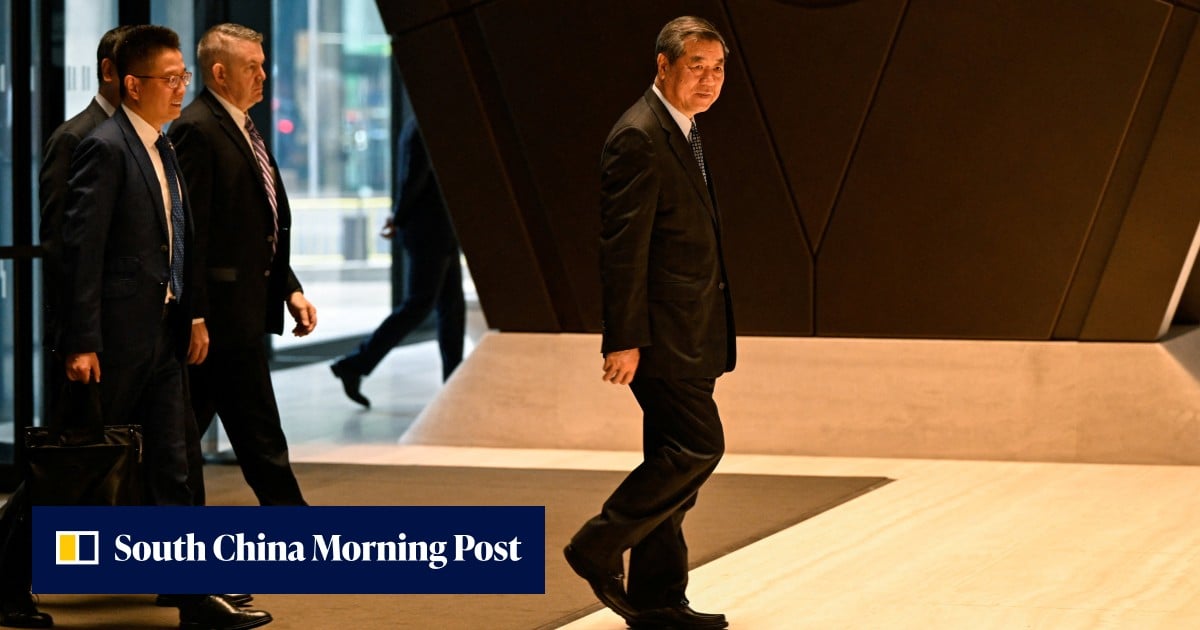
High-level US and Chinese officials, including Treasury Secretary Scott Bessent and Vice Premier He Lifeng, met in New York to finalize economic outcomes and initiate discussions on artificial intelligence safety ahead of a crucial summit between Presidents Xi Jinping and Donald Trump.
Imagine two big school principals, President Xi and President Trump, are going to meet to talk about important things like how their schools trade snacks and how to make sure new smart robots are safe. Before they meet, their main teachers, like Mr. Bessent and Mr. He, are having smaller meetings to write down all the important ideas and agreements so the principals can quickly decide what to do. They want to make sure their big meeting has clear results, not just talk.
Analysis
The recent preparatory discussions in New York between top US and Chinese officials underscore the persistent effort by both nations to manage their intricate relationship through high-level engagement. These talks, involving US Treasury Secretary Scott Bessent, Trade Representative Jamieson Greer, and Chinese Vice Premier He Lifeng, were specifically aimed at crafting concrete deliverables for the impending summit between Presidents Xi Jinping and Donald Trump. The focus on tangible outcomes suggests a desire to move beyond mere dialogue towards actionable agreements, particularly in economic spheres.
He Lifeng
Chinese Vice Premier He Lifeng played a central role in these final preparatory talks, engaging with his US counterparts to shape the agenda for the upcoming presidential summit. His involvement highlights the economic dimension of the bilateral relationship, which remains a primary area of both cooperation and contention. The discussions mirrored previous engagements, such as those in May between Bessent and He in Seoul, indicating a structured and recurring diplomatic process designed to build momentum towards leader-level meetings. This consistent engagement, despite underlying tensions, signals a commitment to maintaining open channels of communication.
JP Morgan
The choice of JP Morgan's headquarters in New York as the venue for the preparatory talks, and the subsequent summit in Washington, D.C., emphasizes the significant economic focus of these high-stakes meetings. The leaders are set to discuss potential economic outcomes, which could range from trade agreements to investment policies, directly impacting global markets. Beyond economics, the summit will also initiate a long-awaited dialogue on artificial intelligence safety and governance, a critical emerging area that requires international cooperation to establish norms and prevent potential risks. This dual agenda reflects the multifaceted nature of modern great-power relations.
Beijing
The upcoming summit builds upon previous engagements, notably the May meeting in Beijing where President Trump and President Xi Jinping last convened. It was during this earlier summit that the two leaders agreed to establish an intergovernmental dialogue on AI, which initially operated separately from the economic discussions led by Bessent and He. The decision to now fold AI discussions into a broader economic meeting, as reported by the South China Morning Post, suggests an evolving strategy to integrate these critical topics, recognizing their interconnectedness in shaping future global dynamics and bilateral relations.
Key points
- US Treasury Secretary Scott Bessent and Trade Representative Jamieson Greer held final preparatory talks with Chinese Vice Premier He Lifeng in New York.
- The talks aimed to finalize deliverables for an upcoming summit between Chinese President Xi Jinping and US President Donald Trump in Washington, D.C.
- The summit, to be held at JP Morgan's headquarters, will focus on economic outcomes and initiate dialogue on artificial intelligence safety and governance.
- The leaders had previously agreed in Beijing in May to establish an intergovernmental dialogue on AI, which is now being integrated into broader economic discussions.
The structured preparatory talks and the leaders' commitment to a summit suggest a genuine effort to find common ground on complex issues. Successful outcomes could lead to improved economic stability, clearer guidelines for AI development, and a reduction in bilateral tensions, fostering a more predictable international environment.
Despite the preparatory efforts, the summit might fail to produce concrete deliverables, leading to continued uncertainty in economic relations and a lack of progress on critical issues like AI governance. This could exacerbate existing tensions and signal a stalemate in managing the US-China relationship.