US-China trade war reaches India’s streets as Modi weighs risks of Washington bet
Indian Prime Minister Narendra Modi is facing mounting domestic backlash over a potential trade deal with the United States that would place India at the centre of US President Donald Trump’s efforts to redirect agricultural exports displaced by the US-China trade conflict.
Intelligence analysis by Llama
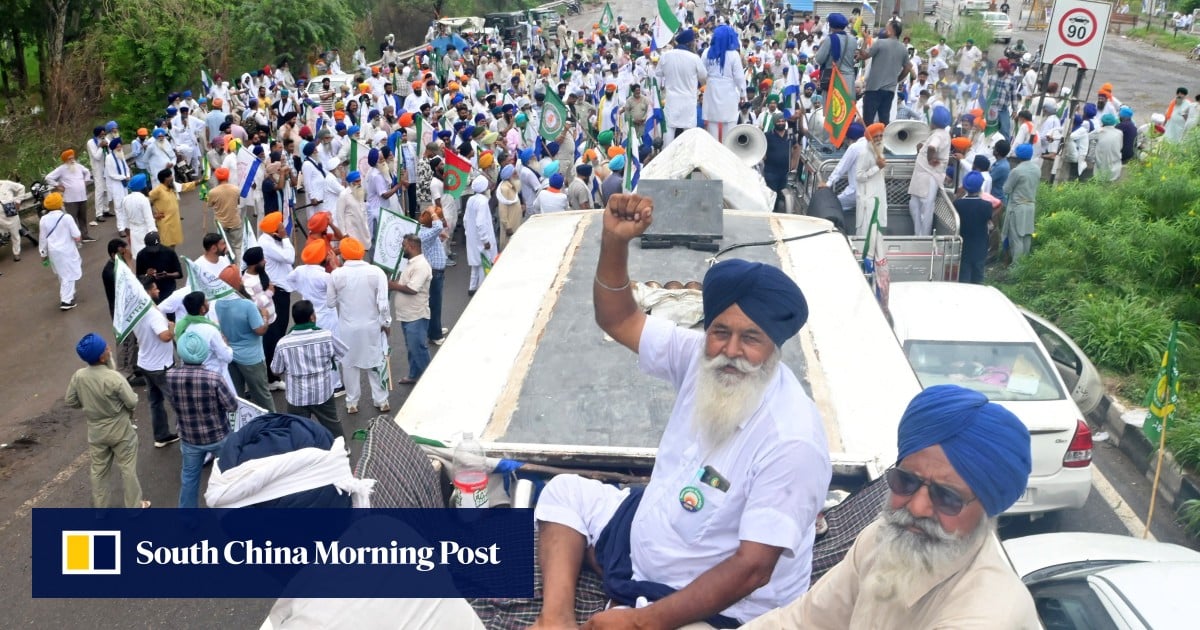
Thousands of farmers from the northern state of Punjab marched towards Delhi on Tuesday to oppose what they described as a “secret” trade deal with Washington, threatening the livelihoods of millions of farmers.
Imagine India is trying to balance its friendship with the US and China. The US wants India to buy more American food, but this might hurt Indian farmers. The farmers are protesting because they don't want to lose their jobs. It's a tough situation for the Indian government.
Analysis
A $60B Vote of Confidence
The proposed US trade deal with India has sparked a perfect storm of geopolitical turmoil and domestic political unrest. Indian Prime Minister Narendra Modi is facing mounting domestic backlash over a potential trade deal with the United States that would place India at the centre of US President Donald Trump’s efforts to redirect agricultural exports displaced by the US-China trade conflict. Thousands of farmers from the northern state of Punjab marched towards Delhi on Tuesday to oppose what they described as a “secret” trade deal with Washington. They accused the government of negotiating concessions that could open India’s markets to cheaper American imports, including soybean oil, feed grains and dairy products, threatening the livelihoods of millions of farmers. Authorities blocked major highways to prevent demonstrators from reaching the capital.
Why Cursor?
The protests highlight the domestic political risks for Modi as his government deepens ties with Washington while facing pressure from Trump over trade, Russian oil purchases and efforts to reduce US dependence on China. Washington has been seeking alternative buyers for American agricultural exports after China sharply reduced purchases of US soybeans in response to Trump’s tariffs. India has emerged as a key target for greater market access, but the backlash underscores the challenges facing Delhi as it attempts to balance its economic interests with both the US and China.
The Road Ahead
According to Sadanand Dhume, a senior fellow for India, Pakistan and South Asia at the Council on Foreign Relations, Modi is facing a “perfect storm of geopolitical turmoil and domestic political unrest”. The proposed trade deal with the US has sparked a backlash from farmers, who fear that cheaper American imports will threaten their livelihoods. The government’s efforts to deepen ties with Washington while facing pressure from Trump over trade, Russian oil purchases and efforts to reduce US dependence on China have created a complex web of challenges for Modi’s administration.
Key points
- Thousands of farmers from the northern state of Punjab marched towards Delhi on Tuesday to oppose a potential trade deal with the US.
- The proposed trade deal with the US has sparked a backlash from farmers, who fear that cheaper American imports will threaten their livelihoods.
- The government's efforts to deepen ties with Washington while facing pressure from Trump over trade, Russian oil purchases and efforts to reduce US dependence on China have created a complex web of challenges for Modi's administration.
If the trade deal with the US is successful, it could lead to increased economic cooperation between the two countries, benefiting both nations. However, the current backlash from farmers and the domestic political risks for Modi's administration suggest that this outcome is uncertain.
The proposed trade deal with the US could lead to a backlash from farmers, who fear that cheaper American imports will threaten their livelihoods. This could create a perfect storm of geopolitical turmoil and domestic political unrest for Modi's administration.