US court blocks Trump’s US$400 million White House ballroom project
A US federal appeal court ordered Donald Trump’s administration to stop construction on a US$400 million ballroom on the site of the White House’s demolished East Wing, dealing the Republican leader a major setback in a case testing his presidential authority.
Intelligence analysis by Llama
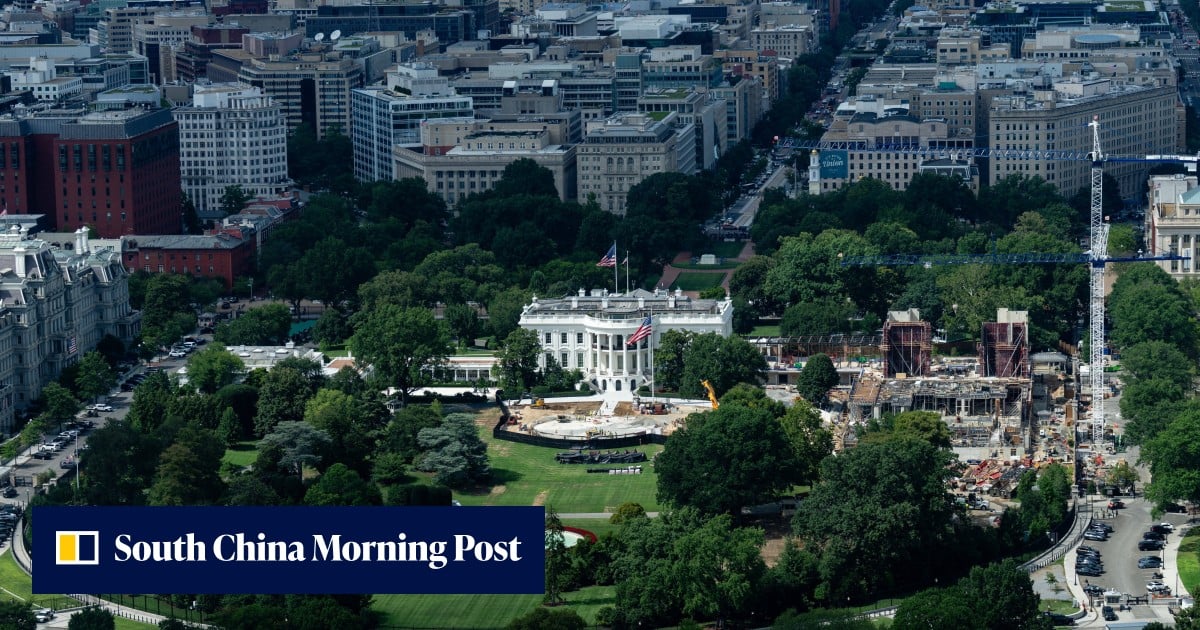
A US federal appeal court has blocked Donald Trump's US$400 million White House ballroom project, citing the need for congressional approval. The decision is a major setback for the Trump administration, which had argued that the project was a security necessity.
Imagine you're a guest at a big house, and the owner wants to make some changes to the house. But the owner can't just make the changes without asking the people who own the house for permission. That's kind of what's happening with the White House and Donald Trump's ballroom project. A court has said that Trump needs to ask Congress for permission before he can build the ballroom, because it's a big change to the house.
Analysis
Trump's Ballroom Project: A Security Necessity or Executive Overreach?
The US Court of Appeals for the District of Columbia Circuit has dealt a significant blow to Donald Trump's US$400 million White House ballroom project, ruling that the administration must obtain congressional approval before proceeding with the construction. The decision is a major setback for the Trump administration, which had argued that the project was a security necessity.
The court's ruling is based on the principle that each president is a temporary tenant, not the owner, of the White House and cannot fundamentally reshape it without congressional approval. The National Trust for Historic Preservation, which sued last year after the administration tore down the East Wing and began building the ballroom without seeking authorisation from Congress, has won a significant victory in its efforts to protect the White House's historic integrity.
The ballroom project is the grandest of several Trump efforts to reshape central Washington's landscape of government buildings and national monuments. While the administration has argued that the project is a security necessity, critics have raised concerns about the potential impact on the White House's historic integrity and the role of Congress in shaping the building's design and function.
The decision has significant implications for the Trump administration's efforts to reshape the White House and the broader landscape of government buildings and national monuments in Washington, D.C. It also raises questions about the role of Congress in shaping the White House's design and function, and the limits of presidential authority in making changes to the building.
The Impact on the White House's Historic Integrity
The White House is a national historic landmark and a symbol of American democracy. The building's historic integrity is protected by a range of laws and regulations, including the National Historic Preservation Act. The Trump administration's decision to tear down the East Wing and build a new ballroom without seeking authorisation from Congress has raised concerns about the potential impact on the building's historic integrity.
The court's ruling is a significant victory for the National Trust for Historic Preservation and its efforts to protect the White House's historic integrity. It also raises questions about the role of Congress in shaping the White House's design and function, and the limits of presidential authority in making changes to the building.
The Future of the Ballroom Project
The Trump administration has announced that it will appeal the court's decision to the US Supreme Court. The Supreme Court has the final say on the matter, and its decision will determine the future of the ballroom project. If the Supreme Court upholds the lower court's decision, the ballroom project will be blocked, and the White House will be preserved in its current form. If the Supreme Court reverses the lower court's decision, the ballroom project will proceed, and the White House will be altered in a significant way.
Key points
- A US federal appeal court has blocked Donald Trump's US$400 million White House ballroom project.
- The court ruled that the administration must obtain congressional approval before proceeding with the construction.
- The decision is a major setback for the Trump administration, which had argued that the project was a security necessity.
- The National Trust for Historic Preservation, which sued last year after the administration tore down the East Wing and began building the ballroom without seeking authorisation from Congress, has won a significant victory in its efforts to protect the White House's historic i…
If the Supreme Court upholds the lower court's decision, the White House will be preserved in its current form, and the ballroom project will be blocked. This could be a positive outcome for those who value the White House's historic integrity and want to protect it from significant changes.
If the Supreme Court reverses the lower court's decision, the ballroom project will proceed, and the White House will be altered in a significant way. This could be a negative outcome for those who value the White House's historic integrity and want to protect it from significant changes.