US eyes ban on Chinese humanoid robots as US-China tech rivalry intensifies
The US House has passed a defense bill prohibiting the military from using Chinese-made humanoid robots, citing national security and data privacy concerns amid intensifying US-China tech rivalry.
Intelligence analysis by Gemini 2.5 Flash
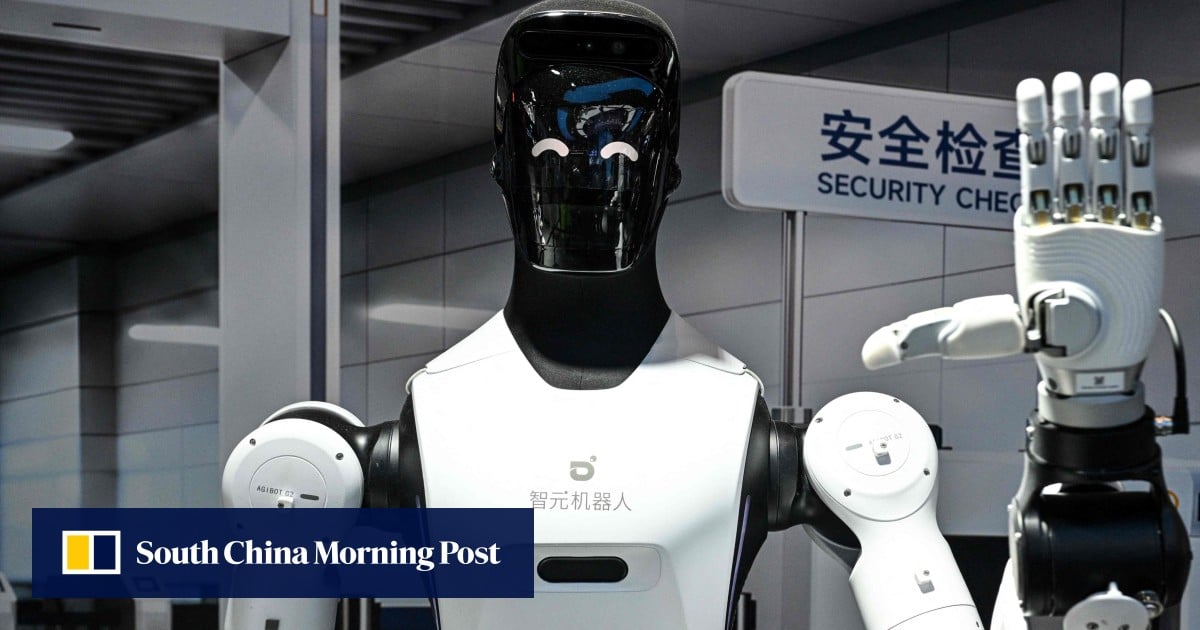
Washington is expanding its scrutiny of Chinese technology to include advanced robotics, with the US House of Representatives passing a bill that bans the Pentagon from procuring or operating humanoid robots linked to foreign adversaries like China. This move, part of the annual National Defense Authorization Act, reflects growing concerns over national security and data privacy, thou…
Imagine the US government is building a super-secret clubhouse for its army, and they need helper robots. This new rule says they can't buy robots from certain countries, like China, because they worry those robots might secretly tell the other countries what's happening in the clubhouse. It's like making sure only trusted friends can bring their toys to play in your special fort.
Analysis
Restricting Military Robotics
The US House of Representatives has advanced defense legislation, the National Defense Authorization Act (NDAA), which includes a significant provision targeting Chinese-made humanoid robots. Specifically, Section 163 of the draft bill prohibits the Pentagon from acquiring, leasing, or operating such systems if they are linked to designated "foreign adversaries" like China, Russia, and Iran. This move underscores Washington's escalating concerns over national security and data privacy in the context of advanced autonomous systems. The legislation reflects a strategic effort to prevent potential vulnerabilities within the US military infrastructure. By explicitly naming countries like China, the US is signaling a clear intent to decouple critical defense technologies from nations perceived as geopolitical rivals. This targeted restriction aims to safeguard sensitive military operations and data from potential exploitation or compromise.
Escalating Tech Rivalry
This legislative action is a direct manifestation of the intensifying technological competition between the United States and China. The US has been progressively implementing restrictions on various Chinese technologies, citing national security risks, and this latest move extends that scrutiny into the burgeoning field of humanoid robotics. It highlights a broader strategy to limit China's influence in critical emerging technologies. The inclusion of elements from the proposed Guarding the US Against Adversarial Robotics Dominance (GUARD) Act within the NDAA indicates a sustained legislative push to address perceived threats from foreign robotics. While the current bill is narrower than the full GUARD Act, which sought to ban commercial sales, it sets a precedent for future, potentially more expansive, restrictions. This incremental approach suggests a calculated escalation in the tech rivalry.
The Unaddressed Commercial Market
Significantly, the current iteration of the defense bill limits its scope strictly to military procurement, leaving the commercial sale of Chinese humanoid robots in the US market untouched for the time being. This distinction is crucial, as the original GUARD Act framework had proposed much more sweeping measures, including evaluating Chinese robot systems for inclusion on the Federal Communications Commission’s "Covered List," which would have effectively banned their commercial sale by stripping wireless communication licenses. The decision to initially focus on military applications suggests a pragmatic approach by lawmakers, prioritizing immediate national security concerns while potentially deferring broader commercial restrictions. However, the very existence of the more comprehensive GUARD Act indicates that a full commercial ban remains a possibility, signaling ongoing debate and potential future legislative action regarding the wider presence of Chinese robotics in the US. This leaves the commercial sector in a state of uncertainty, aware of the potential for future policy shifts.
Key points
- The US House of Representatives passed a bill banning the military from using Chinese-made humanoid robots.
- Section 163 of the National Defense Authorization Act (NDAA) prohibits the Pentagon from procuring or operating such systems from designated "foreign adversaries" including China, Russia, and Iran.
- The legislation is driven by national security and data privacy concerns amidst intensifying US-China tech rivalry.
- While incorporating elements of the proposed GUARD Act, the current bill is limited to military procurement, leaving commercial sales untouched.
- The full GUARD Act would have evaluated Chinese robots for a commercial ban by stripping their wireless communication licenses.
The current bill's focus solely on military procurement, rather than a full commercial ban, suggests a measured approach, potentially allowing for continued innovation and market competition in the commercial robotics sector for now. This targeted restriction could also enhance national security by ensuring critical defense systems are free from potential foreign interference.
This ban intensifies the US-China tech rivalry, potentially leading to retaliatory measures from China and further fragmentation of the global technology market. It could also stifle innovation if companies are forced to choose sides or develop redundant systems, ultimately hindering the advancement of robotics technology worldwide.