US government extensively spied on anti-ICE protesters and leftwing groups, records reveal
Newly disclosed records show the Department of Homeland Security ran a vast surveillance operation against anti-ICE protesters, infiltrating meetings, Signal chats, and obtaining financial records of major unions and left-leaning nonprofits.
Intelligence analysis by Llama
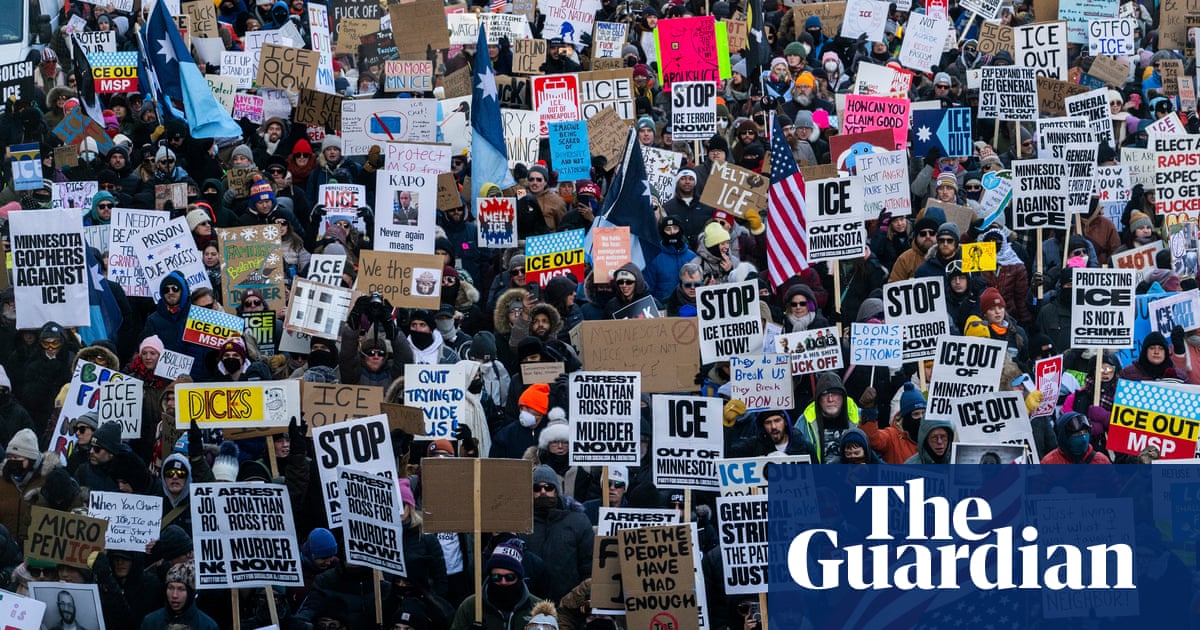
Nearly 30 internal DHS investigative reports, released in a court filing, detail "Operation Puppet Master," an expansive inquiry into networks opposing Trump's immigration crackdown in Minnesota, including undercover operations and financial subpoenas targeting groups like the AFL-CIO, SEIU, and the DSA.
Imagine the government sent secret agents to sit in on your after-school club, joined your group chat, and asked the bank for your team's money records, all because your club was peacefully disagreeing with a policy. That's what the records say happened to groups that didn't like ICE, and now 15 people are on trial.
Analysis
Operation Puppet Master
The records released in federal court in Minneapolis describe a DHS initiative launched in January 2026, formally titled "Operation Puppet Master," whose stated purpose was to identify a "network of conspirators" organizing against ICE in Minnesota. The operation took shape against a charged backdrop: the killings of Renee Good and Alex Pretti had galvanized community organizing against the Trump administration's immigration surge, and the agency was already operating under an executive order from the previous year that designated "antifa" a "domestic terrorist organization" responsible for "riots" against ICE. A DHS report from February framed the inquiry as targeting people "providing material support to violent opportunists and agitators." According to Kevin Riach, an attorney for one of the indicted defendants, the scope of the operation was striking. DHS spokespeople did not respond to inquiries and the Department of Justice declined to comment when asked about the disclosures, leaving the government without an on-record defense of the surveillance techniques described.
The Communications Workers of America subpoena
Among the most concrete revelations in the tranche is the documented use of administrative subpoenas to compel financial institutions to turn over records. DHS investigators requested wire transfer data from "various financial institutions to and from" the Service Employees International Union, one of the largest unions in the country, framing the request as part of an inquiry into "domestic terrorist financing." They also asked the Federal Reserve Bank of New York to provide financial data tied to the Communications Workers of America, an international union. Investigators additionally obtained financial records linked to the Sunrise Movement, a national nonprofit focused on the climate crisis. None of these organizations has been charged with any crime. The breadth of the financial dragnet, sweeping in groups with no alleged connection to violence, has become one of the central points of concern for civil rights advocates reviewing the case.
Direct Action Minnesota and the case against 15 defendants
The surveillance fed directly into a criminal case filed in June against 15 Minneapolis protesters, in which the government alleged a "conspiracy" to "impede" federal immigration officers. The named coalition in the indictment, Direct Action Minnesota, is described in the filings as a loose grouping of organizers rather than a formal organization. The government's theory of the case, as reflected in the investigative reports, connected Direct Action Minnesota to a wider ecosystem of mainstream progressive and labor institutions, including the AFL-CIO, the Minneapolis Federation of Educators, the Minnesota Association of Professional Employees, the Democratic Socialists of America, and Showing Up for Racial Justice. The undercover operations documented in the records add a granular texture to that theory: an agent attended a Sunrise Movement "resistance skills training" at the Minneapolis public library on 31 January and engaged participants, even offering to "build items that might assist other groups with more 'direct-action' protests"; another agent joined activist Signal groups; others surveilled a Hunter College virtual meeting on "ICE brutality," a Minneapolis labor center gathering, a park discussion of protest tactics, and a Direct Action Minnesota meeting at a church. The combination of undercover attendance, signal infiltration, and financial subpoenas illustrates the multi-layered approach DHS brought to the case.
Key points
- DHS launched "Operation Puppet Master" in January to investigate networks opposing ICE in Minnesota
- Nearly 30 internal DHS investigative reports were disclosed in the criminal case against 15 Minneapolis protesters
- Undercover agents attended meetings at the Minneapolis public library, Hunter College, a labor center, a park, and a church
- DHS used administrative subpoenas to obtain financial records from the SEIU, the Communications Workers of America, and the Sunrise Movement
- The Trump executive order designating "antifa" a domestic terrorist organization is cited as the directive underpinning the investigations
- None of the unions or progressive nonprofits named in the records have been charged with any crime
If the surveillance methods are scrutinized in court and the case against the 15 defendants falters, the disclosures could reinforce legal guardrails around the use of undercover agents and administrative subpoenas against political opponents, narrowing the operational space for similar inquiries in the future.
The records suggest a template for expansive domestic surveillance that could be applied to other protest movements, and civil rights groups warn the framing of mainstream organizing as potential "domestic terrorism" may chill lawful dissent well beyond this single Minnesota case.