US intensifies attacks on Iran as Tehran hits back at Gulf states
On the sixth day of fighting, the US hit targets near Tehran and struck a tanker accused of breaking its blockade, while Iran fired missiles and drones at Bahrain, Jordan, and Kuwait.
Intelligence analysis by Llama
Six consecutive days of US-Iran combat are pushing the region toward all-out war, undermining last month's interim peace deal. The Strait of Hormuz is effectively closed, Iran has urged Houthi allies to choke the Red Sea route, and Gulf states hosting US bases are now in the line of fire.
Two big countries are fighting and the fight is getting bigger. America is bombing places near Iran's capital, and Iran is shooting missiles at America's friends nearby. They also both want to control a narrow waterway where the world's oil ships pass through, and that's making oil expensive everywhere.
Analysis
A Naval Blockade and a Choked Oil Artery
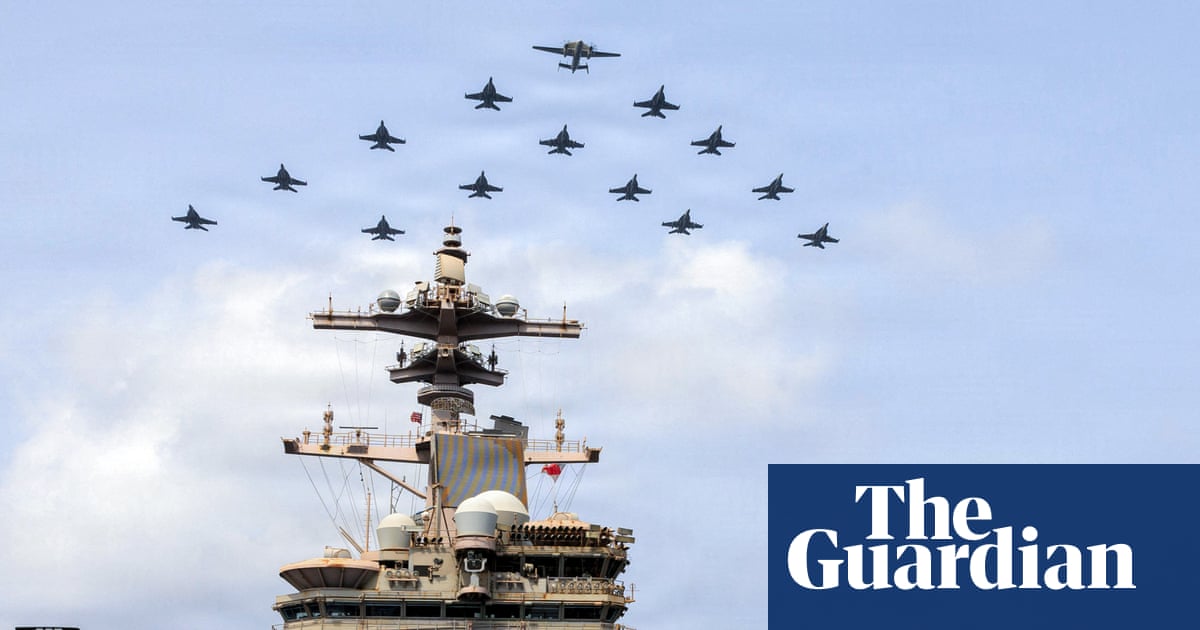
The defining feature of this phase of the conflict is economic coercion layered on top of bombardment. The US navy, led by the carrier USS George H W Bush in the Arabian Sea, is blockading Iranian ports while conducting strikes, and on Thursday fired a Hellfire missile at a tanker it said was trying to reach Kharg Island, Iran's biggest oil export terminal. Iran responded by declaring the Strait of Hormuz shut, and asked its Houthi allies in Yemen to be ready to close the Red Sea corridor if US forces touched Iranian energy infrastructure. With the two waterways simultaneously threatened, the article notes that global energy prices and inflation have already been sent soaring, and a Houthi closure of the Red Sea could "paralyse the global energy market."
The interim Memorandum of Understanding signed last month is now the central point of legal and political contention. The MoU stipulated the strait would remain open for 60 days, but both sides insist ships transit through separately designated lanes — a disagreement that has, in practice, reduced traffic. Only nine vessels transited on Wednesday, most on the Iranian-designated route rather than the US one, down from 13 the day before. The political pressure on the White House is concrete: Donald Trump wants the waterway reopened because rising energy prices could damage Republican candidates in the autumn midterm elections, giving Tehran leverage precisely where Washington is most exposed.
Tehran's Retaliation Spreads Across the Gulf
Iran's response has moved beyond the Persian Gulf to a wider arc of US partners. Missiles and drones were fired at Bahrain, Jordan, and Kuwait — three countries hosting US military bases — and Iraq's prime minister, Ali al-Zaidi, reported an intercepted overnight drone attack on Erbil in Iraqi Kurdistan. Iraq briefly suspended crude loading at all its terminals after a drone crashed into a tanker at Basra, before resuming later in the day. The broadening target set marks a deliberate Iranian effort to make the cost of supporting US operations visible to every Gulf capital.
The humanitarian toll inside Iran is also climbing. Iranian authorities said more than 35 people have been killed and more than 300 wounded in recent US strikes, and Tehran accused Washington of a "barbaric attack" after a cancer hospital in south-west Iran was evacuated because of nearby strikes. Iran's foreign ministry spokesperson, Esmaeil Baghaei, said 211 children undergoing chemotherapy were moved, and drew a pointed comparison to Israeli strikes on healthcare facilities. The evacuation has given Iran a propaganda anchor as it lobbies regional and global audiences against US escalation.
A Peace Deal in Free Fall
The MoU is now in serious jeopardy, and the article's framing — "all-out war" and serious doubt about last month's deal — captures how thin the diplomatic floor has become. Iranian military spokesperson Col Ebrahim Zolfaghari said the only path to reopening the strait is full US compliance with the 14-point MoU and "Iranian regulations" for ship transits, language that effectively asks Washington to accept Tehran's terms of passage. Trump, meanwhile, has publicly floated attacks on Iranian power plants, bridges, and a nuclear facility, drawing Iranian warnings that "all the infrastructure in the region will be crushed." Each side's maximalist rhetoric is narrowing the space in which any negotiator can operate.
The conflict is also beginning to redraw the practical operating environment for global shipping. India — one of the largest sources of merchant mariners worldwide — has told shipowners and recruitment companies not to deploy Indian seafarers on vessels bound for the strait until further notice. That kind of labour-market disruption, even before the strait fully closes, signals how quickly a regional war becomes a global supply-chain problem.
Key points
- US strikes hit targets near Tehran and fired on a tanker approaching Kharg Island, the centre of Iran's oil exports
- Iran retaliated with missiles and drones against Bahrain, Jordan, and Kuwait, all of which host US bases
- The Strait of Hormuz is effectively closed, threatening roughly a fifth of global oil and gas flows
- Iran asked Yemen's Houthis to prepare to close the Red Sea oil route if US forces hit Iranian energy sites
- An interim peace deal signed last month is now in serious doubt as both sides escalate
- India has told shipowners not to deploy Indian seafarers on Hormuz-bound vessels
The MoU framework still exists on paper, and both sides have publicly tied any reopening of the strait to a documented set of terms. If Trump decides the political cost of higher energy prices ahead of the midterms outweighs the benefit of escalation, there is a narrow window to revive negotiations around the existing 14-point text rather than start from zero.
With US strikes now reaching the Tehran area, Iranian retaliation hitting three host countries, and the Strait of Hormuz effectively closed, the most likely path is further escalation: a Houthi closure of the Red Sea, a broader regional war drawing in Saudi Arabia and Iraq, and a sustained oil-price shock that feeds global inflation through the autumn.