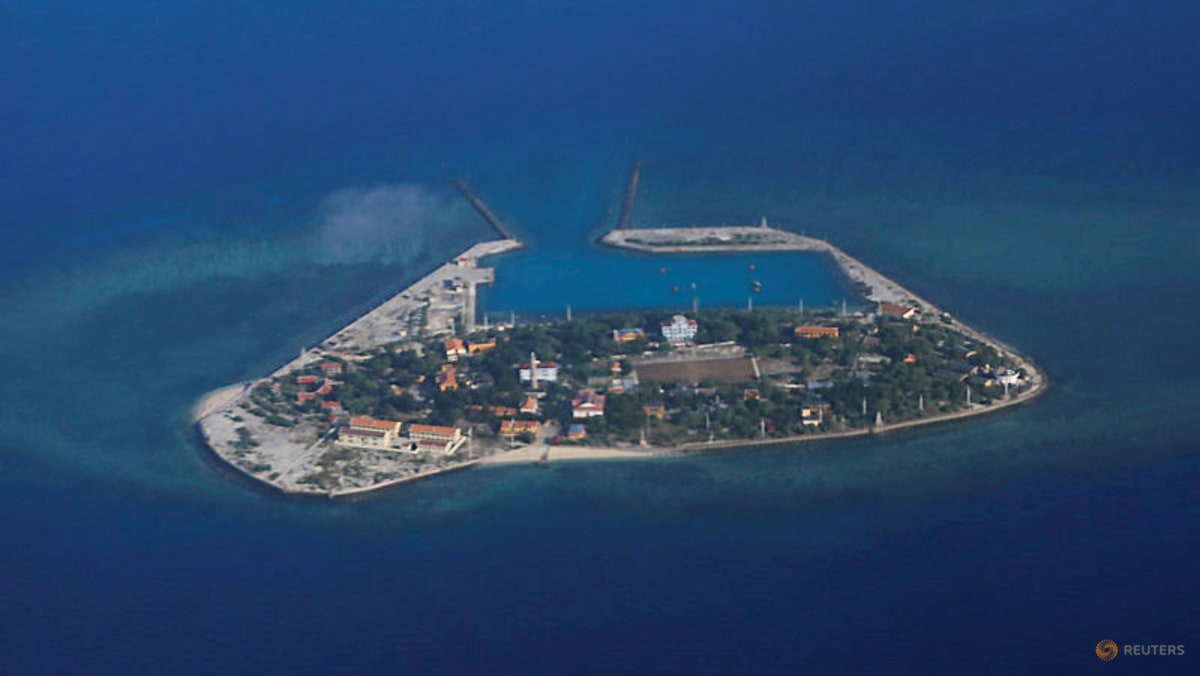
US, Japan join Philippines in South China Sea drills
The US and Japan joined the Philippines in maritime exercises in the South China Sea, as the Filipino and Chinese governments traded accusations following an encounter between vessels from their countries in the disputed waters.
Intelligence analysis by Llama
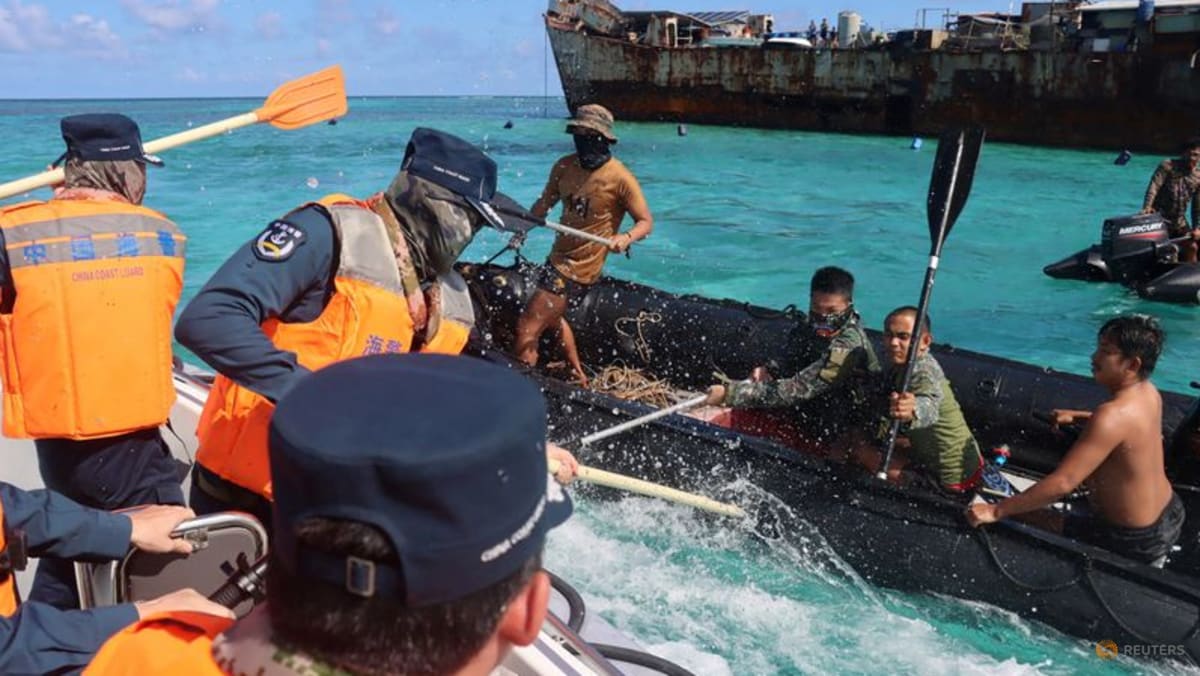
The five-day drills brought together warships, coast guard vessels and surveillance and fighter aircraft in operations aimed at improving interoperability among the allies, according to the Philippine military.
Imagine you're playing a game with your friends, and you all agree to follow the rules. But then, one of your friends starts to cheat and tries to take over the game. That's kind of what's happening in the South China Sea, where China is trying to take control of the waters and the islands. The US, Japan, and the Philippines are joining forces to show China that they won't let them get away with it.
Analysis
A Show of Force in the South China Sea
The recent joint drills between the US, Japan, and the Philippines in the South China Sea have sent a strong message to China about the importance of maintaining peace and stability in the region. The five-day exercises brought together warships, coast guard vessels, and surveillance and fighter aircraft in operations aimed at improving interoperability among the allies, according to the Philippine military.
The drills were the latest in a series of joint drills that have expanded in scope and frequency in recent years as the Philippines, backed by the US and Japan, seeks to push back against China's sweeping claims over the South China Sea. China claims sovereignty over almost the entire South China Sea and rejects a 2016 arbitral ruling invalidating its claims.
A Test of Resolve
The joint drills were a test of resolve for the Philippines, which has been seeking to assert its sovereignty over the disputed waters. The Philippines has been facing increasing pressure from China, which has been building artificial islands and deploying military assets in the South China Sea.
The drills were also a demonstration of the US and Japan's commitment to the Philippines and the region. The US has been providing military aid to the Philippines, while Japan has been providing economic assistance. The joint drills were a way for the US and Japan to show their support for the Philippines and to demonstrate their commitment to the region.
A Path Forward
The joint drills were a positive step forward for the Philippines and its allies. The exercises demonstrated the importance of maintaining peace and stability in the South China Sea and showed that the Philippines and its allies are committed to defending their sovereignty and territorial integrity.
However, the path forward is not without challenges. China's claims over the South China Sea remain a major obstacle to peace and stability in the region. The Philippines and its allies will need to continue to work together to address these challenges and to promote peace and stability in the South China Sea.
Key points
- The US, Japan, and the Philippines conducted joint drills in the South China Sea.
- The exercises were aimed at improving interoperability among the allies.
- China claims sovereignty over almost the entire South China Sea and rejects a 2016 arbitral ruling invalidating its claims.
- The joint drills were a test of resolve for the Philippines, which has been seeking to assert its sovereignty over the disputed waters.
- The US and Japan have been providing military aid and economic assistance to the Philippines, respectively.
The joint drills between the US, Japan, and the Philippines are a positive step forward in promoting peace and stability in the South China Sea. The exercises demonstrate the importance of maintaining a strong and united front against China's claims, and show that the Philippines and its allies are committed to defending their sovereignty and territorial integrity. If this development continues to play out positively, it could lead to increased cooperation and diplomacy between the parties involved, ultimately reducing tensions in the region.
However, the path forward is not without challenges. China's claims over the South China Sea remain a major obstacle to peace and stability in the region. If the situation continues to escalate, it could lead to increased tensions and conflict between the parties involved, ultimately destabilizing the region and putting the Philippines and its allies at risk.