US Sanctions Against Iran Escalate Tensions with China
China has criticized new US sanctions targeting Iran and its trading partners, including Chinese entities, stating such unilateral measures lack international legal basis and vowing to protect its economic interests.
Intelligence analysis by Gemini 2.5 Flash
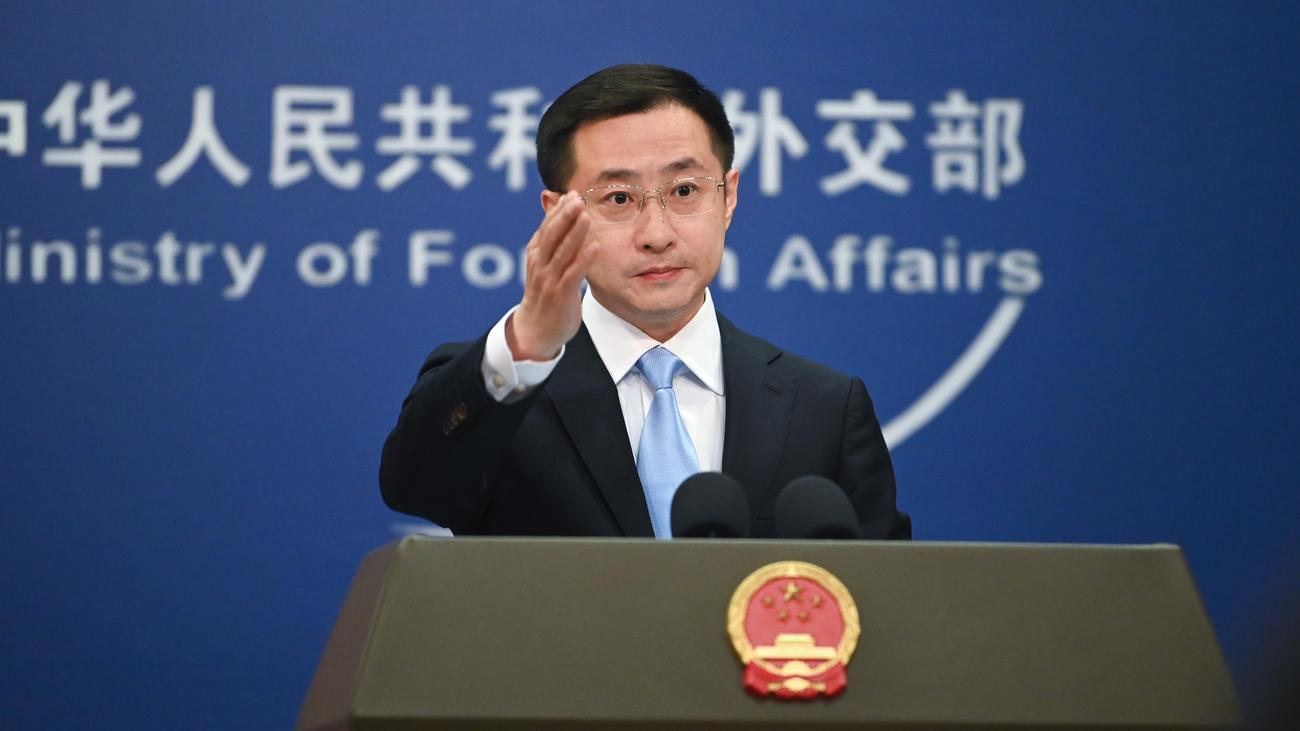
The United States has imposed new sanctions on entities in China and Hong Kong for facilitating Iran's oil sales and procurement of sensitive technology, intensifying a long-standing dispute. China's Foreign Ministry strongly condemned these "unilateral punitive measures," asserting they violate international law and warning of countermeasures to protect its economic interests, ahead …
Imagine the US is telling countries not to trade with Iran, like telling kids not to share toys with a naughty friend. China, who buys a lot of oil from Iran, says "No way!" and that the US can't tell them what to do. Now they're a bit mad at each other, especially because the US is punishing some Chinese companies.
Analysis
Lin Jian's Stance
Chinese Foreign Ministry spokesman Lin Jian articulated Beijing's strong opposition to the new US sanctions targeting Iran and its trading partners. He explicitly stated that the People's Republic views these unilateral punitive measures as lacking any foundation in international law, thereby challenging their legitimacy on a global stage. This position underscores China's consistent diplomatic stance against what it perceives as extraterritorial application of US domestic law.
Jian further emphasized that such measures are counterproductive and not an appropriate method for resolving existing international conflicts. His remarks signal China's intent to safeguard its own economic interests, explicitly warning that Beijing would take "all necessary measures" in response to potential US actions against Chinese companies or partners. This declaration highlights the potential for retaliatory actions, escalating the economic and diplomatic friction between the two global powers.
Scott Bessent's Strategy
US Treasury Secretary Scott Bessent outlined the strategic rationale behind the new sanctions, confirming that the Treasury Department had meticulously identified the intricate networks and intermediaries utilized by Iran. These entities, according to Bessent, are crucial for Iran's oil sales and its broader efforts to circumvent existing international sanctions, directly linking the measures to Iran's illicit financial activities. The focus on these networks indicates a targeted approach to dismantle Iran's ability to fund its programs.
The US Treasury's statement detailed that specific measures were directed against several firms based in Hong Kong, a Chinese special administrative region, and other individuals within China. These entities are accused of acting as crucial intermediaries in Iran's global procurement network, particularly for sensitive items like optical technical equipment vital for its nuclear and missile technology programs. This direct targeting of Chinese-linked entities underscores the US commitment to disrupting Iran's proliferation efforts, even at the risk of further straining relations with Beijing.
Donald Trump's Diplomatic Horizon
The timing of these intensified sanctions is particularly noteworthy, as they precede a significant diplomatic engagement. US President Donald Trump is scheduled to host Chinese President Xi Jinping in the United States in approximately one month, following Trump's invitation during his visit to Beijing in May. This upcoming high-level meeting presents a critical juncture for US-China relations, where the escalating tensions over Iran sanctions will undoubtedly feature prominently on the agenda.
While the US refrained from imposing sanctions on major Chinese banks, which could have caused more severe disruptions, the current measures still cast a shadow over the impending summit. The decision to hold back on broader financial sanctions against Chinese banks suggests a calculated effort to maintain some diplomatic space, yet the existing actions against Chinese companies indicate a firm resolve to pressure Beijing on its dealings with Iran. The outcome of the Trump-Xi meeting will be crucial in determining whether these tensions can be managed or if they will lead to a deeper rift.
Key points
- China condemns new US sanctions against Iran and its trading partners, calling them illegal and unilateral.
- The US Treasury Department targeted several Hong Kong-based firms and Chinese individuals for aiding Iran's procurement of nuclear and missile technology.
- China, the largest buyer of Iranian oil, vowed to protect its economic interests and take "all necessary measures" in response.
- The sanctions precede a planned meeting between US President Donald Trump and Chinese President Xi Jinping in September.
- The US aims to disrupt Iran's global procurement networks and its ability to circumvent international sanctions.
The upcoming meeting between US President Donald Trump and Chinese President Xi Jinping in September could provide a crucial diplomatic avenue to de-escalate tensions. If both leaders find common ground or agree on a framework for dialogue, it might prevent further retaliatory measures and stabilize global trade relations, potentially leading to a more coordinated approach to Iran.
The current escalation risks a tit-for-tat cycle of sanctions and countermeasures, potentially harming global supply chains and economic stability. China's vow to protect its economic interests could lead to direct retaliation against US companies or interests, further straining the already complex US-China relationship and making a resolution to the Iran issue more difficult.
Market signals
- OIL Increased tensions and sanctions against Iran, a major oil producer, could disrupt supply and drive up crude oil prices.
AI-generated analysis of potential market relevance. Not financial advice.