US, South Korea slash joint military drills by half as Trump eyes Kim summit
The US and South Korea are set to cut their joint military drills by about half, following President Donald Trump's order to reduce US participation in the annual exercises.
Intelligence analysis by Llama
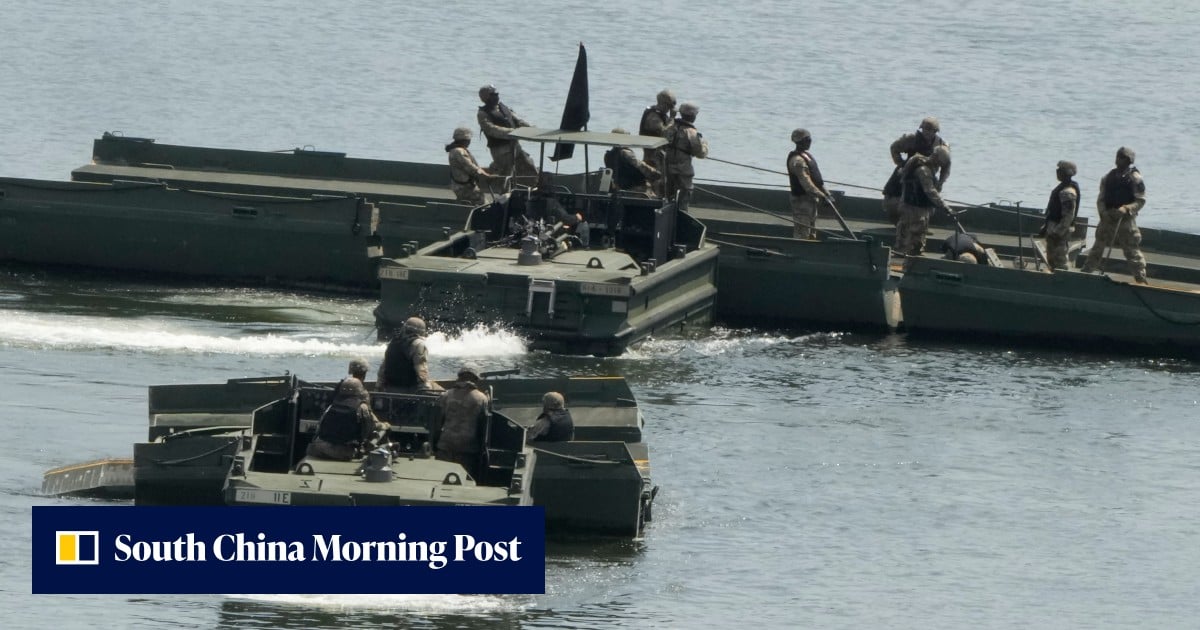
The allies are expected to complete the defensive phase of the Ulchi Freedom Shield exercise this week and cancel or defer the counter-attack phase, which was due to start next week.
Imagine you're playing a game with your friend where you both have to work together to protect each other from a bad guy. The US and South Korea are like two friends who are playing this game together, and they have to practice working together to protect each other from a bad guy. But now, the US is saying that they don't want to play the game as much, because they want to be friends with the bad guy too.
Analysis
Background
The Ulchi Freedom Shield exercise is an annual joint military drill between the US and South Korea, aimed at enhancing their military readiness and cooperation. The exercise typically involves a combination of defensive and offensive operations, with the goal of deterring potential aggression from North Korea.
What Changed
In a surprise move, President Donald Trump ordered the US military to substantially reduce its participation in the exercise, citing his good relationship with North Korean leader Kim Jong-un. The decision was reportedly made in response to concerns about the escalating tensions between the US and North Korea.
Implications
The reduction in military drills is seen as a significant development in the region, particularly in the context of the US-North Korea relationship. While the exact implications of this decision are unclear, it is likely to have a positive impact on the diplomatic efforts to resolve the North Korean nuclear crisis. The move may also be seen as a gesture of goodwill by the US, aimed at improving its relationship with North Korea.
What's Next
The future of the Ulchi Freedom Shield exercise remains uncertain, with the US and South Korea expected to reassess their military cooperation in the coming weeks. The decision to reduce US participation in the exercise is likely to have far-reaching consequences for the region, and will be closely watched by observers and analysts.
Key points
- The US and South Korea are set to cut their joint military drills by about half.
- The reduction in military drills is seen as a significant development in the region, particularly in the context of the US-North Korea relationship.
- The decision to reduce US participation in the exercise is likely to have far-reaching consequences for the region.
The reduction in military drills may lead to a positive impact on the diplomatic efforts to resolve the North Korean nuclear crisis. The move may also be seen as a gesture of goodwill by the US, aimed at improving its relationship with North Korea.
The reduction in military drills may be seen as a sign of weakness by North Korea, leading to increased aggression and tensions in the region.