US-South Korea war games cut short after Washington request, Seoul says
South Korea's annual joint military drills with the US will be cut short by six days at the request of Washington, its defence ministry has announced.
Intelligence analysis by Llama
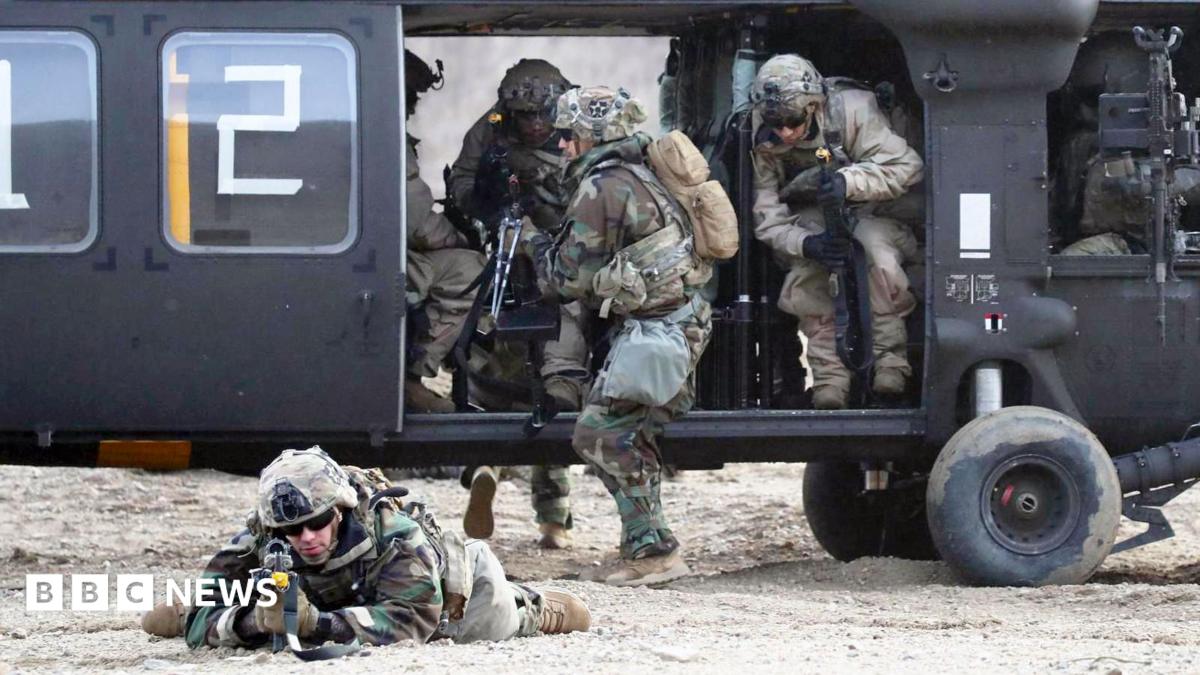
South Korea's annual joint military drills with the US will be cut short by six days at the request of Washington, its defence ministry has announced, in a move that shakes South Korea's confidence in America's commitment to come to its aid.
Imagine you're playing a game with your friends, and you all agree to play for a certain amount of time. But then, one of your friends says they want to stop playing early, and you all have to agree. That's kind of what's happening with the US and South Korea's joint military drills. The US is saying they want to stop playing the game early, and South Korea has to agree. This is making some people in South Korea feel uncertain and worried about their safety.
Analysis
Washington's Request Sparks Uncertainty in Seoul
The decision to cut short the joint military drills has sparked uncertainty in Seoul, with many questioning the implications for South Korea's confidence in America's commitment to come to its aid. The drills, which were scheduled to run until 27 August, will now conclude on 21 August, following a request from Washington. This move has sent a signal to other US allies in the region, including Japan and Taiwan, that the US may be re-evaluating its military commitments in the area.
A Shift in US Policy?
The decision to cut short the drills has been linked to a proposal from the US side, with some speculating that it may be a sign of a shift in US policy towards North Korea. The US has long been a key ally of South Korea, providing military support and protection in the face of North Korean aggression. However, the decision to cut short the drills has raised questions about the US's commitment to this relationship.
Implications for Regional Security
The decision to cut short the drills has significant implications for regional security, with many fearing that it may embolden North Korea to pursue more aggressive actions. The drills were seen as a key component of the US's military strategy in the region, and their reduction has left many wondering about the US's ability to protect its allies in the face of growing threats from North Korea.
Key points
- South Korea's annual joint military drills with the US will be cut short by six days at the request of Washington.
- The decision to cut short the drills has sparked uncertainty in Seoul, with many questioning the implications for South Korea's confidence in America's commitment to come to its aid.
- The drills were seen as a key component of the US's military strategy in the region, and their reduction has left many wondering about the US's ability to protect its allies in the face of growing threats from North Korea.
If this development plays out positively, it could lead to a reduction in tensions between the US and North Korea, potentially paving the way for future diplomatic efforts. However, this is a long shot, and the situation remains highly uncertain.
The decision to cut short the drills could embolden North Korea to pursue more aggressive actions, potentially leading to a destabilization of the region. This could have serious consequences for regional security and the safety of US and South Korean personnel.