US Supreme Court lets Trump continue work on White House ballroom for now
The US Supreme Court has allowed President Donald Trump's administration to continue construction of his White House ballroom project for now, temporarily pausing a judicial order that would halt much of the development.
Intelligence analysis by Llama
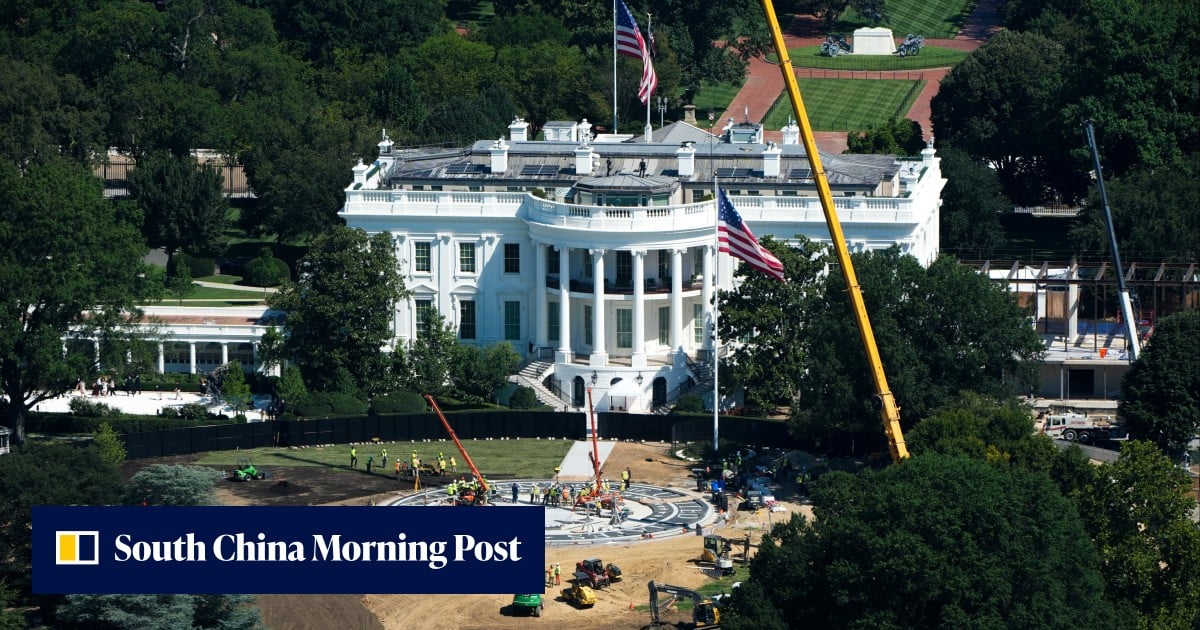
The US Supreme Court has granted an administrative stay, allowing the Trump administration to continue working on the White House ballroom project while a lawsuit by a historic preservation group proceeds. The project combines a 90,000 sq ft ballroom with an extensive underground complex, which the administration claims is a security necessity.
Imagine the White House, where the president lives and works, needs a new big room for important events. The president wants to build this room, but some people are worried that it will ruin the old building. The Supreme Court has said that the president can keep building the room for now, but the people who are worried will still get to argue their case.
Analysis
Background
The US Supreme Court's decision to grant an administrative stay in the case of the White House ballroom project is a significant development in the ongoing saga of President Donald Trump's construction plans. The project, which combines a 90,000 sq ft ballroom with an extensive underground complex, has been the subject of a lawsuit by the non-profit National Trust for Historic Preservation, which claims that the administration has acted unlawfully in tearing down the White House East Wing and beginning construction without seeking specific approval from Congress.
What Changed
The Supreme Court's decision to grant an administrative stay gives the justices additional time to consider the administration's formal request to let it continue working on the project while the lawsuit proceeds. This decision is significant because it allows the administration to continue construction of the ballroom, which it claims is a security necessity, citing assassination attempts against the president and other recent threats.
What's Next
The lawsuit by the National Trust for Historic Preservation will continue to proceed, and the Supreme Court will ultimately have to decide whether the administration's actions were lawful. In the meantime, the construction of the White House ballroom will continue, with the administration claiming that it is a necessary security measure. This development is significant for those following US politics and the Trump administration's actions, as it relates to the construction of a new White House ballroom and the administration's claims of national security.
Key points
- The US Supreme Court has granted an administrative stay, allowing the Trump administration to continue working on the White House ballroom project.
- The project combines a 90,000 sq ft ballroom with an extensive underground complex.
- The administration claims that the project is a security necessity, citing assassination attempts against the president and other recent threats.
- The lawsuit by the National Trust for Historic Preservation will continue to proceed.
If the Supreme Court ultimately decides that the administration's actions were lawful, the construction of the White House ballroom could be completed, and the administration could claim that it was a necessary security measure. This could be seen as a positive development for the administration, as it would allow them to complete a major project and claim a victory.
On the other hand, if the Supreme Court decides that the administration's actions were unlawful, the construction of the White House ballroom could be halted, and the administration could be forced to tear down the existing structure. This could be seen as a negative development for the administration, as it would be a setback for their plans and could lead to further controversy.
