US targets Iran’s crypto sector, cites over $100M in oil-linked payments
The US Treasury has expanded its sanctions framework to target Iran's digital asset sector, alleging over $100 million in crypto payments facilitated oil sales for the Islamic Revolutionary Guard Corps (IRGC). This move allows OFAC to sanction foreign entities supporting …
Intelligence analysis by Gemini 2.5 Flash
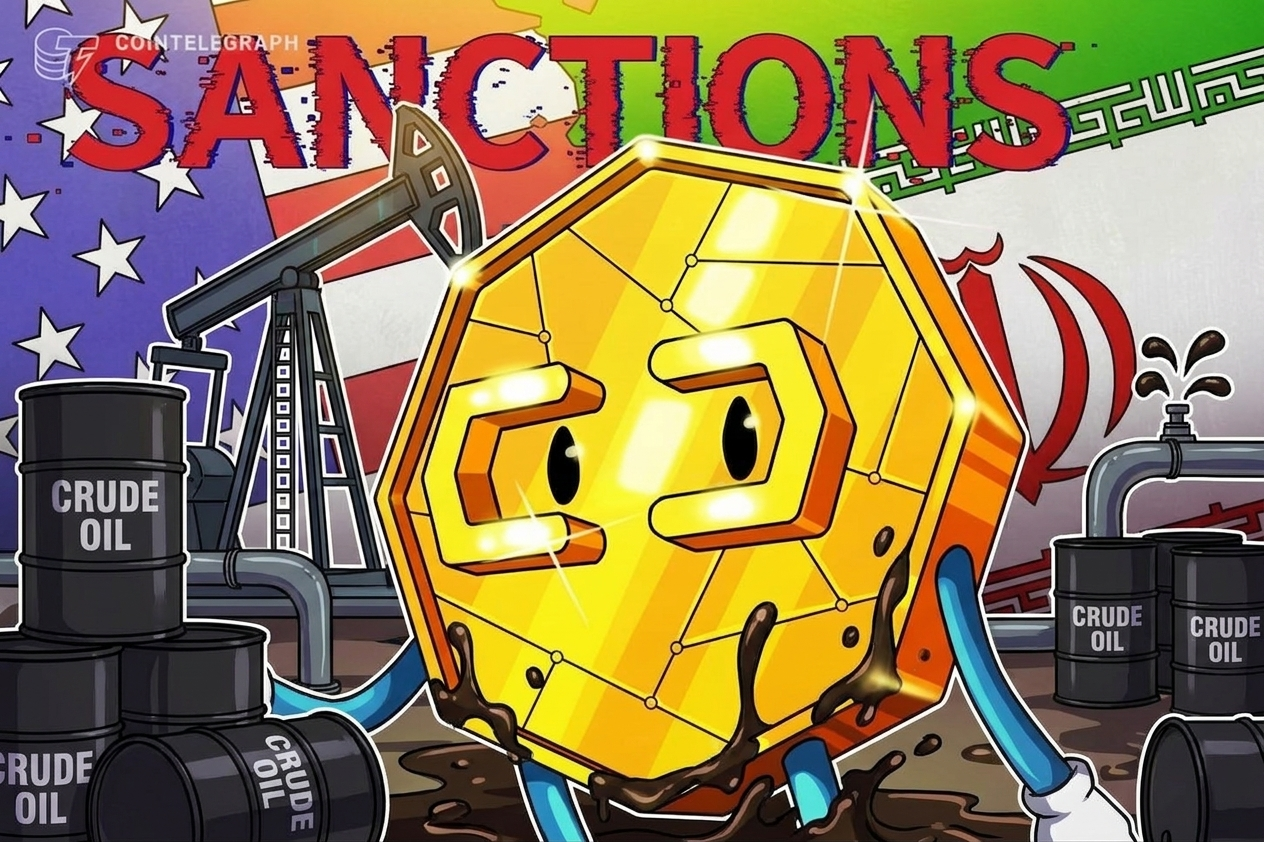
The US Treasury Department has significantly broadened its sanctions against Iran, now encompassing the country's entire digital asset sector. This expansion follows allegations that a UAE-based broker processed more than $100 million in cryptocurrency since 2023 to facilitate Iranian oil sales, particularly for the IRGC's Quds Force, highlighting crypto's increasing use in sanctions …
Imagine there's a country that isn't allowed to sell its oil to most places because of special rules. But they found a clever way to get paid using digital money, like special online tokens, instead of regular bank money. Now, the US government is saying, "No more!" They're making new rules that let them stop anyone, anywhere, who helps this country use digital money to sell its oil. It's like catching someone trying to sneak candy into a movie theater and then making a rule that says no one can bring any kind of candy in anymore.
Analysis
The recent actions by the US Treasury mark a significant shift in its approach to sanctioning Iran, moving from targeting specific crypto exchanges to encompassing the entire digital asset sector. This broader determination empowers the Office of Foreign Assets Control (OFAC) to sanction any foreign individual or company found to be operating in or providing services that support Iran's digital asset activities. The Treasury explicitly stated that Iran is increasingly leveraging cryptocurrencies as a "tool of choice for sanctions evasion," particularly for transactions linked to the Islamic Revolutionary Guard Corps (IRGC) and government insiders. This strategic expansion underscores the US government's growing concern over the role of digital assets in circumventing international financial restrictions and its commitment to disrupting such illicit financial flows.
Ivan Obukhov
Central to the US Treasury's latest sanctions is the case of Ivan Obukhov, a UAE-based Ukrainian broker. Obukhov and his company, Foscom FZE, were specifically sanctioned for allegedly processing over $100 million in crypto payments since 2023. These transactions were reportedly used to facilitate oil sales on behalf of the IRGC's Quds Force, a designated terrorist organization. The identification and sanctioning of Obukhov and his firm highlight the Treasury's focus on individuals and entities directly involved in facilitating illicit financial activities through digital assets. This specific example serves as a concrete illustration of the broader pattern of sanctions evasion that the US aims to disrupt with its expanded framework.
Executive Order 13902
The legal basis for these expanded sanctions is rooted in Executive Order 13902. The accompanying OFAC determination clarifies that any person identified as operating in Iran's digital asset sector will now be subject to sanctions under this executive order. The implications of such a designation are severe: any US-linked property of the sanctioned parties must be blocked, and foreign banks that facilitate significant transactions for these entities could face restrictions on their access to US accounts. This mechanism provides a powerful deterrent, aiming to isolate Iran's digital asset sector from the global financial system and prevent further use of crypto for illicit purposes.
Nobitex
Prior to this sector-wide measure, the US had already taken several targeted actions against specific crypto platforms linked to Iran. For instance, in June, the Treasury sanctioned four Iranian crypto exchanges, including Nobitex, which is identified as the country's largest platform. This action followed an earlier announcement by Treasury Secretary Scott Bessent, who claimed the US had seized nearly $1 billion in cryptocurrency from Iranian exchanges and wallets. The progression from sanctioning individual platforms like Nobitex to a blanket sectoral determination demonstrates an evolving and increasingly comprehensive strategy by the US to combat Iran's use of digital assets for sanctions evasion.
Key points
- The US Treasury expanded sanctions to cover Iran's entire digital asset sector.
- The move targets over $100 million in crypto payments allegedly used for Iranian oil sales, particularly for the IRGC's Quds Force.
- UAE-based Ukrainian broker Ivan Obukhov and his company Foscom FZE were sanctioned for facilitating these payments.
- The new determination allows OFAC to sanction any foreign individual or company supporting Iran's digital asset sector under Executive Order 13902.
- This follows previous targeted sanctions against specific Iranian crypto exchanges like Nobitex.
The expanded sanctions could lead to increased financial isolation for Iran, potentially pushing its illicit crypto activities further underground and making them harder to track. This could also create a chilling effect on legitimate crypto businesses operating in regions perceived as high-risk, leading to over-compliance and reduced access to digital financial services.