US tightens green card application rules
The US has introduced stricter immigration rules that will bring more scrutiny for some green-card applicants and introduce new requirements for foreign students, exchange visitors, and journalists.
Intelligence analysis by Llama
The US has tightened its green card application rules, introducing stricter documentation requirements and new requirements for foreign students, exchange visitors, and journalists. The changes aim to bring more scrutiny to some green-card applicants and give immigration officers more discretion when reviewing applications.
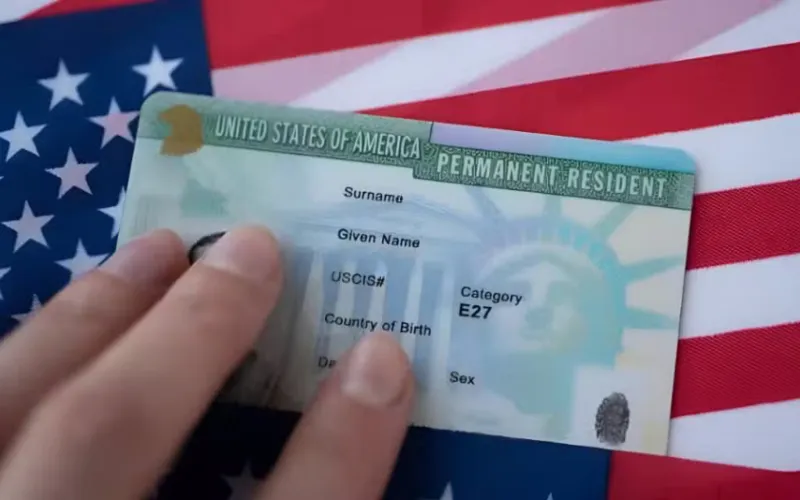
The US has made it harder for people to get green cards, which are special cards that let people live and work in the US. Now, people applying for green cards will have to fill out a new form and provide more information about their finances. This is to make sure that people who get green cards don't rely too much on government help.
Analysis
New Form I-485 Requirements
The US Citizenship and Immigration Services (USCIS) has introduced a new version of Form I-485, Application to Register Permanent Residence or Adjust Status, which will be required starting September 18, 2026. The new form will replace the current January 20, 2025, version, and applications using the old form on or after September 18 will be rejected. USCIS has advised applicants not to use the new form before it becomes effective.
Public-Charge Rule Changes
The public-charge rule has been revised to give immigration officers a broader set of factors to consider when deciding whether an applicant is likely to depend on government assistance. Officers will review an applicant's overall circumstances, including relevant factors and evidence, before making a decision. Some immigrant categories will remain exempt from the public-charge rule.
Changes for Foreign Students and Exchange Visitors
A separate Department of Homeland Security rule will replace the current duration-of-status system for F, J, and I nonimmigrants with fixed admission periods and new procedures for extensions. Foreign students and exchange visitors will no longer be allowed to remain in the US for the full length of their programs under the previous D/S designation. Instead, they will receive a fixed admission period and may have to apply for an extension when necessary. Foreign media representatives will also face fixed admission periods and additional requirements under the new rules.
Increased Scrutiny for Green-Card Applicants
The changes reflect a broader move toward stricter oversight of legal immigration. They include closer review of financial circumstances for some green-card applicants, greater monitoring of temporary immigration status, and a stronger focus on complete applications. For Pakistani applicants and others seeking US immigration benefits, the changes could mean stricter documentation requirements and less room for mistakes when submitting applications.
Key points
- The US has introduced a new version of Form I-485, which will be required starting September 18, 2026.
- The public-charge rule has been revised to give immigration officers a broader set of factors to consider when deciding whether an applicant is likely to depend on government assistance.
- Foreign students and exchange visitors will no longer be allowed to remain in the US for the full length of their programs under the previous D/S designation.
- Foreign media representatives will also face fixed admission periods and additional requirements under the new rules.
If these changes play out positively, it could lead to a more efficient and streamlined immigration process, reducing the burden on applicants and USCIS alike. This could also lead to a more accurate assessment of an applicant's eligibility, reducing the number of denied applications.
However, the increased scrutiny and stricter documentation requirements could lead to a higher number of denied applications, causing frustration and delays for applicants. Additionally, the changes could create a barrier for those who are already vulnerable, such as low-income individuals or those with limited access to resources.