USS Nimitz soldiers on but ‘glory days are over’: CCTV report
Chinese state media claims the USS Nimitz's "glory days" are over, citing its extended service and recent incidents as evidence of US fleet fatigue and declining shipbuilding capacity.
Intelligence analysis by Gemini 2.5 Flash
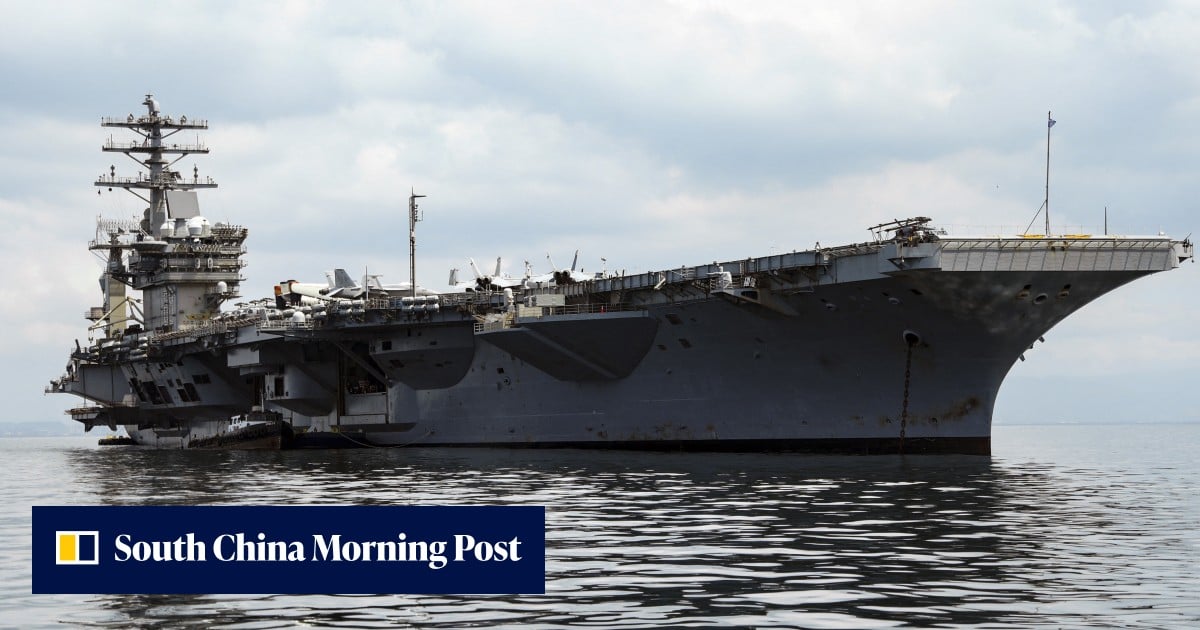
A Chinese state broadcaster report suggests the prolonged operational life of the USS Nimitz, the world's longest-serving aircraft carrier, along with reported accidents, indicates significant challenges for the US Navy. Chinese military analysts attribute this to broader fatigue within the US fleet and a decline in the country's shipbuilding industry.
Imagine a really old toy car that's been played with for a super long time, even though it was supposed to be put away years ago. Some people in China are saying that this old toy car, which is like a big US Navy ship called the USS Nimitz, is now too tired and breaking down a lot because the toy factory isn't making new ones fast enough.
Analysis
The recent report by Chinese state broadcaster CCTV, asserting that the "glory days" of the USS Nimitz are over, offers a pointed critique of US naval capabilities and shipbuilding prowess. This analysis, disseminated through official channels, is not merely an observation but a strategic narrative aimed at highlighting perceived vulnerabilities within the US military. By focusing on the extended operational life of the Nimitz and linking it to broader issues of fleet fatigue and industrial decline, Beijing seeks to project an image of a struggling American defense apparatus, potentially influencing regional perceptions of power dynamics. The report underscores the ongoing information competition between the two global powers, where military hardware and operational readiness become central themes in shaping international opinion.
USS Nimitz
The USS Nimitz, commissioned in 1975, holds the distinction of being the world’s longest-serving active aircraft carrier, a fact frequently emphasized by Chinese commentators. Its original retirement date of 2026 has been repeatedly postponed, now slated for March next year, to coincide with the delivery of the USS John F. Kennedy, the second Ford-class carrier. This delay, while presented by the US Navy as a logistical alignment, is framed by Chinese analysts as a symptom of deeper systemic issues. The article specifically references two aircraft incidents in the South China Sea in October last year involving the Nimitz, which are used to bolster the argument that the carrier is being kept operational "with difficulty."
CCTV Report
The Chinese state broadcaster CCTV's report serves as a significant platform for Beijing's military analysis, reflecting official views on international defense matters. The report explicitly states that the US Navy's reliance on extended carrier deployments, particularly concerning the Nimitz, is a "cause for concern." This framing suggests that such reliance is not a sign of resilience but rather an indicator of underlying weaknesses in the US's ability to replace aging assets promptly. The report's emphasis on the decline in US shipbuilding capacity is a direct challenge to America's industrial base, implying that its ability to project power globally is being hampered by domestic manufacturing limitations.
Li Yaqiang
Li Yaqiang, identified as a former senior colonel in the Chinese navy and a military commentator, provides the most direct and quotable assessment in the CCTV report. His statement, "Judging from the series of accidents that have occurred, the Nimitz is already being kept operational with difficulty. The glory days of the Nimitz aircraft carrier are over," encapsulates the core message of the Chinese analysis. Li's comments, coming from a figure with military credentials, lend authoritative weight to the narrative that the US fleet is experiencing fatigue and that its premier assets are past their prime. This expert commentary reinforces the broader strategic communication effort to portray the US as facing significant challenges in maintaining its global military dominance.
Key points
- Chinese state broadcaster CCTV claims the "glory days" of the USS Nimitz aircraft carrier are over.
- The report links the carrier's extended service to fatigue in the broader US fleet and a decline in US shipbuilding capacity.
- The USS Nimitz, commissioned in 1975, is the world's longest-serving active aircraft carrier.
- Its retirement, originally set for 2026, has been postponed until March next year (2027).
- A former Chinese navy senior colonel cited recent incidents involving Nimitz aircraft as evidence of its operational difficulties.
The US Navy's decision to extend the USS Nimitz's service could be viewed as a strategic move to maintain continuous carrier presence while new Ford-class carriers are brought online, demonstrating adaptability in fleet management. This temporary measure ensures no immediate gap in operational capability during a crucial transition period for naval modernization.
The reliance on extending the service life of aging assets like the USS Nimitz, as highlighted by Chinese analysts, could signal deeper structural issues within the US shipbuilding industry and potentially compromise the operational readiness and safety of the US fleet. This could lead to increased maintenance burdens, higher accident rates, and a perceived weakening of US naval power.
