Venezuela earthquake: father and son found alive in rubble after four days as death toll nears 1,500
A father and his teenage son were miraculously found alive in Venezuela's earthquake rubble four days after twin quakes, as the death toll approaches 1,500 and rescue efforts continue.
Intelligence analysis by Gemini 2.5 Flash
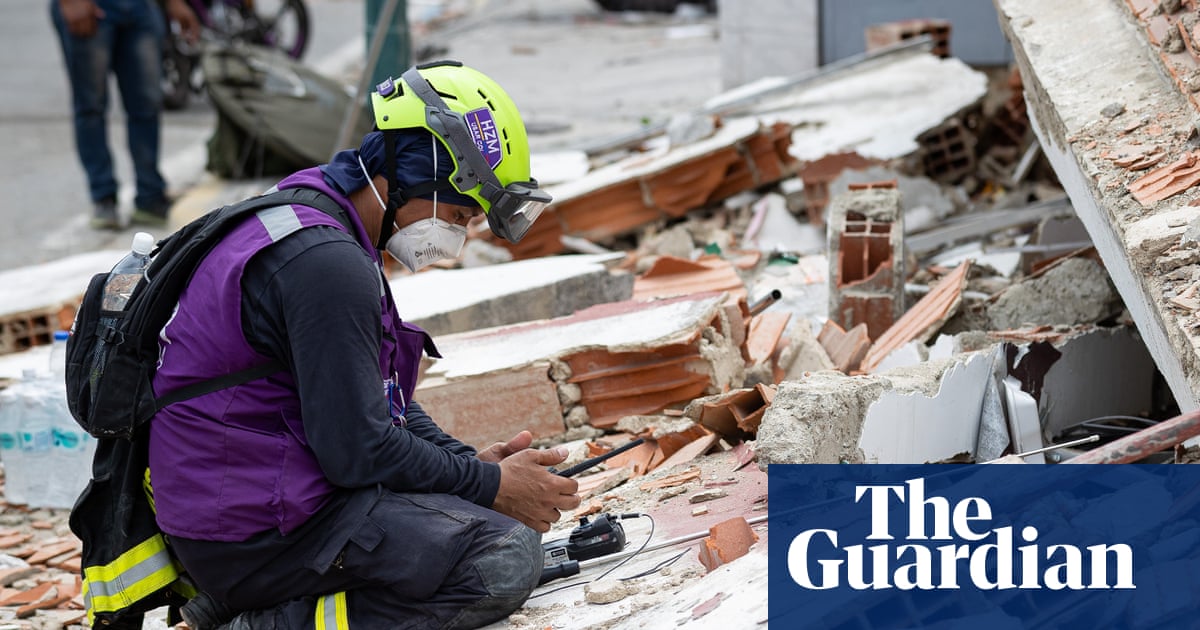
Amidst a devastating humanitarian crisis, a father and son were rescued in Caraballeda, Venezuela, offering a rare moment of hope after magnitude 7.2 and 7.5 earthquakes destroyed hundreds of buildings. The discovery has spurred fresh search efforts, even as the critical 72-hour survival window has passed, and the country grapples with an overwhelmed response, widespread looting, and …
Imagine a giant shaking the ground really hard, making lots of buildings fall down in Venezuela. Many people got hurt or trapped, and sadly, many died. But after four days, a dad and his son were found alive under all the broken pieces, which was a big surprise and made everyone hopeful. Now, many countries are sending help because Venezuela was already having a tough time, and this big shake made things even harder for everyone.
Analysis
A Glimmer of Hope Amidst Despair
The discovery of a father and his teenage son alive in the rubble of Caraballeda, nearly four days after Venezuela was struck by twin earthquakes, has provided a much-needed beacon of hope in an otherwise tragic unfolding disaster. This miraculous rescue, carried out by French and American teams, comes as the official death toll nears 1,500, with tens of thousands still reported missing. The event has reignited the determination of rescue workers, even though the critical 72-hour window for finding survivors has long passed, reminding the world of the resilience of the human spirit against overwhelming odds.
However, this isolated success story is set against a backdrop of immense suffering. The magnitude 7.2 and 7.5 quakes completely destroyed nearly 200 buildings and severely damaged 774 others, leaving millions without sanitation and other basic necessities. The scale of the devastation has overwhelmed local resources, turning entire communities into scenes of pancaked buildings and desperate residents digging through debris by hand, searching for loved ones.
Compounding Crises: Economic Woes and Public Frustration
The earthquakes have struck Venezuela at a particularly vulnerable time, exacerbating a decade-long economic collapse that has already hollowed out public services and hospitals, driving millions to leave the country. This pre-existing fragility has severely hampered the nation's ability to respond effectively to the disaster, with a mortuary in Caracas reportedly overwhelmed and aid efforts struggling to meet the vast needs of the affected population. The UN migration agency estimates that up to 6.76 million people could be impacted, requiring extensive shelter, water, sanitation, healthcare, and relief items.
Public frustration has boiled over in some hard-hit areas, particularly in La Guaira, where residents have complained about slow and insufficient aid from authorities. Outbreaks of looting have hit pharmacies, supermarkets, and other businesses in the port city, which now largely lies in rubble. The desperation of the populace is palpable, with some residents openly challenging soldiers to assist in rescue efforts rather than maintaining order, highlighting the deep-seated anger and sense of abandonment felt by many.
International Response and Political Undercurrents
In response to the catastrophic events, an outpouring of international aid has begun, with 24 nations sending 521 tons of supplies, specialized dog units, and over 2,700 search-and-rescue personnel. The United States, despite its complex political relationship with Venezuela, has significantly contributed, sending a 250-strong disaster response team and an additional 230 military personnel to expand airport capacity and reopen a key seaport for relief efforts. This marks a notable instance of humanitarian cooperation amidst ongoing geopolitical tensions, particularly after the US's military raid on Caracas in January.
Adding another layer to the crisis, exiled Venezuelan opposition figure Maria Corina Machado announced her imminent return to the homeland, stating, "The time has come." Her return could introduce a political dimension to the humanitarian response, potentially galvanizing opposition sentiment and further complicating the government's efforts to manage the disaster. The UN has estimated the physical repair bill at $6.7 billion, equivalent to 6% of Venezuela's GDP, underscoring the monumental task of recovery that lies ahead for a nation already on its knees.
Key points
- A father and his teenage son were found alive in Caraballeda, Venezuela, four days after twin earthquakes.
- The death toll from the magnitude 7.2 and 7.5 quakes has reached nearly 1,500, with tens of thousands still missing.
- The disaster has exacerbated Venezuela's decade-long economic crisis, overwhelming public services and leading to widespread looting.
- International aid, including teams and supplies from 24 nations and the US, is pouring into the country.
- The UN estimates the physical repair bill at $6.7 billion, equivalent to 6% of Venezuela's GDP.
The miraculous rescue of a father and son after four days offers a powerful symbol of hope, encouraging ongoing search efforts and demonstrating the resilience of rescue teams. The significant international aid pouring in, including personnel and supplies from 24 nations and the US, suggests a robust collaborative effort that could alleviate suffering and accelerate recovery.
The death toll is expected to rise significantly, with tens of thousands still missing and the critical 72-hour survival window long passed. Venezuela's pre-existing economic crisis has severely crippled its ability to respond, leading to overwhelmed services, widespread looting, and public frustration, which could further destabilize the country and prolong the humanitarian crisis.