Venezuela opposition leader Machado says she will not take part in US-backed talks
Venezuelan Nobel Peace Prize laureate and opposition leader Maria Corina Machado said she will not take part in US-backed talks with the de facto government of Delcy Rodriguez scheduled for August.
Intelligence analysis by Llama
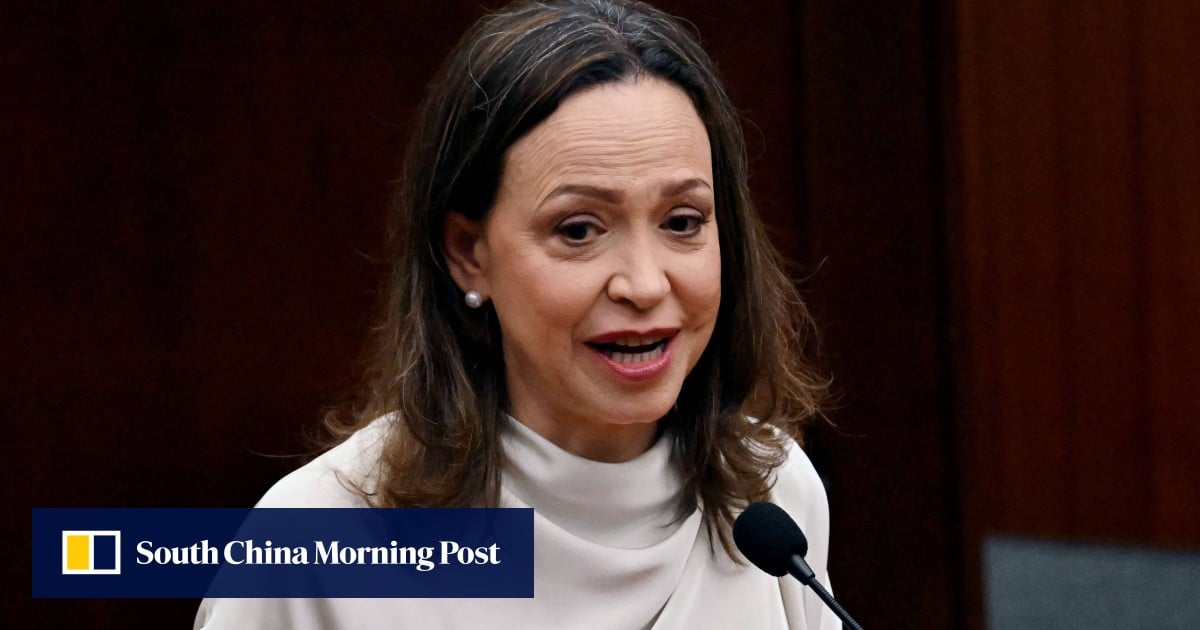
Venezuela opposition leader Maria Corina Machado will not participate in US-backed talks with the de facto government of Delcy Rodriguez, citing a lack of transparency and information about the talks' objectives and timeline.
Venezuela's opposition leader, Maria Corina Machado, decided not to participate in talks with the country's de facto government because she didn't know what the talks were about or what they wanted to achieve. This is a problem because the opposition and the government need to work together to fix Venezuela's crisis.
Analysis
A Divided Opposition: Machado's Decision to Opt Out of US-Backed Talks
Maria Corina Machado's decision to opt out of US-backed talks with the de facto government of Delcy Rodriguez has sent shockwaves through Venezuela's opposition ranks. The Nobel Peace Prize laureate and opposition leader has long been a vocal critic of the de facto government, and her decision to boycott the talks has been met with both support and criticism from within the opposition.
Machado's statement, co-signed by Edmundo Gonzalez Urrutia, who ran for president in Venezuela's 2024 elections, cited a lack of transparency and information about the talks' objectives and timeline as the reason for her decision. This move has been seen as a significant blow to the opposition's efforts to engage with the de facto government and find a peaceful resolution to the country's ongoing crisis.
The US Factor: Washington's Role in the Talks
The US government had hailed the initiative as an important step towards political reconciliation in Venezuela, and had been instrumental in brokering the talks between the opposition and the de facto government. However, Machado's decision to opt out of the talks has raised questions about the US government's role in the process and its commitment to supporting the Venezuelan opposition.
Implications for Venezuela's Political Reconciliation Process
Machado's decision to boycott the talks has significant implications for Venezuela's political reconciliation process. The opposition's participation in talks with the de facto government was seen as a crucial step towards resolving the country's ongoing crisis, and Machado's decision to opt out of the talks has put a major obstacle in the way of this process.
The de facto government, led by Delcy Rodriguez, has been accused of human rights abuses and electoral manipulation, and the opposition has long been critical of its actions. However, the opposition's decision to participate in talks with the de facto government was seen as a necessary step towards finding a peaceful resolution to the country's crisis.
Machado's decision to opt out of the talks has raised questions about the opposition's commitment to engaging with the de facto government and finding a peaceful resolution to the country's crisis. It remains to be seen how this development will impact the political reconciliation process in Venezuela.
Key points
- Venezuela opposition leader Maria Corina Machado will not participate in US-backed talks with the de facto government of Delcy Rodriguez.
- Machado cited a lack of transparency and information about the talks' objectives and timeline as the reason for her decision.
- The US government had hailed the initiative as an important step towards political reconciliation in Venezuela.
- Machado's decision to opt out of the talks has significant implications for Venezuela's political reconciliation process.
If the opposition and the de facto government can find a way to work together, it could lead to a peaceful resolution to Venezuela's crisis and a more stable future for the country.
However, if the opposition and the de facto government cannot find a way to work together, it could lead to further conflict and instability in Venezuela, making it even harder to resolve the country's crisis.
