Volkswagen: IG Metall Accuses VW Board of Poor Communication
IG Metall criticizes Volkswagen's board for its poor communication regarding intensified austerity measures, which have led to fears of job losses and site closures. The union warns of potential conflict and strikes if employee trust is further eroded.
Intelligence analysis by Gemini 2.5 Flash
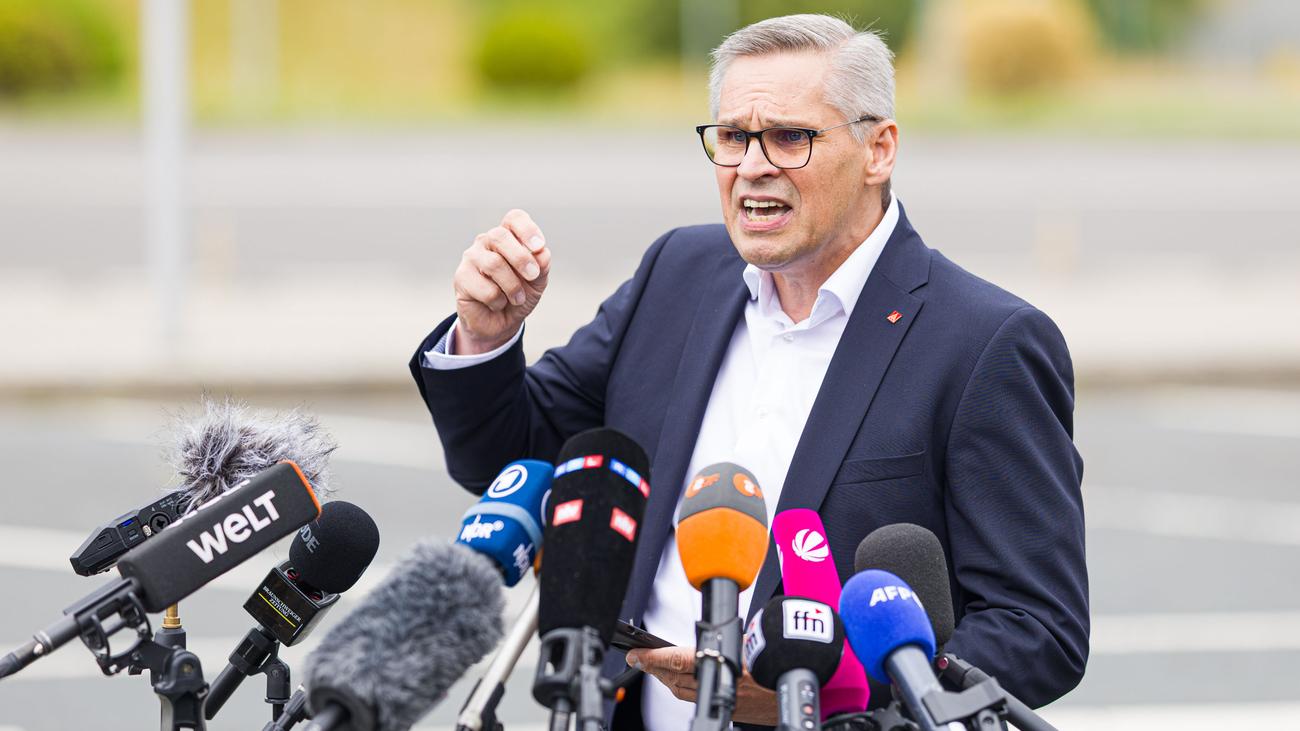
IG Metall, represented by Thorsten Gröger, has strongly condemned Volkswagen's board for its handling of recent austerity announcements, arguing that the communication strategy is damaging public perception and employee trust. The union fears significant job cuts and site closures, signaling a potential industrial dispute and even strikes in the new year if the board continues to prio…
Imagine a big car company, Volkswagen, is trying to save money, like when your parents say you need to save your pocket money. But the boss, Oliver Blume, is talking about it in a way that makes the workers, represented by a group called IG Metall, very worried about losing their jobs. The workers' leader, Thorsten Gröger, says the boss's way of talking is like a big mistake and could make everyone angry, maybe even leading to strikes where workers stop working to show they're serious.
Analysis
Thorsten Gröger
Thorsten Gröger, the IG Metall district manager for Lower Saxony, has emerged as a vocal critic of Volkswagen's executive board. He explicitly stated that the board's current communication strategy regarding austerity measures is a "disaster" and fails to send positive signals to customers. Gröger's remarks underscore the deep dissatisfaction within the union regarding how CEO Oliver Blume's announced cost-cutting plans are being presented and implemented.
Gröger also highlighted the historical balance between profitability and secure employment at VW, suggesting that the board's current approach fundamentally challenges this long-standing principle. He warned that such actions inevitably provoke a confrontation, which, while undesirable, is something the union is actively preparing for. His statements indicate a significant escalation in the rhetoric between management and labor.
VW Law
The "VW Law" is a critical legal framework that provides special protection for Volkswagen's plants and grants the state of Lower Saxony significant influence within the company. Gröger invoked this historical basis when addressing speculation that VW might attempt to push through austerity plans via an extraordinary general meeting, bypassing the supervisory board. He described the mere existence of such speculation, without immediate denial, as an "unbelievable process."
This law ensures that the state of Lower Saxony, as a major shareholder, has a blocking minority, effectively preventing hostile takeovers and safeguarding employee interests. The union's reference to the VW Law signals its intent to leverage all available legal and historical protections to resist what it perceives as an aggressive cost-cutting agenda that threatens job security and established industrial relations.
Hannover
The VW plant in Hannover is a focal point in the ongoing dispute, serving as the location for the final extraordinary works council meeting between the board and the workforce. This meeting marks the culmination of a series of nine such gatherings, preceding any potential new decisions on the austerity measures. The choice of Hannover for this concluding session underscores its symbolic importance within Volkswagen's German manufacturing footprint.
These meetings are critical for both sides to present their arguments and gauge the mood of the workforce before any definitive actions are taken. The outcome of these discussions, particularly the one in Hannover, will likely influence the union's strategy moving forward, especially concerning the potential for industrial action, including strikes, which Gröger indicated could theoretically commence in the new year after the peace obligation expires.
Key points
- IG Metall criticizes Volkswagen's board for poor communication regarding intensified austerity measures.
- Union leader Thorsten Gröger warns of potential conflict and strikes over fears of job losses and site closures.
- Tens of thousands of jobs and four German sites are reportedly at risk due to VW's cost-cutting plans.
- IG Metall believes the board's approach undermines the historical balance between profitability and secure employment.
- The union is preparing for potential industrial action, with strikes theoretically possible from the new year.
- Gröger also expressed concern over speculation that VW might bypass the supervisory board on austerity plans, referencing the protective "VW Law."
The ongoing discussions between Volkswagen's board and IG Metall could lead to a mutually agreeable solution that balances cost-cutting with job security. A constructive dialogue might result in revised austerity plans that are more palatable to the workforce, preventing strikes and fostering renewed trust, ultimately stabilizing the company's future in Germany.
The current communication breakdown and the board's perceived disregard for employee trust could escalate into a full-blown industrial conflict, including widespread strikes at Volkswagen plants in Germany. This would severely disrupt production, damage the company's reputation, and potentially lead to significant job losses and site closures, further destabilizing the German automotive sector.