We economists have done the maths: ‘growth’ is a doomed strategy – there is a better way
The authors argue GDP growth has failed to cut poverty or curb emissions, and urge a rights-based roadmap beyond growth.
Intelligence analysis by GPT-5.4 Mini
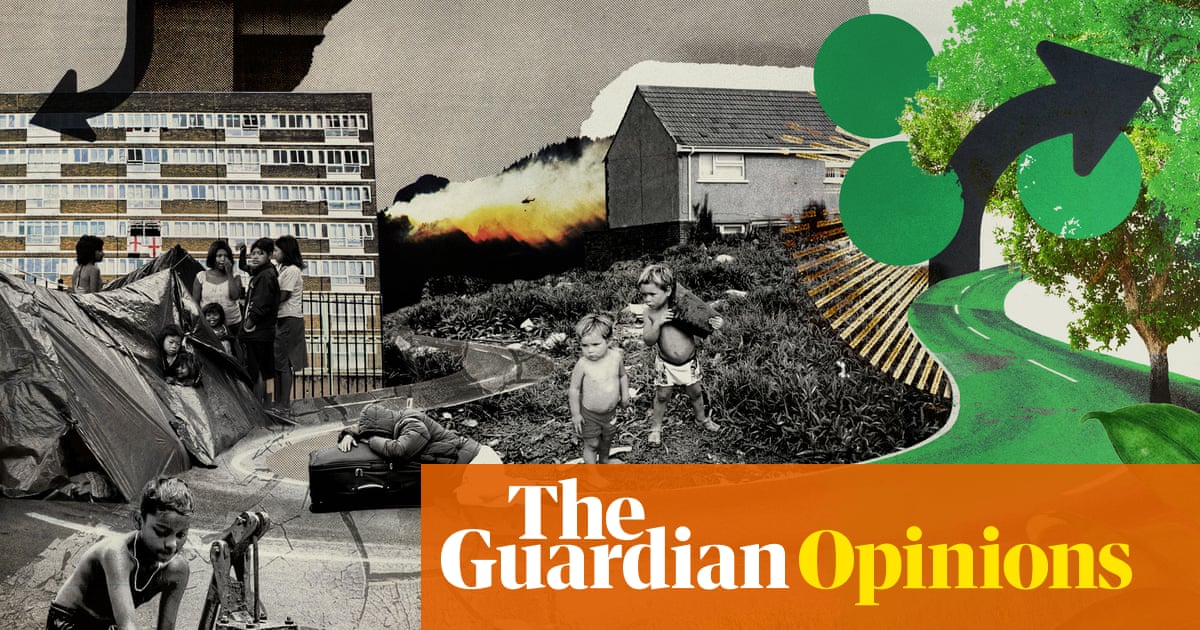
The piece says poverty and ecological breakdown come from the same growth-first model. Its answer is a policy reset centered on rights, public services, fair work, debt justice and limits set by the planet.
The article says a country does not get better just because it gets bigger, especially if the extra money goes to a few people. It is like trying to fill a bucket with holes: the writers want to fix the holes with fair pay, public help and cleaner rules.
Analysis
Core argument
The authors say poverty is not an unavoidable fact of life but the result of policy choices. In their view, decades of relying on economic growth to spread prosperity have not delivered the promised gains: wages have lagged, work has become more insecure, public services have been cut back, and wealth has concentrated at the top.
They also argue that the same model is colliding with environmental limits. The article links rising emissions, biodiversity loss, droughts, floods and heatwaves to an economy built around endless expansion on a finite planet. Growth, they say, has been separated from shared prosperity and made ecologically unsustainable.
What they propose
The authors point to a “roadmap for eradicating poverty beyond growth,” developed over 18 months with more than 400 participants from UN agencies, governments, academic institutions, unions, civil society groups and grassroots movements. The roadmap is presented as a shared framework rather than a narrow expert blueprint.
Its policy direction is broad: decent work and employment guarantees, living wages, stronger unions, workplace democracy, anti-discrimination measures, and greater recognition of paid and unpaid care work. It also calls for universal public investment in children, housing, health, education and transport, along with public control of strategic assets and credit guidance that steers investment toward social and ecological priorities.
Global constraints
The article says any serious anti-poverty strategy must also change global rules. It argues that countries in the global south are squeezed by sanctions, restrictive trade rules, unequal exchange and debt burdens rooted in colonial history. The authors cite a figure that about 3.4 billion people live in countries spending more on debt service than on healthcare or education.
Their answer includes debt justice, south-south cooperation, reparative climate finance and social protection floors. They also stress that people living in poverty should help design and monitor anti-poverty policy, and they welcome “beyond GDP” indicators as part of the shift away from growth as the main measure of success.
Key points
- The authors say growth has not delivered shared prosperity or solved poverty.
- They argue endless expansion is incompatible with a finite planet.
- A new roadmap was shaped by more than 400 participants and has more than 350 signatories.
- The plan emphasizes living wages, stronger unions, public services and recognition of care work.
- They call for debt justice, climate finance and broader beyond-GDP measures.
If policymakers take the roadmap seriously, governments could reduce poverty by raising wages, strengthening public services and protecting workers more directly. The article also suggests that debt relief, climate finance and broader measures of progress could give poorer countries more room to choose their own path.
If leaders keep treating growth as the main goal, the article argues that inequality, insecure work and unaffordable housing will persist. It also warns that a growth-only model will keep pushing emissions and biodiversity loss in the wrong direction, especially for people already facing poverty.