‘We now live without this violence’: the Colombian farmers giving up coca for palm oil
Colombian smallholder farmers in San Pablo are transitioning from illicit coca cultivation to growing oil palm, driven by government subsidies and a reduction in armed conflict. This shift is improving their safety and economic stability.
Intelligence analysis by Gemini 2.5 Flash
For decades, farmers in regions like San Pablo, Colombia, were entangled in the dangerous coca trade due to economic necessity and the pervasive influence of armed groups. Now, supported by public policy offering subsidies and technical assistance, many are successfully converting their land to oil palm, leading to a significant revitalization of the local economy and a marked decreas…
Imagine a farmer who used to grow a special plant that made people sick and caused a lot of trouble and danger in his village. It was the only way to make money, but everyone was scared. Now, with help from the government, he's growing a different plant, a palm tree, that makes oil for food and other things. It's safe, brings peace, and helps him earn enough money to send his kids to college and buy a house, making his whole village much happier and safer.
Analysis
The transformation in Colombia's agricultural landscape, particularly in areas previously dominated by coca cultivation, represents a significant shift in both economic strategy and social well-being. The government's long-standing policy, initiated in 1995, to replace coca with alternative crops like cacao and oil palm is now showing tangible results, especially with renewed political will under President Abelardo de la Espriella.
Yoger Payares
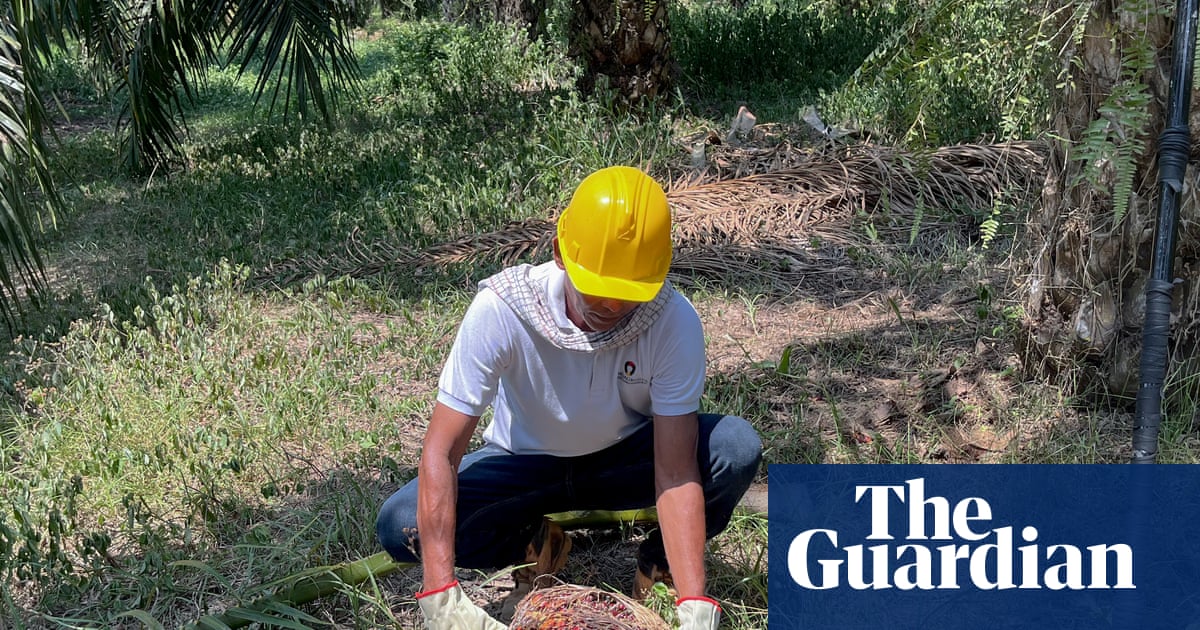
Yoger Payares' personal narrative encapsulates the broader struggle and eventual triumph of many Colombian farmers. For over a decade, Payares was deeply involved in growing coca, a decision born out of economic necessity in a region where it was the primary source of income. He describes the coca boom as an "easy way to make money" that solved immediate financial problems, despite the constant fear and violence associated with the illicit trade.
His transition to oil palm cultivation has brought profound changes, not just economically but also in terms of personal safety and family prospects. Payares now lives without the pervasive threat of armed groups, enjoying a calmer existence. The economic stability provided by palm oil has enabled his children to attend university, and he has acquired significant assets like a house and a truck, achievements he once thought impossible.
San Pablo
The village of San Pablo serves as a microcosm of this national transformation, with 275 smallholder oil palm growers out of a population of nearly 30,000. The shift away from coca has been instrumental in revitalizing the local economy, creating legitimate jobs, and improving food security for residents. Camilo Santos of the Roundtable on Sustainable Palm Oil notes that nearly 90% of San Pablo’s oil palm growers are now independent smallholders, underscoring the community-led nature of this economic pivot.
This collective effort has not only brought stability but also attracted workers from neighboring regions, further boosting the local economy. The reduction in violence, previously fueled by the conflict between armed groups like Farc and ELN and the drug trade, has allowed communities to rebuild and invest in their future without the constant threat of reprisal or kidnapping.
609,142 Hectares
Colombia's commitment to oil palm is evident in its national statistics, with 609,142 hectares planted in 2024, marking a 2.2% increase from the previous year. This makes Colombia the largest oil palm producer in Latin America, with the crop now rivaling coffee in terms of planted area. The demand for palm oil, coupled with Colombia's tropical climate, positions it competitively against global giants like Indonesia and Malaysia.
However, this growth is not without its challenges, particularly concerning sustainability. While many producers are seeking environmental certifications and using satellite monitoring to combat deforestation, experts like Arturo Garcia of Econometria raise concerns about the potential for monoculture. This practice can lead to negative environmental impacts, including the spread of pests, reduced biodiversity, and risks to food security, especially during periods of falling international prices. Despite these concerns, the commitment to sustainable practices, driven by market demands from regions like Europe, suggests an irreversible trend towards more responsible cultivation.
Key points
- Colombian farmers in San Pablo are transitioning from growing coca leaves to cultivating oil palm trees.
- Government subsidies, technical support, and tax discounts are key drivers for this agricultural shift.
- The move has significantly reduced violence and fear, improving the safety and economic well-being of smallholders.
- Colombia is Latin America's largest oil palm producer, with 609,142 hectares planted in 2024.
- Concerns remain about the environmental impact of monoculture and the potential for income instability due to fluctuating international prices.
The successful transition of farmers from coca to palm oil cultivation promises enhanced safety and economic stability for communities previously plagued by violence and illicit trade. Continued government support and market demand for sustainably produced palm oil could further solidify these gains, fostering long-term regional development and improved livelihoods.
Despite the positive economic shift, the expansion of palm oil cultivation raises environmental concerns, particularly regarding monoculture, deforestation, and biodiversity loss. A reliance on a single crop also exposes farmers to the volatility of international prices, potentially jeopardizing their income stability if global demand or prices decline.