Wes Moore & Kevin Stitt say civility can win general elections, but primaries are the problem
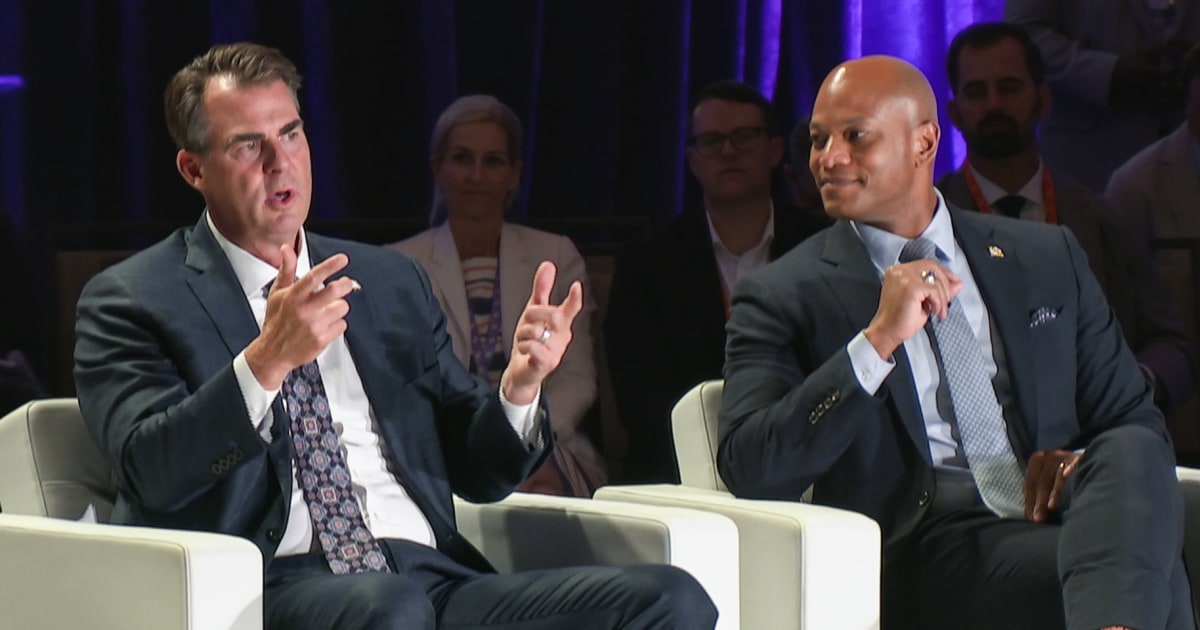
Oklahoma Gov. Kevin Stitt and Maryland Gov. Wes Moore blame partisan primaries for making politics more extreme and call for bringing back 'dignity' in politics and government.
Intelligence analysis by Llama
Two governors, Kevin Stitt and Wes Moore, argue that partisan primaries are the root of the problem in politics, leading to more extreme candidates and a lack of dignity in government. They suggest that civility can win general elections, but the primaries are where the issue lies.
Two governors, Kevin Stitt and Wes Moore, are talking about how politics can be more civil and less divisive. They think that social media is making it harder for people to talk to each other and agree on things. They want to find ways to make politics more about solving problems and less about arguing with each other.
Analysis
A Call for Civility in Politics
The recent conversation between Oklahoma Gov. Kevin Stitt and Maryland Gov. Wes Moore at the National Governors Association summer meeting in Oklahoma City has sparked a much-needed discussion about the state of politics in the United States. The two governors, who come from different parties, have called for a return to civility in politics and government, arguing that partisan primaries are the root of the problem.
According to Stitt, the most extreme candidate in a partisan primary is often the one who wins. He used himself and Moore as examples, pointing out that the danger to Moore is that he will get outflanked on his left, while the danger to Stitt is that he will get outflanked on his right. This, he argues, is a result of the hyperbolic and hyperpolitical nature of modern politics.
Moore agrees with Stitt's assertion, pointing out that the vast majority of people in the country do not define themselves as Democrats or Republicans first. Instead, they are more concerned with issues like improving education, infrastructure, healthcare, and the economy. However, he also notes that the people who want to center their time on dividing us and using hyperbolic language will quickly find themselves on an island by themselves.
The two governors also discussed the role of social media in contributing to the polarization of politics. Stitt noted that it's easy to take shots at people on the other side, and that this is a societal problem that needs to be addressed. Moore added that in Maryland, lawmakers are taking steps to ban phones from K-12 schools during the school day and to ban AI-generated content in political advertising.
The conversation between Stitt and Moore highlights the importance of civility in politics and the need to address the issue of partisan primaries. By calling for a return to dignity in politics and government, they are urging politicians to focus on the issues that matter most to the people, rather than engaging in hyperbolic and divisive rhetoric.
The Role of Social Media in Polarization
The conversation between Stitt and Moore also touched on the role of social media in contributing to the polarization of politics. Stitt noted that social media makes it easy to take shots at people on the other side, and that this is a societal problem that needs to be addressed. Moore added that in Maryland, lawmakers are taking steps to ban phones from K-12 schools during the school day and to ban AI-generated content in political advertising.
This is a critical issue, as social media has become a major driver of polarization in politics. By allowing people to engage in hyperbolic and divisive rhetoric, social media platforms are contributing to the breakdown of civil discourse. It's time for politicians and policymakers to take action and address this issue head-on.
The Importance of In-Person Connection
The conversation between Stitt and Moore also highlighted the importance of in-person connection in politics. Moore noted that he is considering how to have honest, truthful conversations with people about how to lead the country forward. This is a critical issue, as in-person connection is essential for building trust and fostering civil discourse.
By engaging in in-person conversations, politicians can build relationships with people and understand their concerns. This, in turn, can help to build trust and foster a sense of community. It's time for politicians to put down their phones and engage in in-person conversations with the people they serve.
Key points
- Oklahoma Gov. Kevin Stitt and Maryland Gov. Wes Moore blame partisan primaries for making politics more extreme.
- They call for a return to civility in politics and government.
- The two governors argue that social media contributes to polarization and that in-person connection is essential for building trust and fostering civil discourse.
- They suggest that politicians should focus on solving problems rather than engaging in hyperbolic and divisive rhetoric.
If the governors' call for civility in politics is heeded, it could lead to more constructive dialogue and a greater focus on solving problems. This, in turn, could lead to more effective governance and a more united country.
If the trend of partisan primaries continues, it could lead to more extreme candidates and a further breakdown of civil discourse. This, in turn, could lead to more polarization and a greater sense of division in the country.