Western island reclamation will create space for industries, low-carbon energy sources: Analysts
Singapore plans to merge several western islands into a new offshore hub for industry, energy and defence, analysts told The Straits Times. The reclaimed land could host low-carbon energy systems, including potentially nuclear power, while supporting Jurong Island.
Intelligence analysis by Llama
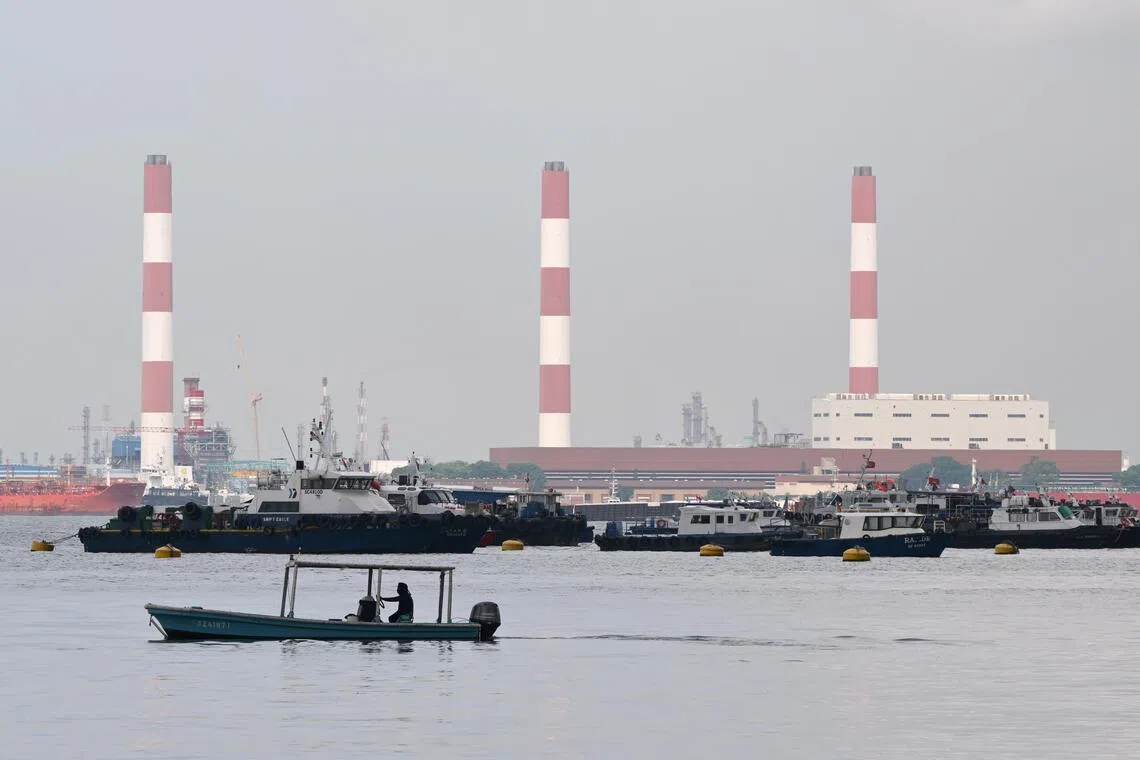
Following PM Lawrence Wong's National Day Rally announcement, analysts say merging Pulau Semakau, Pulau Bukom and Pulau Sudong into one new island gives Singapore room to build an integrated low-carbon energy hub without using scarce mainland land, with nuclear among the options still under study.
Singapore is going to scoop up sand and dirt to make a brand-new island by joining a few small islands together. The new island will be far from people's homes, so it can be a place for big factories and clean power, maybe even nuclear, without crowding anyone. It's like saving a big empty plot of land for a future playground nobody has invented yet.
Analysis
Pulau Semakau, Pulau Bukom and Pulau Sudong
The three islands flagged for merging sit in a cluster south of Jurong Island, Singapore's existing energy and chemicals hub, and they form a contiguous offshore canvas that planners could not assemble on the mainland. The Straits Times reports that analysts view the resulting landmass as a chance to build, from scratch, an integrated energy hub where gas, low-carbon fuels, electricity imports, storage, renewables and potentially nuclear can co-locate, according to Matthew Chew, nuclear competency and strategy lead at engineering consultancy HY. That blank-slate quality matters: Tan-Soo Jie Sheng, director of the Institute for Environment and Sustainability at the Lee Kuan Yew School of Public Policy, said western Singapore's industrial footprint is largely committed, and that future industries will need large, contiguous sites with direct maritime access, exactly what an offshore island provides. Sing Tien Foo, NUS Business School's provost chair professor of real estate, added that isolating heavy and precision manufacturing offshore also buffers residential estates from fire, pollution and other operational risks.
60-year land commitment for nuclear
Chew told ST that one factor making the offshore site a strong nuclear candidate is the long horizon over which a reactor ties up land, roughly 60 years or more under typical siting assumptions. That duration is a poor match for land-scarce Singapore, but a feasible one on a purpose-built island. Seawater access also shortens the cooling-water conveyance distance, addressing a chronic constraint for tropical coastal reactors. The analysts were careful, however, to stress that nuclear is not the stated purpose of the reclamation: Singapore has not decided on the power source and continues to study it as one of several low-carbon alternatives. Benjamin Chang, energy and power leader at Marsh Asia, framed the broader logic as building resilience through options rather than commitments, a deliberate strategy of acquiring flexibility before it is needed.
2050 and 2070 demand planning
Tan-Soo made a historical comparison that anchors the long view: planners in earlier decades could not have predicted the present scale of data-centre and digital-infrastructure demand, and today's planners face the same uncertainty about 2050 or 2070. The new island, in this framing, is an insurance policy against that uncertainty, a place where hydrogen and ammonia activities, advanced manufacturing, and large-scale energy infrastructure can be sited without displacing existing communities or locking the country into a single technology path. The article also flags the trade-offs: high reclamation costs, environmental impact, and restrictions near military areas will all shape what can actually be built. The reclamation timeline runs into the coming decades, meaning the policy choices made now will define the physical and economic options available to the next generation of Singapore planners.
Key points
- PM Lawrence Wong announced the western island plan at the National Day Rally on Aug 23, with reclamation expected over the coming decades.
- The new island will merge Pulau Semakau, Pulau Bukom and Pulau Sudong, south of Jurong Island, creating contiguous land for industry and energy.
- Analysts say the site could host an integrated low-carbon energy hub, with nuclear as one possible option, though no decision has been made.
- Offshore siting offers seawater access for cooling, physical buffers from residential areas, and freedom from mainland land constraints.
- Key challenges include high costs, environmental impact, and restrictions near military zones.
If executed well, the offshore hub could anchor Singapore's transition to a diversified, low-carbon energy mix while protecting residential areas from industrial risks. The flexibility to host future technologies, from hydrogen to advanced nuclear designs, positions the country to capture high-value-add manufacturing investment as global supply chains decarbonise.
Reclamation of this scale is expensive, slow, and environmentally contentious, and restrictions near military installations may limit usable footprint. The long lead time also means the project could be overtaken by faster, cheaper low-carbon alternatives, leaving Singapore with stranded infrastructure costs if nuclear and other large-scale options fail to mature as hoped.