What Ancient Greek Is Good For
A classics professor recalls a mechanic who read Thucydides on the job, sparking a question: what good will studying ancient Greek do? The author reflects on the value of classical education in the age of AI.
Intelligence analysis by Llama
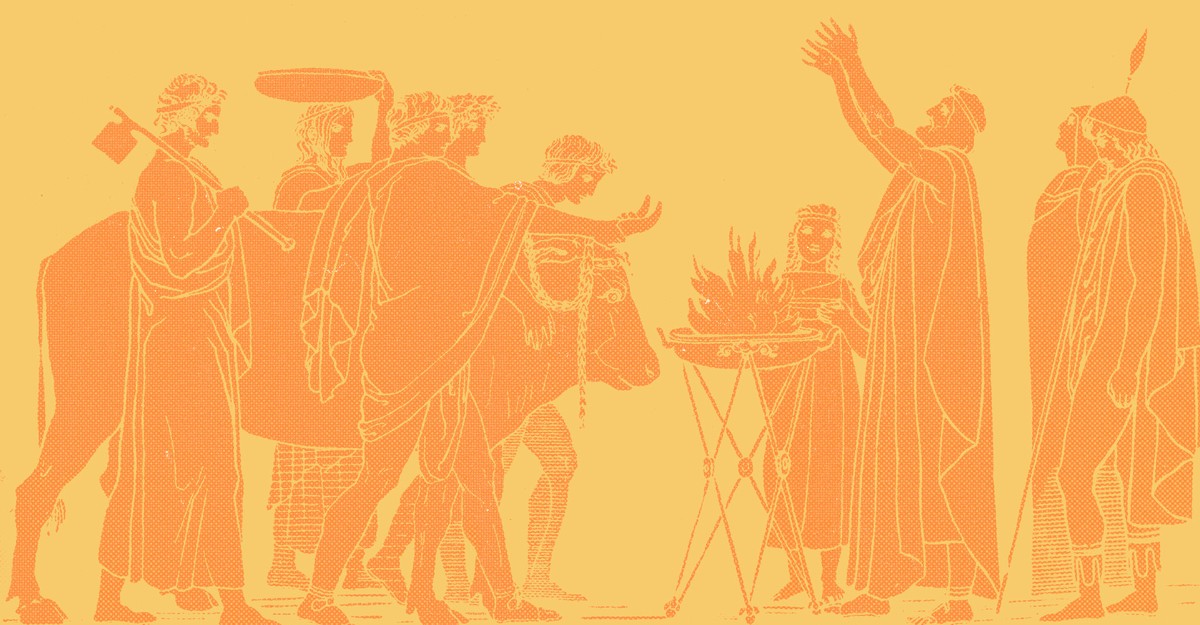
The article explores the value of classical education in the age of AI, using the example of a mechanic who read Thucydides on the job. The author argues that classical education is not just about developing a rarefied skill, but about becoming a certain kind of person.
Imagine you're a mechanic who reads Thucydides on the job. You're not just reading for fun, you're reading to think. That's what studying ancient Greek can do for you - it can help you develop a certain kind of thinking and a certain kind of character.
Analysis
A $60B Vote of Confidence
The article begins with a story about a classics professor who met a mechanic who read Thucydides on the job. The professor asked the mechanic what good studying ancient Greek would do him, and the mechanic replied that it made him think. This story sets the tone for the rest of the article, which explores the value of classical education in the age of AI.
The author notes that the study of classical languages has fallen out of favor in recent years, as the focus has shifted to more practical fields like economics and computer science. However, the author argues that classical education is not just about developing a rarefied skill, but about becoming a certain kind of person.
The author cites the example of a student who spent four years studying ancient Greek and philosophy, only to find that the skills she developed were not as valuable in the job market as she had hoped. However, the author argues that the student's education was not a waste, because it helped her to develop a certain kind of thinking and a certain kind of person.
The article also explores the idea that classical education is not just about the content of the curriculum, but about the process of learning itself. The author notes that the study of classical languages requires a certain kind of discipline and rigor, and that this discipline and rigor can be beneficial in many areas of life.
Overall, the article argues that classical education is not just about developing a skill, but about becoming a certain kind of person. It is about developing a certain kind of thinking and a certain kind of character, and it is about learning to approach problems and challenges in a certain way.
Why Classicists Are Right
The article argues that classicists are right to defend the value of classical education, even in the age of AI. The author notes that the study of classical languages requires a certain kind of discipline and rigor, and that this discipline and rigor can be beneficial in many areas of life.
The author also notes that the study of classical languages can help to develop a certain kind of thinking and a certain kind of character. The author argues that this kind of thinking and character is valuable in many areas of life, and that it is not just about developing a rarefied skill.
The Road Ahead
The article concludes by noting that the study of classical languages is not just about the content of the curriculum, but about the process of learning itself. The author argues that the discipline and rigor required to study classical languages can be beneficial in many areas of life, and that it can help to develop a certain kind of thinking and a certain kind of character.
Key points
- The study of classical languages is not just about developing a rarefied skill, but about becoming a certain kind of person.
- Classical education can help to develop a certain kind of thinking and a certain kind of character.
- The discipline and rigor required to study classical languages can be beneficial in many areas of life.
- The study of classical languages is not just about the content of the curriculum, but about the process of learning itself.
If we continue to value classical education, we may find that it becomes more relevant and useful in the age of AI. We may discover that the skills and knowledge we gain from studying classical languages are not just about developing a rarefied skill, but about becoming a certain kind of person.
If we continue to prioritize practical fields like economics and computer science over classical education, we may find that we are losing something valuable. We may discover that the discipline and rigor required to study classical languages is not just about developing a skill, but about developing a certain kind of thinking and a certain kind of character.