What AQI Readings Really Mean
The air quality index (AQI) is a weather metric for the age of wildfires, but its forecasts can be slow and imprecise, and its particulars don't always have a bearing on direct experience. The AQI's color-coded warnings are useful only in the broadest sense, and the syste…
Intelligence analysis by Llama
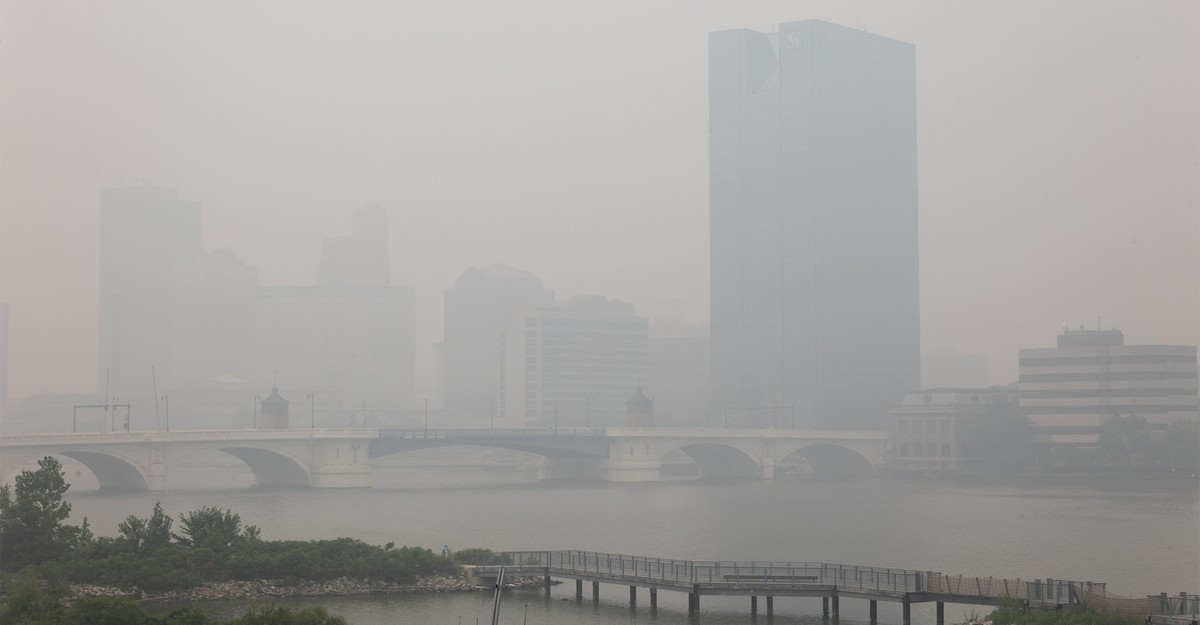
The air quality index (AQI) is a flawed system that can be slow and imprecise, and its particulars don't always have a bearing on direct experience. The AQI's color-coded warnings are useful only in the broadest sense, and the system has several problems, including inconsistent forecasts and a lack of standardization across weather apps and news reports.
The air quality index (AQI) is a tool that helps us understand how clean or dirty the air is. But it's not perfect, and it can be hard to know what the numbers really mean. Imagine you're trying to figure out if it's safe to go outside when there's smoke in the air. The AQI can give you a warning, but it's not always clear what that warning means. It's like trying to read a map that's not very clear. We need to find a better way to understand the air quality index so we can stay safe.
Analysis
The Flaws of the AQI System
The air quality index (AQI) is a weather metric for the age of wildfires, but its forecasts can be slow and imprecise, and its particulars don't always have a bearing on direct experience. The AQI's color-coded warnings are useful only in the broadest sense, and the system has several problems, including inconsistent forecasts and a lack of standardization across weather apps and news reports.
The Problem of Mixed Pollutants
The AQI system focuses on whichever pollutant has a concentration that most exceeds the standards, and disregards the rest. This can lead to a situation where a higher AQI score corresponds to a lower risk of health effects. For example, if there was enough nitrogen dioxide on Monday for an AQI score of 105 and enough ozone for a score of 103, our air-quality reports would give only the former number: 105. But on Tuesday, if the nitrogen dioxide held at 105, while ozone levels dropped to 30, the resulting AQI report would look the same as it had the day before—again, 105—even if the air felt much better in the lungs of a person with asthma.
The Need for Standardization
AQI reporting isn't standardized across weather apps and news reports. In some places, you might see the measure as a total average for the day; in others, you'll get a moving average (known officially as NowCast) that tries to show you how air quality is changing by the hour; still others, such as the basic weather app on my Google phone, offer up a mysterious hybrid of the two. This lack of standardization makes it difficult for the public to make sense of the information, and even for people in the field to understand the range of AQI reports.
Key points
- The air quality index (AQI) is a flawed system that can be slow and imprecise.
- The AQI's color-coded warnings are useful only in the broadest sense.
- The system has several problems, including inconsistent forecasts and a lack of standardization across weather apps and news reports.
- AQI reporting isn't standardized across weather apps and news reports.
- The AQI system focuses on whichever pollutant has a concentration that most exceeds the standards, and disregards the rest.
If the air quality index (AQI) is improved, it could lead to better health outcomes for people who are sensitive to air pollution. This could be achieved through the development of more accurate and standardized AQI systems, as well as increased public awareness and education about air quality.
If the air quality index (AQI) is not improved, it could lead to increased health risks for people who are sensitive to air pollution. This could be due to the continued use of flawed and inconsistent AQI systems, as well as a lack of public awareness and education about air quality.