What are your retro game consoles worth?
Old game consoles can be worth far more than expected depending on condition, model variant, and rarity. A standard NES trades around $82 loose, while a Nintendo PlayStation prototype sold for $360,000 in 2020.
Intelligence analysis by Llama
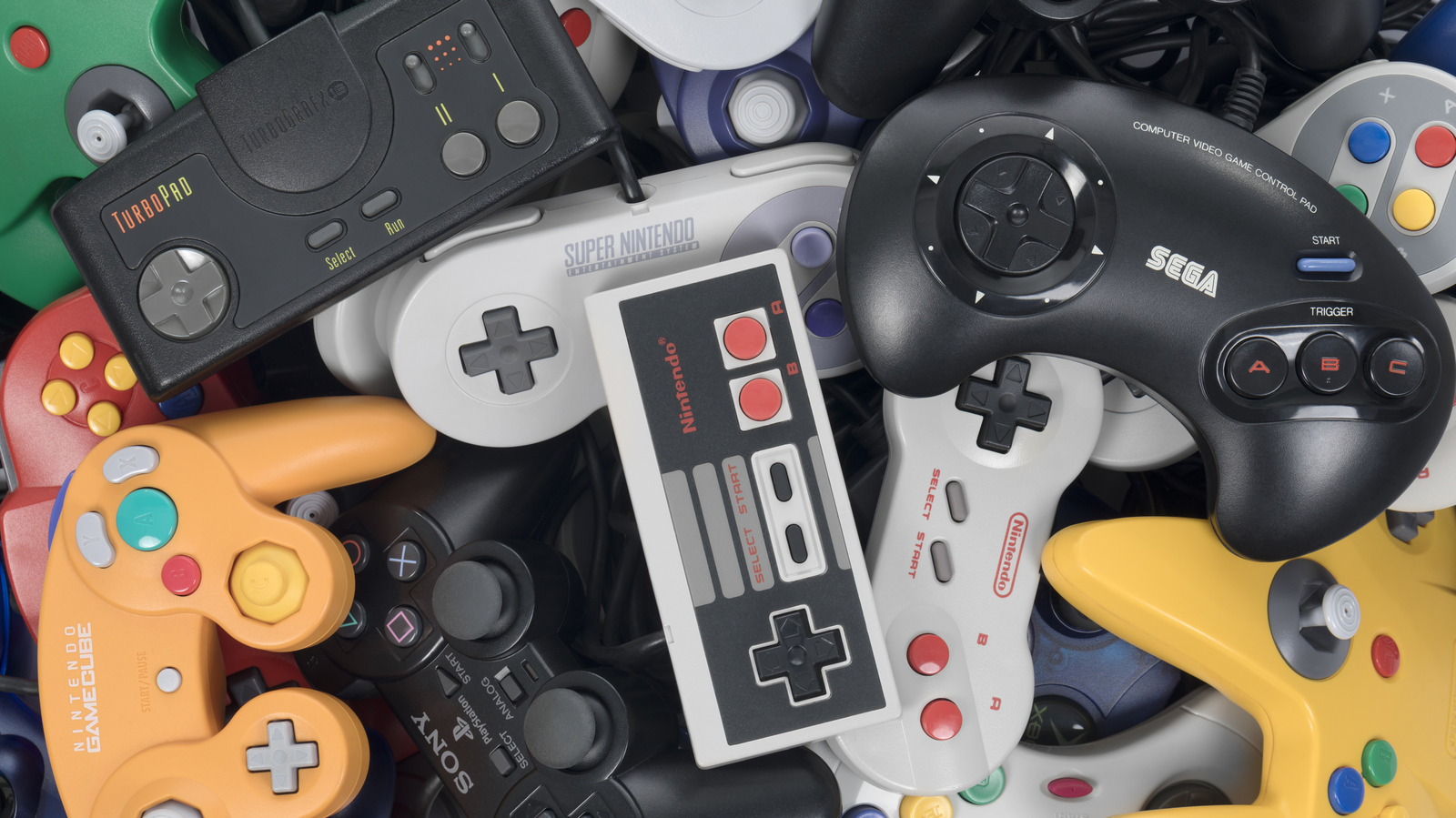
Retro gaming hardware values depend heavily on condition, specific model revisions, and scarcity rather than age alone. A standard NES trades around $82 loose, while the Nintendo PlayStation prototype commanded $360,000 at auction in 2020.
Old game machines from decades ago can sometimes be worth real money, especially if they still have the original box, controllers, and cables. One super-rare console that was never sold in stores once sold for $360,000, which is enough to buy a small house in some places.
Analysis
PriceCharting's $82 NES
The article leans on PriceCharting's market data to ground its valuations in completed transactions rather than the aspirational asking prices that have always polluted eBay. The website's current estimate for a standard Nintendo Entertainment System sits at around $82 loose, $295 complete, and roughly $1,209 new-in-box, figures that translate into hundreds of dollars of swing based on nothing more than which cables and cardboard survived. A boxed NES Action Set, complete with two controllers and a Zapper, sold for $395 on eBay, demonstrating that mid-tier bundles can land well above the loose price without reaching the stratospheric "new" tier.
That said, PriceCharting itself does not guarantee any individual console will fetch its listed market estimate. The article is right to point readers toward recent completed sales of comparable hardware as the better reality check, since the gap between asking and clearing prices on eBay can be vast. Functionality, the piece emphasizes, matters even more than accessories: a console that boots cleanly is dramatically easier to value than an untested one whose owner merely insists it worked "the last time."
The 60GB CECHA-01 Anomaly
Rarity alone does not explain retro pricing — sometimes the specific revision of a console is what does the work. The article uses the early PlayStation 3 60GB CECHA-01 to illustrate this, valued at roughly $374 loose and $650 complete, while later revisions carrying the same name sit much lower. The reason is functional: the CECHA-01 can play PlayStation 2 discs in a way that the slimmer models cannot, making it desirable to collectors who want one box to play multiple generations. The model number on the back sticker, the article advises, can matter more than the console name on the front.
The same dynamic plays out for the Sega Saturn, which fetches an estimated $185 loose and $270 complete in its North American release — multiples of the roughly $56 and $99 figures for an original PlayStation, despite both being fifth-generation contemporaries. Production volumes tell part of the Saturn's story, but the article is careful to warn that rarity does not automatically turn a commercial failure into a windfall. A Japanese Hello Kitty Dreamcast, by contrast, is priced at about $232 loose and $644 complete, showing that regional colorways and licensing tie-ins can also carry premium.
The $360,000 Nintendo PlayStation
The upper end of the prototype market is where the article's framing gets genuinely strange. The surviving Nintendo PlayStation — a one-off console from the cancelled 1990s collaboration between Nintendo and Sony on a CD-ROM add-on — drew a $300,000 winning bid at auction in 2020, with the buyer's premium pushing the final price to $360,000. That figure is not a market; it is an artifact, and the article is honest that the hardware was never meant for store shelves. Surviving development kits, pre-production units, and similar prototypes can number in the single digits, sometimes with only one known example.
For most readers, the practical takeaway sits closer to the Saturn and PS3 tier than to the Nintendo PlayStation. The article implicitly draws a triangle: routine consoles trade in the tens to low hundreds, rare revisions and regional editions push into the mid-hundreds to low thousands, and one-of-a-kind prototypes operate in a category where normal pricing logic does not apply. Anyone pricing an old console should be honest about which corner of that triangle their hardware actually occupies before listing it.
Key points
- PriceCharting values a standard NES at roughly $82 loose, $295 complete, and $1,209 new
- Original accessories, packaging, and tested functionality are the biggest drivers of console value
- Specific model revisions like the PS3 60GB CECHA-01 can command premiums over later versions because they play PS2 discs
- A Japanese Hello Kitty Dreamcast is estimated at about $232 loose and $644 complete
- The one-of-a-kind Nintendo PlayStation prototype sold for $360,000 at auction in 2020
Increased awareness of what drives retro console values — packaging, model revisions, working condition — could push more sellers to preserve and properly document old hardware rather than treating it as junk. That, in turn, deepens the pool of verified completed sales that the article recommends as the better reality check, making the market easier to navigate for casual sellers and serious collectors alike.
The article's warning about wildly optimistic eBay asking prices suggests a persistent risk of disappointment for sellers who anchor on aspirational listings rather than comparable completed sales. Functionality and verified provenance remain the harder lift, and untested machines routinely trade at deep discounts. The Nintendo PlayStation tier is so thinly traded that ordinary owners have essentially no realistic upside to chase.