What does China’s submarine missile test mean for its nuclear triad expansion?
China's recent submarine-launched ballistic missile test, its first known since 1982, publicly demonstrated its sea-based nuclear deterrent, signaling strategic intent to the US and regional neighbors.
Intelligence analysis by Gemini 2.5 Flash
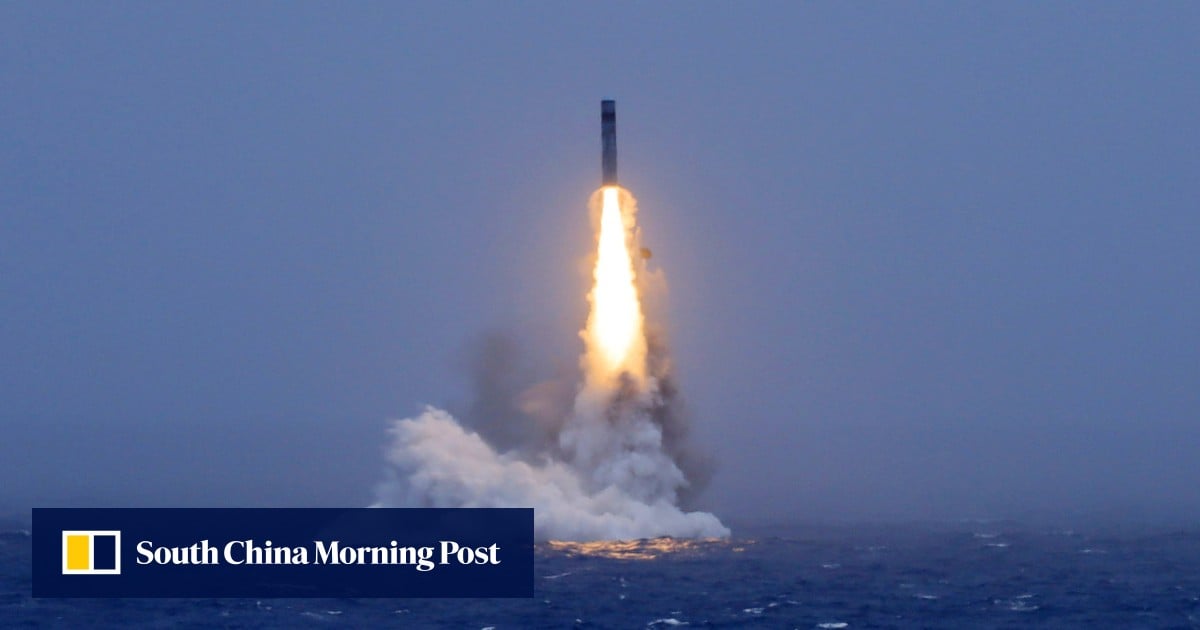
China conducted a rare submarine-launched ballistic missile test into the Pacific, showcasing the operational readiness of its sea-based nuclear deterrent. This move is interpreted by analysts as a strategic signal to the United States and Asia-Pacific nations, reinforcing Beijing's drive to establish a complete nuclear triad and likely prompting increased defense investment among US …
Imagine a country wants to show it has a super-secret, powerful shield that can strike back if it's ever attacked. China just showed off a part of its underwater shield by launching a big rocket from a submarine, proving it works. This tells other countries, especially its neighbors, that China is serious about its defense, like a big kid showing off a new, strong toy.
Analysis
Signaling Strategic Intent
The recent submarine-launched ballistic missile (SLBM) test by China, its first publicly acknowledged since 1982, represents a significant strategic communication rather than merely a technical exercise. According to Zhao Tong, a senior fellow at the Carnegie Endowment for International Peace, "This missile test appears to have been intended more for strategic signalling than for technical experimentation or operational development." This public demonstration confirms a capability long understood but never before showcased, underscoring Beijing's resolve and the maturity of its undersea deterrent.
The primary audience for this signal includes the United States and key regional neighbors, notably Japan. By openly demonstrating its sea-based nuclear capabilities, China aims to project strength and deter potential adversaries, particularly in the context of rising tensions in the Asia-Pacific. This move serves as a clear message about China's growing military prowess and its commitment to safeguarding its national interests through a robust nuclear posture.
Bolstering the Nuclear Triad
The SLBM launch is a crucial step in China's ongoing efforts to establish a fully operational nuclear triad, encompassing land, sea, and air-based delivery systems. The sea-based component, specifically submarine-launched missiles, is considered the most survivable leg of a nuclear force, providing a cornerstone for a credible second-strike capability. This ensures that even if land-based assets are neutralized in a first strike, China retains the ability to retaliate, thereby enhancing its overall nuclear deterrence.
This development follows a similar public announcement nearly two years prior regarding a land-based intercontinental ballistic missile launch into the Pacific. The sequential public demonstrations of different legs of its nuclear triad indicate a deliberate and transparent strategy by Beijing to showcase its comprehensive nuclear modernization program. This transparency, while intended to deter, also inevitably raises concerns among other nations about the pace and scope of China's military expansion.
Regional Repercussions and Responses
The strategic signal sent by China's SLBM test is expected to have tangible repercussions across the Asia-Pacific region and in Washington. Analysts anticipate that the test will "reinforce calls in Washington and among US allies for greater defence investment and closer security coordination." Countries like Australia, Japan, and New Zealand, which received advance notification of the launch, are likely to view this development with heightened concern, potentially leading to accelerated defense modernization efforts.
The increased militarization and strategic posturing by China could contribute to an arms race dynamic in the region, as neighboring countries and US allies seek to counter Beijing's growing capabilities. This could manifest in increased defense budgets, enhanced military exercises, and stronger security alliances, further complicating the already intricate geopolitical landscape of the Indo-Pacific. The test, therefore, not only demonstrates China's capabilities but also shapes the future security architecture of the region.
Key points
- China conducted its first known submarine-launched ballistic missile (SLBM) test since 1982.
- The test publicly demonstrated the operational readiness of China's sea-based nuclear deterrent.
- It serves as a strategic signal to the United States and regional neighbors, particularly Japan.
- The launch reinforces China's drive to establish a fully operational nuclear triad (land, sea, air).
- Analysts suggest the test will likely prompt increased defense investment and security coordination among US allies.
The test is likely to reinforce calls in Washington and among US allies for greater defense investment and closer security coordination, potentially leading to an arms race or increased militarization in the Asia-Pacific. This could further heighten regional tensions and instability, making diplomatic solutions more challenging.
