What Happens When AI Investment 'Cools Down'? Nikkei Average's Temporary Drop Below 60,000 Yen and the Post-Midterm Election Anomaly
The Nikkei 225 briefly dropped below 60,000 yen on November 6th, attributed to concerns over a slowdown in AI investment following a significant Democratic Party win in the US midterm elections. Experts are analyzing the impact of political factors and the mid-to-long ter…
Intelligence analysis by Gemini 2.5 Flash
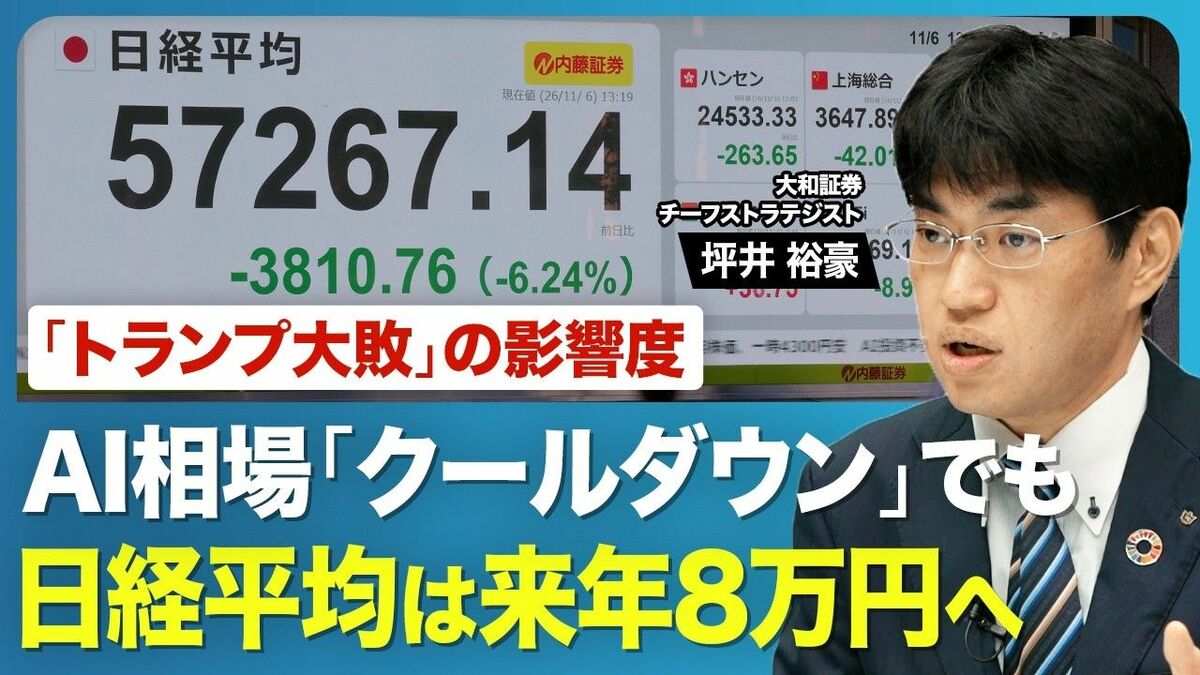
The Japanese stock market experienced a notable dip, with the Nikkei 225 falling below 60,000 yen, driven by anxieties surrounding a potential "cool down" in AI-related investments. This sentiment emerged after the US midterm elections, prompting a re-evaluation of market trends, the future of data center companies, and broader stock market prospects.
Imagine the stock market is like a big game where people buy and sell shares of companies. Recently, the Japanese market, called the Nikkei, had a bit of a wobble, like when you almost trip. This happened because people got a little worried that investments in super-smart computer brains, called AI, might slow down after an election in America. Now, everyone is watching to see if the market will bounce back and if new types of companies will become popular.
Analysis
The recent volatility in the Japanese stock market, marked by the Nikkei 225's temporary dip below the 60,000 yen threshold on November 6th, signals a significant shift in investor sentiment. While the index recovered to the 60,000 yen level by November 10th, the underlying anxieties persist, primarily stemming from a perceived "cool down" in AI-related investments. This market movement is not attributed to systemic financial instability but rather to a re-evaluation of growth prospects in the technology sector, particularly after recent political developments in the United States. The market's reaction underscores the interconnectedness of global politics, technological trends, and national economic performance, making it a critical juncture for Japanese investors.
60,000 Yen
The Nikkei 225's brief fall below 60,000 yen on November 6th, reaching levels not seen since May, was a stark indicator of market apprehension. This sharp decline was characterized by a broad sell-off from the opening bell, reflecting widespread investor caution. Although the index quickly rebounded, the episode highlighted the fragility of current market valuations, especially those tied to high-growth technology sectors.
This market correction prompts a deeper look into the factors influencing investor behavior beyond immediate financial indicators. The article emphasizes that this was not a crisis rooted in financial system instability, differentiating it from past market crashes. Instead, it points to a more nuanced shift in investment strategy, where the exuberance around AI might be giving way to a more selective and cautious approach. The focus is now on understanding the longevity of this "cool down" and its broader implications for market dynamics.
Democratic Party
A significant victory for the Democratic Party in the recent US midterm elections is identified as a key catalyst for the "AI investment slowdown concern." This political outcome has fueled speculation about potential regulatory tightening on the technology sector, particularly concerning artificial intelligence. Such regulatory pressures could increase operational costs, limit innovation, or alter the competitive landscape for AI companies, thereby dampening investor enthusiasm. The article questions whether the historical "anomaly" of market behavior following midterm elections will hold true this time, suggesting that political shifts are now exerting a more direct and profound influence on market trends.
The prospect of increased government oversight introduces a new layer of uncertainty for investors who have heavily bet on the unbridled growth of AI. This political dimension suggests that future market performance will not solely depend on technological advancements or corporate earnings but also on the evolving regulatory environment. The shift in political power could lead to policies that prioritize social or ethical considerations over pure economic growth in the tech sector, fundamentally altering investment calculations.
Data Center Companies
The article posits that data center companies are entering an "era of selection," implying that investors will become more discerning in their choices within this critical infrastructure sector. As AI adoption matures and investment cools, not all data center providers may thrive equally. Companies demonstrating superior efficiency, strategic location, or specialized services for AI workloads are likely to be favored, while others might face increased pressure. This selective approach reflects a maturing market where differentiation and sustainable business models become paramount.
Furthermore, the analysis suggests a broadening of investment focus beyond core AI development and semiconductor firms to include companies that are "users" of AI. This shift indicates a recognition that the value of AI extends across various industries, not just its creators. As AI becomes more integrated into everyday business operations, companies effectively leveraging AI to enhance productivity, innovate products, or improve customer experiences could become the next wave of attractive investments, offering new avenues for market growth even amidst a "cool down" in direct AI infrastructure spending.
Key points
- Nikkei 225 temporarily fell below 60,000 yen on November 6th, recovering by November 10th.
- The decline is linked to concerns about a slowdown in AI investment following a US Democratic Party victory in midterm elections.
- Political factors, including potential regulation, are influencing the outlook for AI-related companies.
- Data center companies are entering a period of "selection," implying increased scrutiny and competition.
- The market may see a shift in focus towards companies that are "users" of AI technology.
The article suggests that while AI investment might cool down, the focus could shift to "user" companies of AI, broadening the market's growth drivers beyond just semiconductor and AI development firms. This diversification could lead to a more stable and resilient Japanese stock market in the mid-to-long term, as innovation spreads across various industries.
A significant Democratic Party victory in the US midterm elections could lead to increased regulation on AI, causing a more prolonged "cool down" in AI investment than anticipated. This political intervention might dampen the performance of AI and semiconductor-related companies, potentially leading to further volatility or stagnation for the Nikkei 225 if new growth drivers don't emerge quickly enough.
Market signals
- N225 The Nikkei 225 temporarily fell below 60,000 yen due to concerns over AI investment slowdown and political factors.
- AI-related companies Concerns about a 'cool down' in AI investment and potential regulation are impacting AI-related firms.
- Semiconductor companies The article highlights scrutiny on AI and semiconductor companies' performance amidst investment slowdown concerns.
AI-generated analysis of potential market relevance. Not financial advice.