What North Korea’s new warship reveals about Kim’s moves to secure surrounding waters
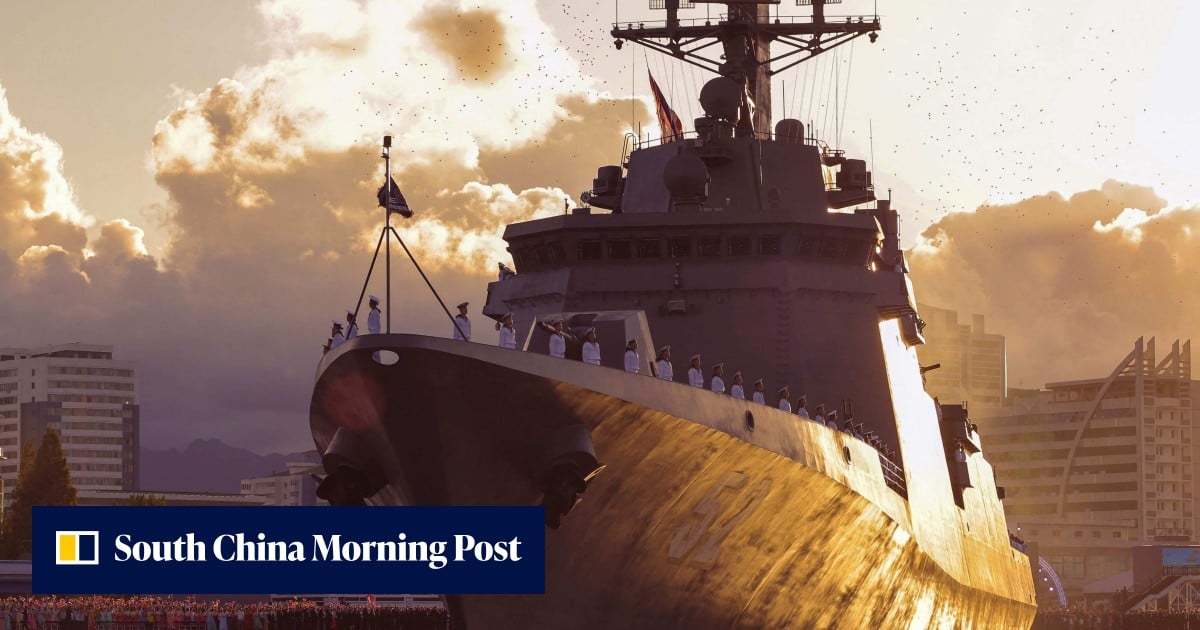
North Korea commissioned its second modern destroyer, the Kang Kon, with Kim Jong-un hinting at another major strategic naval asset to be unveiled in eight months, emphasizing the 'nuclearisation of our navy'.
Intelligence analysis by Gemini 2.5 Flash
North Korean leader Kim Jong-un recently launched a modern destroyer, the Kang Kon, and publicly stated plans to reveal another significant naval asset within eight months. This move, accompanied by rhetoric about the 'nuclearisation of our navy,' signals Pyongyang's intent to bolster its maritime defense and nuclear deterrence capabilities, aiming to intensify regional anxieties.
North Korea's leader, Kim, showed off a new big warship called the Kang Kon and said he'll show an even bigger, more powerful one in eight months. It's like a kid showing off a new toy car, then promising an even cooler robot in a few months, making other kids wonder what he's building next. He wants his country's navy to be super strong, especially with nuclear power, to make other countries worried.
Analysis
North Korea's recent commissioning of the Kang Kon destroyer, coupled with Kim Jong-un's explicit rhetoric regarding the "nuclearisation of our navy," marks a significant escalation in Pyongyang's military posturing. This development is not merely about adding a new vessel to its fleet but signals a strategic shift towards enhancing its maritime nuclear capabilities, a move designed to project power and deepen regional anxieties. The timing of this announcement, with a promise of further revelations in eight months, suggests a calculated long-term strategy to solidify North Korea's position as a nuclear-armed state with diversified delivery platforms.
Kang Kon
The commissioning of the Kang Kon, described as North Korea's second modern destroyer, represents a tangible step in the country's naval modernization efforts. While specific technical details of the vessel are not extensively provided in the article, its designation as a "modern destroyer" implies an upgrade in capabilities compared to older vessels in the North Korean fleet. This new warship is presented by Pyongyang as an integral component of its broader strategy to achieve the "nuclearisation of our navy," indicating its potential role in supporting or deploying nuclear deterrents.
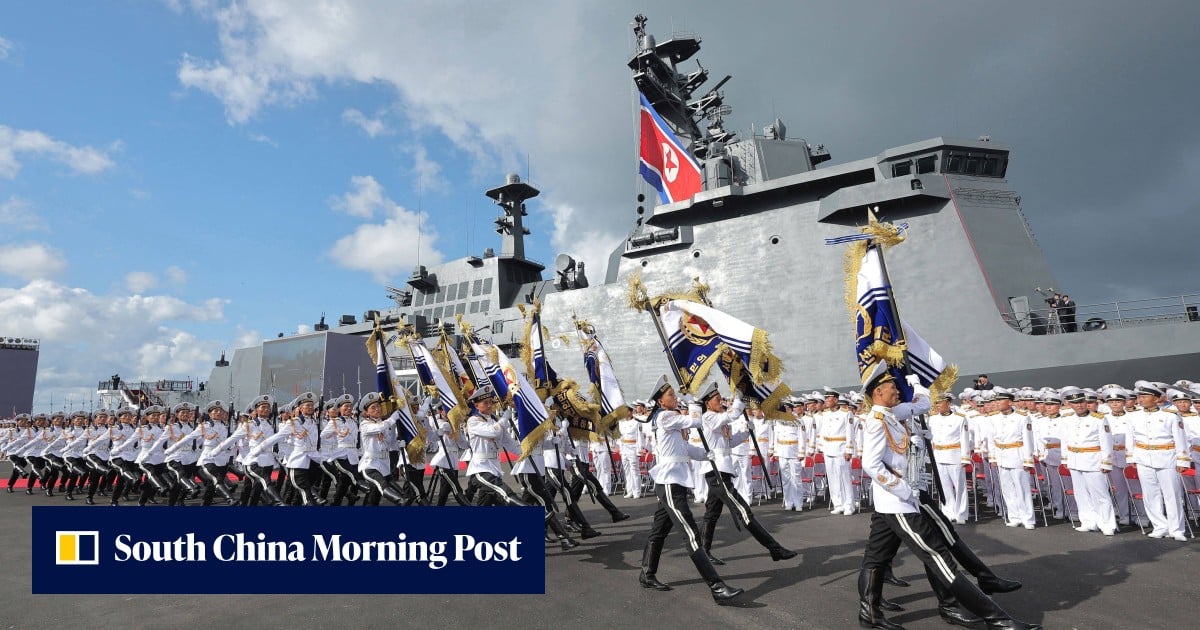
The launch ceremony, attended by Kim Jong-un and other senior officials, underscored the political and strategic importance North Korea places on this naval asset. The Kang Kon's deployment in the southeastern port of Wonsan suggests its intended operational area and its contribution to securing North Korea's surrounding waters. Its existence reinforces the regime's commitment to developing a robust naval presence capable of contributing to its overall defense and deterrence posture.
Kim Jong-un
North Korean leader Kim Jong-un's statements during the commissioning ceremony were highly assertive, directly linking the new destroyer to the country's nuclear ambitions. He declared that the "nuclearisation of our navy is being realised," emphasizing the goal of making its deterrent "increasingly suited, diversified and practical." This rhetoric highlights a clear intent to integrate nuclear capabilities more deeply into its naval forces, moving beyond land-based systems.
Kim's presence alongside his daughter, Kim Ju-ae, and other influential figures, also serves a symbolic purpose, projecting continuity and strength within the leadership. His explicit mention of making "our powerful and reliable nuclear war deterrent more clear" and deepening the "concerns of the enemies" leaves little doubt about the aggressive intent behind these military advancements. This public declaration aims to send a strong message to regional adversaries and the international community about North Korea's unwavering commitment to its nuclear program.
Eight Months
A particularly striking aspect of Kim Jong-un's address was his promise to unveil "important plans to strengthen our naval forces" to the world "eight months from now." This specific timeline has prompted observers to speculate about the nature of the next major strategic asset North Korea intends to reveal. Experts suggest that this could include a submarine capable of carrying submarine-launched ballistic missiles (SLBMs) or even a nuclear-powered submarine.
Such a development would represent a significant leap in North Korea's military capabilities, offering a more survivable second-strike option and complicating regional defense strategies. The eight-month window provides a clear, albeit vague, deadline for the international community to anticipate further advancements, intensifying regional tensions and potentially prompting counter-responses from neighboring countries and their allies. This strategic announcement underscores Pyongyang's methodical approach to military development and its desire to maintain a continuous state of readiness and perceived threat.
Key points
- North Korea commissioned its second modern destroyer, the Kang Kon, in the southeastern port of Wonsan.
- Kim Jong-un announced "important plans" to strengthen naval forces, to be unveiled in eight months.
- Kim emphasized the "nuclearisation of our navy" to make its deterrent "suited, diversified and practical."
- Experts speculate the next asset could be a submarine capable of carrying submarine-launched ballistic missiles (SLBMs) or a nuclear-powered submarine.
- The move is intended to deepen the "concerns of the enemies" and enhance maritime defense and war deterrence.
North Korea's continued development of nuclear-capable naval assets, as hinted by Kim, could significantly escalate tensions in Northeast Asia, leading to a regional arms race and increasing the risk of miscalculation or conflict. This aggressive posture could further isolate Pyongyang and complicate international efforts towards denuclearization.