What’s next for Democrats — in November and 2027: From the Politics Desk
Recent Democratic primaries have exposed deep divisions within the party, shaping midterm strategy and governing next year. Progressives rode a wave of energy to win in Michigan and Minnesota, but don't have an undeniable mandate within their party.
Intelligence analysis by Llama
The recent Democratic primaries have revealed deep divisions within the party, with progressives winning in Michigan and Minnesota but not having an undeniable mandate. This has led to some progressives tacking towards the center to appeal to swing voters.
Imagine you're playing a game with your friends, and you all have different ideas about how to play. That's kind of what's happening with the Democratic party right now. Some people want to play it safe and win over more friends, while others want to take risks and try new things. This is making it hard for the party to agree on what to do next.
Analysis
Progressive Energy in the Democratic Party
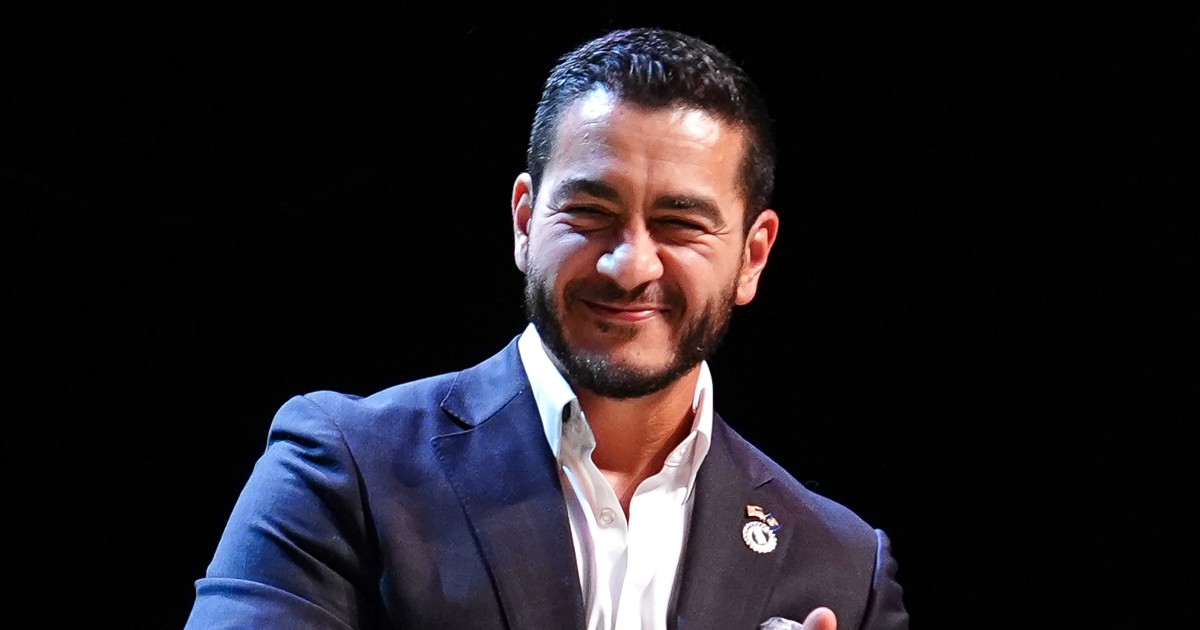
The recent Democratic primaries have exposed some deep and important divisions within the party, shaping not just midterm strategy but also how Democrats might govern if they win. Progressives rode a wave of energy to squeak out a narrow victory in Michigan, where Democrat Abdul El-Sayed becomes one of the movement's most important figures as he battles in a must-win Senate race this fall. And they scored another feather in their cap in Minnesota, where Lt. Gov. Peggy Flanagan's victory makes her the front-runner to be the state's next senator.
But while that progressive energy is unmistakable on the left, they don't have an undeniable mandate within their party. El-Sayed won by a hair, and Wisconsin's Francesca Hong fumbled a big polling lead in the state's gubernatorial primary in her own narrow loss this week. That's why some progressives are tacking toward the center to appeal to swing voters — like how Flanagan didn't directly tell me on Thursday's 'MTP Now' whether or not she supported abolishing ICE (she's called to 'rip apart' the agency).
It's why other Democrats like new Wisconsin governor nominee David Crowley have emphasized the need for his party to have a 'big tent' in order to win in November. These fascinating intraparty debates over issues like immigration, the economy, healthcare, Israel policy, and data centers transcend the campaign trail. If Democrats get their wish and take back the House or the Senate, these debates will set up important governing questions for party figures like Minority Leader Hakeem Jeffries, who hopes to become the next speaker of the House.
Balancing Progressive Energy
How will leaders like Jeffries balance the energy in the burgeoning progressive wing of the party heading into 2028? And what will that mean for some of the top progressive priorities on healthcare, immigration, and criminal justice — issues that have energized the left but that Republicans have used to argue the whole Democratic Party is captive to progressives?
I'll speak about this, and more, with both Jeffries and California Democratic Rep. Ro Khanna on Sunday's 'Meet the Press.' On top of that, Attorney General Todd Blanche will sit down with me just days after his confirmation. I hope you'll join us.
Trump and Vance on the Iran War
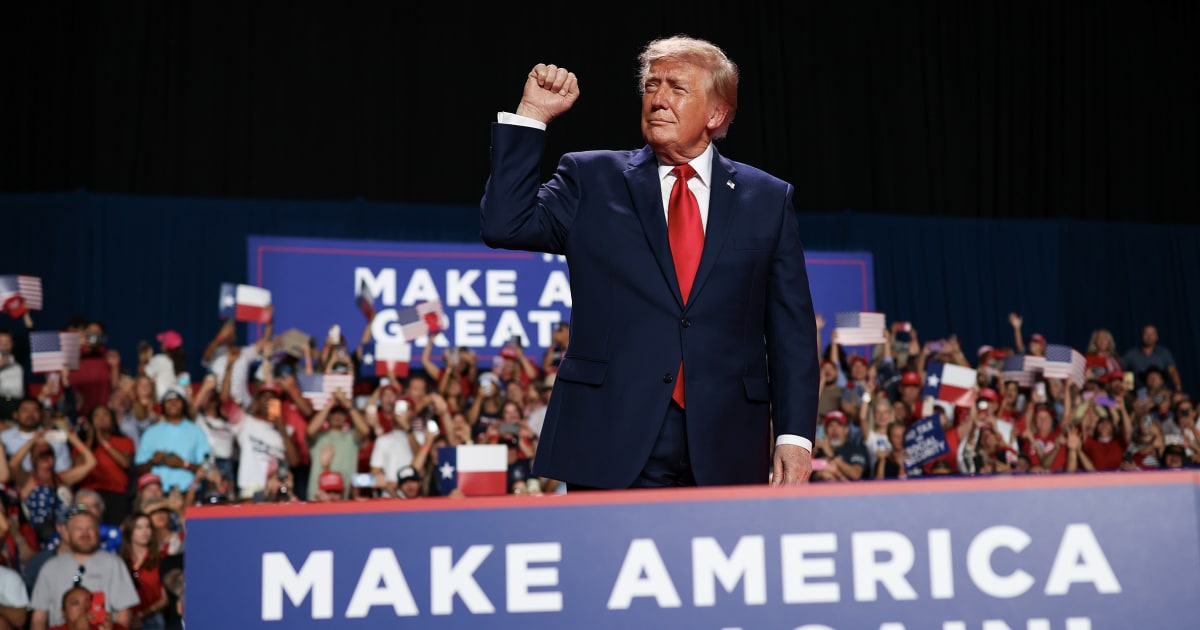
President Donald Trump today dismissed concerns from families of service members about the grim conditions aboard the USS Abraham Lincoln, amid anxiety about whether deployments have been overextended in the Middle East due to the Iran war. In interviews with NBC News and other outlets, family members of some of the thousands of people aboard the ship have described a lack of supplies and food and an overall deteriorating mental health situation with multiple sailors having attempted to jump overboard.
NBC News asked Trump, who was speaking to reporters at Joint Base Andrews, whether the deployments had gone on for too long and whether he was worried about troops' mental health. 'No. No. No — not nearly long enough,' Trump said.
Trump also told reporters Friday that the Lincoln is 'moving right now or very shortly' and that 'it's being replaced with another very similar ship.' The USS George Washington is expected to replace the Lincoln in the Middle East, a U.S. official told NBC News.
Meanwhile, Alexander Smith writes that keeping gas prices low is now the United States' 'goal No. 1' in the Iran war, Vice President JD Vance has said, as Washington threatened an indefinite naval blockade and signaled it would soon intensify economic pressure on Tehran.
'I know that oil is down today and it's way down from the highs in the early days of the conflict,' Vance told Fox News yesterday, before the latest uptick. 'That's goal No. 1 — keep oil and gas cheap for Americans all over our country.' He added: 'Obviously, goal No. 2 is ensure that Iran never gets a nuclear weapon.' Tehran insists it has no desire to develop one.
Trump and his team have offered various reasons for starting the conflict with Iran, initially saying they wanted to support mass anti-government protests, before prioritizing a desire to defang Iran's nuclear program and even topple the regime.
Oil and gas was flowing relatively freely worldwide before the U.S.-Israeli attack, sparking a conflict that has increasingly centered on the tussle for control of the Strait of Hormuz — a waterway through which some 20% of the world's energy supplies traveled prior to the war.
Key points
- Recent Democratic primaries have exposed deep divisions within the party.
- Progressives rode a wave of energy to win in Michigan and Minnesota, but don't have an undeniable mandate within their party.
- Some progressives are tacking towards the center to appeal to swing voters.
- The Iran war has led to concerns about the grim conditions aboard the USS Abraham Lincoln and the overextension of deployments in the Middle East.
- President Donald Trump has dismissed concerns from families of service members about the conditions aboard the ship.
- Vice President JD Vance has said that keeping gas prices low is now the United States' 'goal No. 1' in the Iran war.
If Democrats can find a way to balance the energy of the progressive wing with the need to appeal to swing voters, they may be able to win back the House or Senate in 2028. This could lead to significant changes in healthcare, immigration, and criminal justice policies.
However, if Democrats are unable to balance the progressive energy with the need to appeal to swing voters, they may struggle to win back the House or Senate in 2028. This could lead to continued gridlock and a lack of progress on key issues.