When the US comes for Cuba, what can Vietnam do?
Vietnam faces a foreign policy dilemma as increased US pressure on Cuba, coupled with Havana's economic crisis, tests its six-decade-long friendship. Hanoi must now weigh its ideological ties with Cuba against its vital partnership with Washington.
Intelligence analysis by Gemini 2.5 Flash
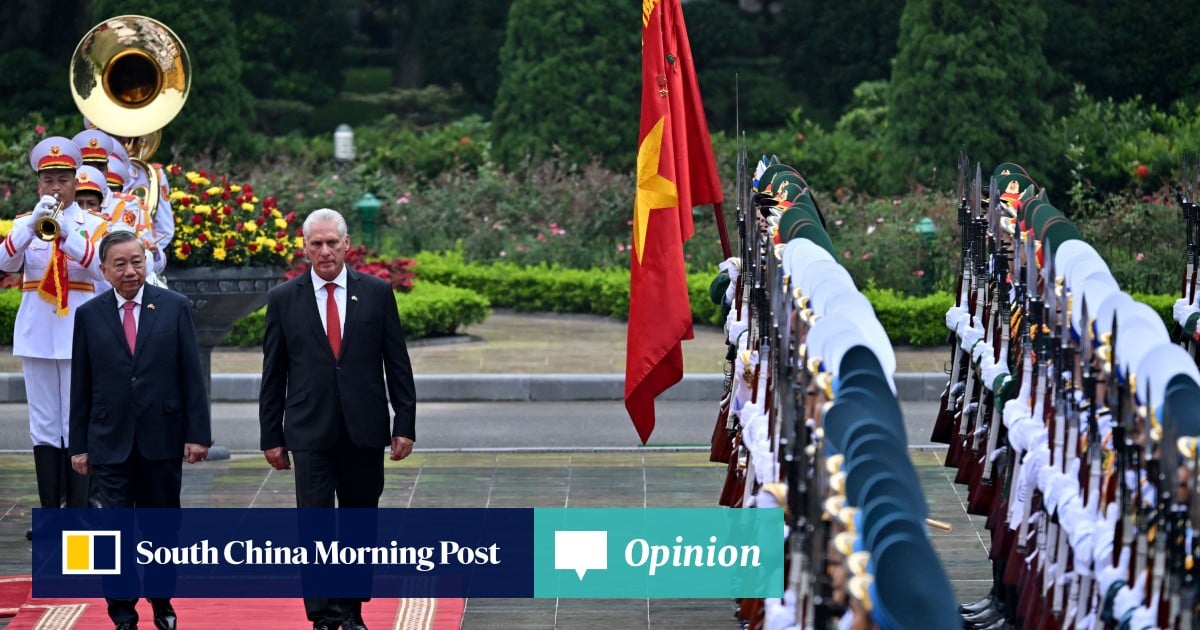
The Trump administration's actions against Cuba, aiming for regime change, and Venezuela's collapse have plunged Cuba into its worst crisis since the 1990s. This puts Vietnam, a long-time ally, in a difficult position, forcing it to decide how to support Cuba without jeopardizing its crucial relationship with the United States.
Imagine two friends, Vietnam and Cuba, who have been best buddies for 60 years, always sticking up for each other. Now, a big kid, the United States, is being really tough on Cuba, making it hard for them to get food and oil. Vietnam really wants to help its friend Cuba, but it also needs to stay friends with the big kid, the US, because the US helps Vietnam a lot. So, Vietnam has to figure out how to help Cuba without making the US mad, which is a very tricky balancing act.
Analysis
A Friendship Under Duress
Vietnam and Cuba have shared a profound bond for six decades, forged in a common struggle against imperialism and cemented by ideological affinity. This alliance, rooted in genuine camaraderie, has historically been sustained through symbolic gestures and low-cost support, such as UN votes or humanitarian aid like rice shipments. However, the current geopolitical landscape has dramatically altered the stakes, transforming Cuba's chronic troubles into an existential crisis. The collapse of Venezuela's Nicolas Maduro regime severed a crucial lifeline of subsidised oil, pushing Cuba into its most severe socio-economic downturn since the 1990s.
Adding to Havana's woes, the Trump administration's aggressive stance, including the indictment of former Cuban President Raul Castro and sanctions on his successor, Miguel Diaz-Canel, signals a clear US policy objective of regime change. This direct and intensified pressure from Washington raises the cost of friendship for any nation aligned with Cuba. For Vietnam, a country that has painstakingly built a vital partnership with the United States, this presents an unprecedented foreign policy dilemma. The long-standing, ideologically driven alliance with Cuba now directly conflicts with the pragmatic necessity of maintaining strong ties with a global superpower.
The High Stakes of Loyalty
Hanoi's predicament is multifaceted. On one hand, abandoning Cuba would betray a deep historical and ideological commitment, potentially undermining Vietnam's credibility among its remaining socialist allies and within its own political establishment. The shared history of resisting external powers and pursuing a socialist path forms a core part of Vietnam's national identity and foreign policy narrative. To turn its back on Cuba now, in its moment of greatest need, would be a significant ideological concession.
On the other hand, the economic and strategic benefits of its partnership with Washington are immense and indispensable for Vietnam's continued development and regional security. Jeopardizing this relationship could have severe repercussions, ranging from trade disruptions and investment losses to diminished diplomatic influence. The article highlights that for most of the past six decades, supporting Cuba came at little cost, but now Washington is "raising the price of that friendship." This implies that continued overt support for Cuba could trigger retaliatory measures or strain relations with the US, forcing Vietnam into an uncomfortable choice between its past and its future.
Navigating a Bipolar World
Vietnam's challenge reflects a broader trend in international relations where middle powers are increasingly forced to navigate the intensifying rivalry between major global players. For Hanoi, the question is not merely about Cuba, but about defining its strategic autonomy and balancing competing interests in a complex geopolitical environment. It must find a way to uphold its principles without sacrificing its pragmatic national interests. This could involve exploring new avenues of support for Cuba that are less provocative to the US, such as humanitarian aid through international channels, or encouraging economic reforms in Cuba that might alleviate US concerns.
Ultimately, Vietnam's response will be a critical test of its diplomatic acumen and its ability to manage a delicate balancing act. The outcome will not only shape the future of its relationship with Cuba and the US but also serve as a case study for other nations facing similar pressures to choose sides in an increasingly polarised world. The decision will reveal what Vietnam truly values and how it intends to project its influence on the global stage while safeguarding its sovereignty and prosperity.
Key points
- The US is intensifying pressure on Cuba, with actions like indictments and sanctions, signaling a policy objective of regime change.
- Cuba is facing its worst socio-economic crisis since the 1990s, exacerbated by the fall of Venezuela's Maduro and loss of subsidised oil.
- Vietnam and Cuba share a six-decade-long alliance based on ideological affinity and a shared struggle against imperialism.
- Hanoi faces a dilemma: how to support Cuba without jeopardizing its vital partnership with Washington.
- Historically, supporting Cuba was low-cost for Vietnam, but US actions are now raising the price of that friendship.
Vietnam could successfully navigate this complex situation by finding creative ways to support Cuba, perhaps through multilateral channels or by encouraging economic reforms in Havana that might ease US pressure. This could allow Hanoi to maintain its historical friendship while preserving its crucial partnership with Washington, demonstrating a sophisticated diplomatic approach.
Vietnam might be forced into an uncomfortable choice, either alienating its long-standing ally Cuba by succumbing to US pressure or jeopardizing its vital economic and strategic ties with the United States by continuing overt support for Havana. This could lead to significant diplomatic and economic repercussions for Vietnam.