Where is Darkhovin; the nuclear power plant under construction that was 'targeted by a US attack'
Iran claims the US attacked its Darkhovin nuclear power plant construction site, calling it an "aggressive act," while CENTCOM reported strikes on military targets without naming Darkhovin. The IAEA is investigating the reports but notes the site was in early construction…
Intelligence analysis by Gemini 2.5 Flash
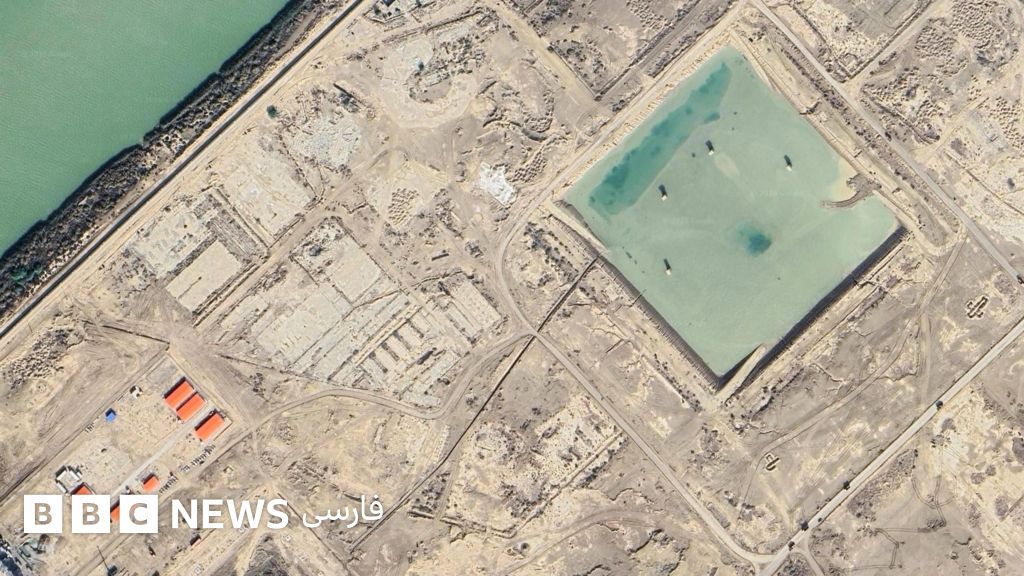
Iran's Atomic Energy Organization alleges a US attack on its Darkhovin nuclear power plant construction site, a project with a 50-year history of delays and restarts. While Iran condemns the alleged strike, US Central Command's statement on regional military actions does not specifically mention Darkhovin, and international agencies confirm the site was in very early stages without nu…
Imagine Iran is trying to build a big power station that uses special nuclear fuel, like a giant, super-efficient kettle to make electricity. They've been trying for 50 years, but it keeps getting stopped and started. Now, Iran says another country, America, shot at the building site where they're just digging and laying foundations, not where the special fuel is kept. America says it hit military spots, but didn't mention this power station. It's like two kids arguing about who threw a rock at a half-built treehouse.
Analysis
The Darkhovin Project: A Half-Century Saga
The Darkhovin nuclear power plant project, located in southwestern Iran near the Karun River, has been a cornerstone of Iran's civilian nuclear ambitions for nearly five decades. Initiated in the 1970s under the Shah with a French company, it was halted after the 1979 revolution. Subsequent attempts to revive the project in the 1990s with Chinese assistance also failed due to US political pressure. This long history of starts and stops underscores the persistent challenges Iran has faced in developing its nuclear energy infrastructure, often entangled with geopolitical dynamics and international sanctions.
The project was re-announced in 2007 as the IR-360, a 360-megawatt light water reactor, with plans for international tenders that never materialized into contracts. Despite initial targets for completion by 2016, the project remained stalled. In 2022, Iran's Atomic Energy Organization (AEOI) again announced the start of executive operations for a new iteration, the "Karun Nuclear Power Plant," a 300-megawatt pressurized light water reactor. This latest phase, estimated to cost nearly two billion dollars and take eight years, emphasizes domestic design and construction, reflecting Iran's drive for self-sufficiency in its nuclear program.
Conflicting Accounts of a Reported Attack
Iran's Atomic Energy Organization has explicitly accused the United States of targeting the Darkhovin construction site with "several projectiles," labeling it an "aggressive and barbaric act" and a violation of international law. This accusation comes amidst broader regional tensions and reported exchanges of fire between Iranian and US forces. However, the US Central Command (CENTCOM), while confirming strikes on various Iranian military targets—including missile, drone, and naval infrastructure—did not specifically name Darkhovin in its public statements. This discrepancy creates ambiguity regarding the precise nature and intent of the alleged attack on the nuclear site.
The International Atomic Energy Agency (IAEA) has acknowledged the reports and stated it is investigating the claims. Crucially, the IAEA's latest assessment, from February 2026, described the Karun power plant in Darkhovin as being in its "early stages of construction" and confirmed that no nuclear material was present at the site. This detail is significant as it suggests that any damage would likely be to conventional construction infrastructure rather than posing a nuclear proliferation risk or immediate environmental hazard. The IAEA's definition of "start of construction" requires the first major concrete pouring for the reactor building's foundation, a stage the Darkhovin project had not yet officially reached according to international monitoring bodies.
Implications for Regional Stability and Nuclear Oversight
The alleged attack on Darkhovin, regardless of its precise target or the stage of the facility's construction, carries significant implications for regional stability and the future of international nuclear oversight in Iran. If confirmed as a deliberate strike on a declared, albeit nascent, civilian nuclear facility, it could further escalate tensions between Iran and the United States, potentially leading to retaliatory actions and a more volatile security environment in the Middle East. Such an event would also complicate diplomatic efforts to revive or establish new agreements regarding Iran's nuclear program, as it could be perceived by Iran as a direct challenge to its sovereign right to peaceful nuclear energy.
Furthermore, the incident highlights the ongoing challenges faced by the IAEA in monitoring Iran's nuclear activities, particularly when sites are in early construction phases and not yet subject to full safeguards. While the absence of nuclear material at Darkhovin mitigates immediate proliferation concerns, the broader context of military strikes near a declared nuclear site underscores the fragility of the current non-proliferation regime and the need for transparent communication and verification. The international community will be closely watching the IAEA's independent assessment to understand the full scope of the incident and its potential ramifications for global security and nuclear diplomacy.
Key points
- Iran's AEOI claims the US targeted its Darkhovin nuclear power plant construction site with projectiles.
- US CENTCOM reported strikes on Iranian military targets but did not name Darkhovin.
- The IAEA is investigating the reports and confirmed Darkhovin was in early construction stages with no nuclear material.
- The Darkhovin project has a nearly 50-year history of starts, stops, and design changes, aiming for civilian nuclear power.
- The site had not yet reached the technical "start of construction" phase according to IAEA definitions.
The IAEA's confirmation that the Darkhovin site was in early construction stages with no nuclear material present could de-escalate the situation by reducing fears of a nuclear incident. If the US clarifies its targets and avoids future strikes on civilian infrastructure, it might prevent further escalation and allow for diplomatic channels to address regional tensions.
The alleged attack, even on an early-stage civilian site, could be seen by Iran as a major provocation, leading to retaliatory actions against US interests or allies in the region. This could further destabilize the Middle East, complicate any future nuclear negotiations, and potentially accelerate Iran's pursuit of nuclear capabilities, increasing proliferation risks.
Market signals
- OIL Escalating military actions and regional instability in the Middle East, as described in the article, typically increase concerns about oil supply disruptions, pushing prices higher.
AI-generated analysis of potential market relevance. Not financial advice.