White House AI policy adviser Krishnan to leave position
White House AI adviser Sriram Krishnan will leave at the end of June as Trump weighs tighter AI policy and possible government stakes in firms.
Intelligence analysis by GPT-5.4 Mini
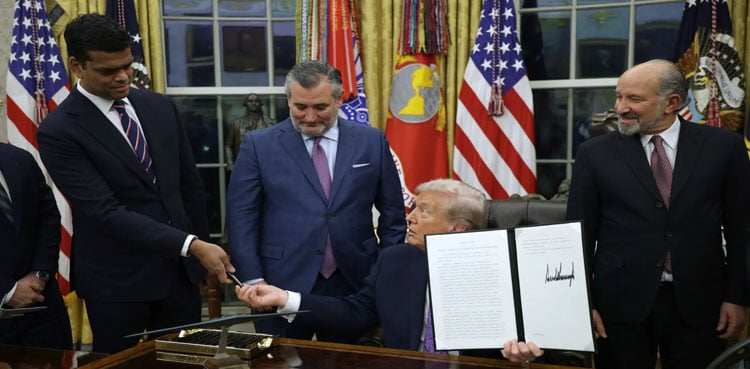
Krishnan's exit removes a key White House voice in efforts to build an AI policy framework, just as the Trump administration signals deeper involvement in the sector and more scrutiny of leading models.
A top White House helper for AI is leaving while the rules for this new machine-powered world are still being drawn. It is like a referee walking off the field while the game is still being planned, so the next calls may come from someone new.
Analysis
What happened
Reuters says White House AI policy adviser Sriram Krishnan will leave his post at the end of June. In a post on X, Krishnan called the role "the privilege of a lifetime" and said he wants to continue working on the large challenges facing America around AI.
Why it matters
Krishnan had been part of the Trump administration's work on a national framework for AI regulation. His departure comes while the administration is still trying to define how far the U.S. government should go in shaping the industry, including discussion of whether the government could take stakes in AI firms.
Trump said the idea could look like a partnership with the public and said he planned to meet AI executives soon. The article also shows that the White House's approach is not purely pro-tech. Security concerns have complicated its AI agenda, including a standoff with Anthropic over military use of models and earlier Pentagon restrictions.
Policy direction
The White House has also moved toward model testing before public release, telling agencies to ask leading developers to voluntarily submit their strongest systems for cybersecurity checks. At the same time, there is political resistance from parts of Trump's orbit, where some warn that AI and the data centers behind it could trigger backlash.
The piece suggests the administration is balancing three pressures at once: faster AI adoption, national security caution, and the politics of energy and infrastructure. Krishnan's exit may not change the direction on its own, but it removes one visible operator from a policy file that is still being actively written.
Key points
- Sriram Krishnan said he will leave his White House AI policy role at the end of June.
- He had been involved in efforts to build a national framework for regulating AI development.
- The departure comes as Trump weighs whether the U.S. government should take stakes in AI firms.
- The administration is also trying to balance AI expansion with national security concerns and political backlash.
If the transition is smooth, the White House can keep building its AI rules without losing momentum. More testing and clearer guidance could make powerful AI systems safer to release and easier for companies to plan around.
Losing a key adviser could slow work on a national AI framework or create gaps in continuity. Security fights, political backlash over data centers, and tension with firms like Anthropic could keep the administration's approach uneven.