Why a Chilean salt flat is a microcosm of the extractive frontiers of green capitalism
Lithium extraction in the Atacama desert threatens local ecosystems and communities
Intelligence analysis by Qwen 2.5 (3B)
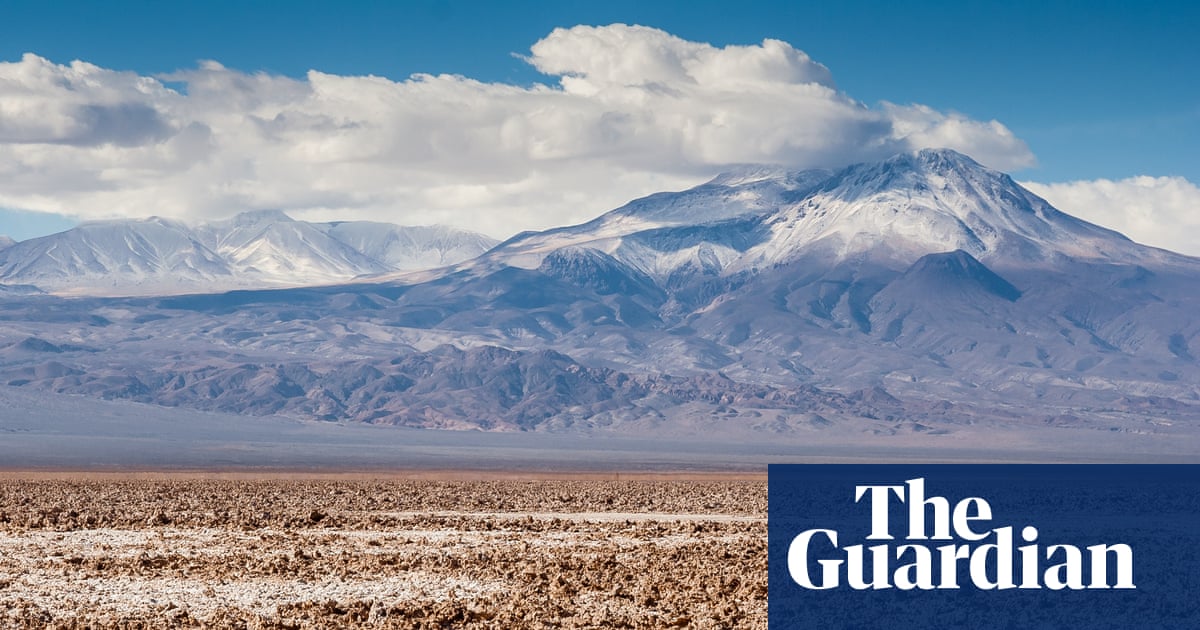
Lithium mining in the Atacama desert, a key resource for green energy, has environmental and social costs
Imagine you have a big salt lake where you can find a special mineral called lithium. To get this mineral, you need to dig holes in the ground and let the water evaporate. But when the water evaporates, it takes away the salt and makes the lake smaller. This can hurt the animals that live there and the people who live nearby. The article is talking about how this happens in a place called the Atacama desert in Chile.
Analysis
The Atacama Salt Flats
The Atacama salt flats, a crucial source of lithium, are under threat from mining activities. The article highlights the unique conditions that make the Atacama an ideal location for lithium extraction, but also the environmental and social costs associated with this process. The article also discusses the broader implications of this phenomenon, which is a microcosm of the extractive frontiers of green capitalism.
Environmental Impacts
The mining process involves pumping underground brine to surface evaporation ponds, which concentrates the lithium. This process has significant environmental impacts, including the drying up of local water sources and the decline of endemic flamingo species. The article notes that the Atacama's high evaporation rate is crucial for lithium extraction, but this also leads to the drying up of local water sources.
Social Impacts
The mining activities have also affected the local Indigenous communities. The article mentions that the mining companies have not adequately addressed the concerns of these communities, leading to tensions and conflicts. The article also highlights the potential for lithium mining to provide economic benefits to the region, but these benefits are not evenly distributed and may not outweigh the environmental and social costs.
The Extractive Frontiers of Green Capitalism
The article argues that the Atacama salt flats represent a microcosm of the extractive frontiers of green capitalism. The article notes that the global push for green energy has led to an expansion of extractive industries, often at the expense of local communities and ecosystems. The article suggests that a more balanced approach is needed to address the environmental and social costs of these industries.
Conclusion
The article concludes by emphasizing the need for a more nuanced understanding of the trade-offs of lithium mining and other extractive industries. The article suggests that a more sustainable approach to green energy transitions is needed, one that takes into account the environmental and social costs of these industries.
Key points
- Lithium mining in the Atacama desert is crucial for green energy but has environmental and social costs
- The high evaporation rate of the Atacama desert is essential for lithium extraction but also leads to water shortages
- Mining activities have affected local Indigenous communities and their concerns have not been adequately addressed
- The Atacama salt flats represent a microcosm of the extractive frontiers of green capitalism
- A more balanced approach is needed to address the environmental and social costs of extractive industries
By finding ways to reduce the environmental impact of lithium mining, we can continue to use this mineral to make green energy while also protecting the local ecosystems and communities.
If we don't find ways to balance the need for lithium with the need to protect the environment and communities, the negative impacts of lithium mining could become too big and cause problems for people and animals.