Why China’s sugar stockpiles may blunt an El Nino-fuelled global supply crunch
China is expected to reduce sugar imports due to a global supply crunch and rising prices, particularly from Thailand, but its substantial domestic stockpiles are anticipated to mitigate the impact on local prices. This move aligns with Beijing's food security agenda.
Intelligence analysis by Gemini 2.5 Flash
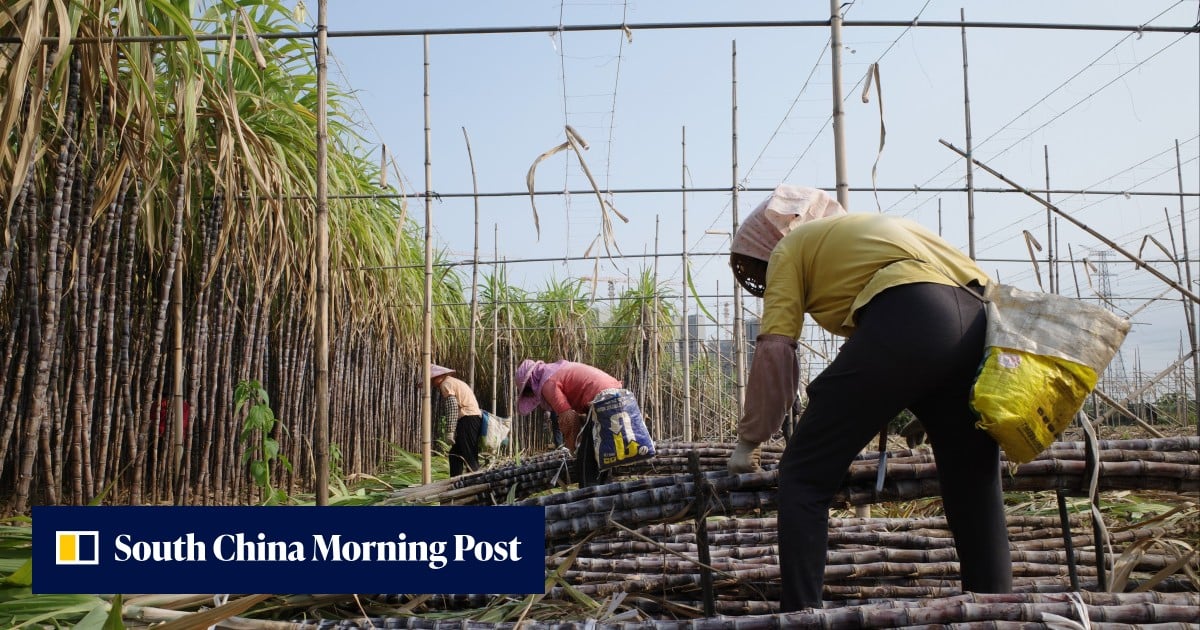
Amid concerns over an El Nino-driven global sugar supply crunch and soaring international prices, China plans to slow its sugar imports. Despite relying on imports for a third of its supply, the nation's robust domestic stockpiles are poised to cushion the impact, ensuring only moderate local price increases for the strategic commodity.
Imagine sugar is like candy, and everyone around the world wants it. But a big weather event called El Nino is making it hard for some countries, like Thailand, to grow enough sugar cane, so there's less candy for everyone and prices are going up. Luckily, China has a huge secret stash of candy at home, so even though they usually buy some from other countries, they can use their own stash to make sure their people still have enough and don't have to pay too much extra.
Analysis
Thailand's Production Drop
The global sugar market is currently grappling with significant supply challenges, primarily driven by a projected substantial decline in production from Thailand, which stands as the world's second-largest sugar exporter. For the upcoming 2026 to 2027 season, Thailand's sugar output is anticipated to fall by at least 17 percent, a considerable reduction that will impact international availability and pricing. Specifically, total production is expected to drop below 10 million tonnes, a notable decrease from the 12 million tonnes recorded in the previous season.
This substantial reduction is directly attributed to the adverse effects of El Nino-driven dryness, which has severely impacted agricultural conditions and sugarcane yields across the region. The forecasts of reduced supply from such a key player have already contributed to a steady rise in global sugar prices over the past month, signaling a tightening international market and prompting concerns among major importing nations. This situation underscores the vulnerability of global commodity markets to climate phenomena and the interconnectedness of agricultural supply chains, highlighting how regional weather patterns can have far-reaching economic consequences.
China's Import Policy
In direct response to the escalating global prices and the uncertainties surrounding international sugar supply, China, a significant global sugar importer, is strategically adjusting its import policy. The nation's approach to sweetener imports had already shown clear signs of tightening during the 2025 to 2026 crushing season, indicating a proactive and pre-emptive shift in its trade strategy. Analysts, such as Niu Zhe from bulk commodity consultancy Sublime China Information, have highlighted that with strong domestic production expected to continue into the 2026 to 2027 season, coupled with the rising costs associated with importing raw sugar from traditional suppliers like Brazil and Thailand, the economic viability of out-of-quota imports has diminished significantly.
This means the "out-of-quota import window has completely closed," as Niu Zhe states, suggesting a deliberate move by Beijing to prioritize domestic supply and reduce its exposure to volatile international markets. Consequently, the pace of sugar imports is likely to slow markedly in the second half of the year, reflecting a calculated effort to manage national resources, stabilize internal market conditions, and reinforce the country's broader food security objectives. This strategic pivot aims to minimize the impact of external price shocks on Chinese consumers and industries.
1.945 Million Tonnes
China's sophisticated approach to managing its sugar supply is further underpinned by a carefully structured dual-tariff system, designed both to regulate imports and to provide a protective framework for its domestic producers. Under this system, the country applies a relatively lower 15 percent tariff on sugar imports that fall within a specific quota, set at 1.945 million tonnes. This volume is considered the in-quota allowance, benefiting from more favorable import conditions and ensuring a baseline level of foreign supply.
However, any volume of sugar imported above this precise threshold faces a significantly steeper duty of 50 percent. This substantial increase in tariff for out-of-quota imports acts as a strong disincentive, effectively making large-scale additional imports economically unfeasible when global prices are already high. This tariff structure, combined with China's robust domestic stockpiles, grants Beijing considerable leverage and control over its internal market dynamics. By strategically leaning on these substantial reserves and meticulously adjusting import volumes through its tariff mechanisms, China aims to effectively blunt the impact of global supply disruptions and maintain a desired level of price stability for sugar, a commodity explicitly deemed strategic for national food security. This comprehensive policy ensures that even amidst international volatility, China can largely insulate its consumers and industries from the most severe price fluctuations, safeguarding its economic stability and social welfare.
Key points
- China plans to slow sugar imports due to a global supply crunch and rising international prices.
- Thailand, the world's second-largest sugar exporter, faces a projected 17% drop in production for the 2026-2027 season due to El Nino.
- China's high domestic sugar stockpiles are expected to mitigate the impact, leading to only moderate local price increases.
- Sugar is considered a strategic agricultural commodity under Beijing's food security agenda.
- China employs a dual-tariff system for sugar imports, with a 15% tariff for in-quota volumes up to 1.945 million tonnes and 50% for volumes above that.
China's substantial domestic sugar stockpiles are expected to effectively cushion the impact of the global supply crunch, leading to only moderate increases in local prices. This strategic reserve management demonstrates China's resilience in maintaining food security and insulating its economy from international commodity market volatility.
While China's stockpiles offer a buffer, a prolonged or more severe global supply crunch, especially if El Nino effects worsen or extend, could still strain domestic reserves and eventually lead to more significant price increases. Over-reliance on domestic production might also limit access to diverse global supplies in the long term.
Market signals
- Sugar China's reduced import demand, supported by domestic stockpiles, is expected to temper global sugar prices.
AI-generated analysis of potential market relevance. Not financial advice.