Why did doctors show a Pawan Kalyan movie to a patient during surgery?
During awake brain surgery in Andhra Pradesh, doctors played Pawan Kalyan’s 'OG' to help monitor a woman’s brain activity and keep her calm.
Intelligence analysis by GPT-5.4 Mini
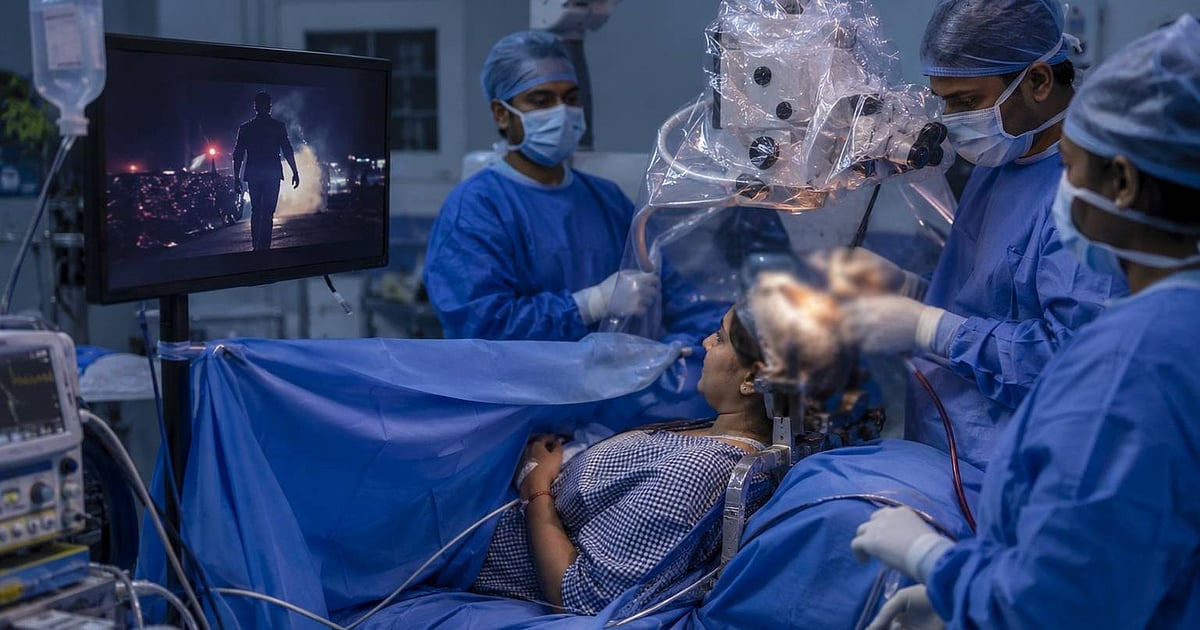
An Andhra Pradesh hospital used awake brain surgery on a woman with a tumor in a critical brain area. Doctors showed her Pawan Kalyan’s 'OG' so they could observe her responses in real time while keeping her relaxed.
Doctors treated the brain like a control room with important switches. They kept the patient awake and showed a movie so they could quickly notice if talking or moving became harder while removing the tumor.
Analysis
What happened
An article from Prajavani says doctors in an Andhra Pradesh hospital performed an awake brain surgery on a woman who had a tumor in a part of the brain linked to speech and activity. Because that area is highly sensitive, the patient was kept awake instead of being fully anesthetized.
Why a movie was shown
To help the patient stay calm during the procedure, the doctors showed her Pawan Kalyan’s film OG. The article says this helped them watch her reactions while also reducing stress. That matters in awake brain surgery because doctors can observe speech, movement, and other responses as the tumor is removed.
What the method achieves
The article explains that if the patient’s speech or movement changes during surgery, the medical team can notice it immediately. That gives doctors a chance to adjust their approach in real time and avoid harming important brain functions.
The piece also identifies OG as a 2025 film starring Pawan Kalyan, Priyanka Mohan, and Prakash Raj, produced by DVV Entertainment. In this story, the movie is not the focus for its own sake. It is used as a tool to make a difficult brain operation safer and less stressful for the patient.
Key points
- Doctors in Andhra Pradesh used awake brain surgery for a woman with a tumor in a critical brain area.
- They showed her Pawan Kalyan’s film 'OG' to help keep her calm during the operation.
- The team could monitor speech and movement in real time while removing the tumor.
- The article says the method helps doctors detect any change in brain function immediately.
- The film was used as a practical distraction, not as the main subject of the story.
If this approach works well, doctors can remove tumors near sensitive brain areas while watching speech and movement in real time. Keeping the patient calm may also make the surgery smoother and safer.
Awake surgery depends on the patient staying cooperative and stable throughout the operation. If anxiety, discomfort, or a sudden change in response occurs, the surgery can become harder to manage.