Why did Venezuela have highly enriched uranium, and how was a secret operation to deliver it to the US carried out?
Venezuela secretly transferred approximately 13 kg of highly enriched uranium to the US, a multi-national operation involving the US, UK, and the IAEA to prevent nuclear proliferation.
Intelligence analysis by Gemini 2.5 Flash
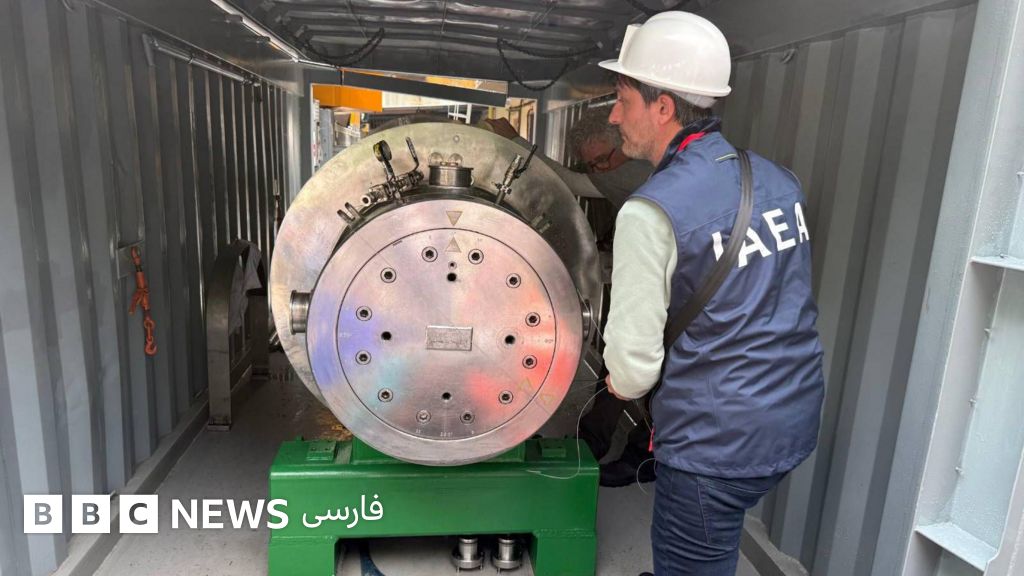
A clandestine operation in late April saw Venezuela's military escorting highly enriched uranium to Puerto Cabello for transfer to the United States. This joint effort, involving the US, UK, and the International Atomic Energy Agency, aimed to secure the material, which theoretically could be used for a small nuclear weapon, despite being intended for peaceful research.
Imagine a special kind of super fuel that can make electricity or help scientists do cool experiments, but if it gets into the wrong hands, it could be used to make a really scary bomb. Venezuela had some of this fuel, and several big countries worked together like secret agents to carefully move it out of Venezuela and send it to the USA, so everyone could feel safer. It was like taking a super-powered toy that could be dangerous and putting it in a safe place.
Analysis
In a secret nighttime operation in late April, a Venezuelan military convoy transported approximately 13 kilograms of highly enriched uranium from the Venezuelan Institute for Scientific Research near Caracas to the port of Puerto Cabello. This material was then slated for transfer to the United States.
The operation was a collaborative effort involving the governments of Venezuela, the United States, and the United Kingdom, alongside the International Atomic Energy Agency (IAEA). The IAEA confirmed on May 8th that the mission was "a carefully planned joint mission carried out under strict security measures, as such materials could pose a risk of nuclear proliferation or a security threat if they fall into the wrong hands or groups."
Highly enriched uranium is defined as uranium with an enrichment level exceeding 20 percent. Jack Crawford, a researcher in the Nuclear Proliferation and Policy group at the Royal United Services Institute, noted that while this type of uranium is used in nuclear reactors globally for peaceful purposes, such as scientific research or submarine propulsion, it can also be refined further to produce fissile material for weapons.
Crawford explained to BBC Verify that "the 13 kilograms of highly enriched uranium removed from Venezuela could, in theory, after further refinement, be enough to produce a small nuclear weapon, although the amount of uranium-235 present was slightly more than 20 percent, and typically weapons-grade highly enriched uranium reaches 90 percent or more." He added that this removal represents the latest international effort to eliminate the possibility of highly enriched uranium, intended for peaceful uses, falling into the hands of non-state actors or governments seeking nuclear weapons.
Concerns from the US government and the IAEA have been ongoing due to Venezuela's relationships with countries like Iran, Russia, Cuba, and North Korea.
Venezuela acquired this highly enriched uranium as fuel for its RV-1 reactor, Latin America's first nuclear reactor. This experimental reactor was installed in the early 1960s at the Venezuelan Institute for Scientific Research as part of the "Atoms for Peace" program, initiated by US President Dwight D. Eisenhower in the 1950s. Eisenhower's vision was to shift nuclear technology from military applications to peaceful uses, proposing the creation of an atomic energy agency under the UN. This led to the establishment of the IAEA and the "Atoms for Peace" program, through which the US provided nuclear training and technology to developing countries, under the condition that they would not use it for weapons development.
Venezuela purchased the RV-1 reactor, with a capacity of three megawatts, from General Electric, an American company, in 1956. The reactor began operations on November 22, 1960, and functioned as a research reactor until 1991, with full shutdown occurring in 1997. Part of its fuel was removed then, and the remaining portion had been securely stored until this recent transfer.
Key points
- Venezuela secretly transferred 13 kg of highly enriched uranium to the US in a clandestine operation involving military escort.
- The operation included participation from the governments of Venezuela, the US, the UK, and oversight by the IAEA.
- Highly enriched uranium, though used for peaceful research, can be refined to create a small nuclear weapon.
- Venezuela acquired the uranium in the 1960s for its RV-1 research reactor, part of the US 'Atoms for Peace' program.
- The transfer aimed to prevent nuclear proliferation and address concerns about Venezuela's ties with countries like Iran and Russia.
The successful, covert transfer of highly enriched uranium from Venezuela to the United States demonstrates effective international cooperation in preventing nuclear proliferation. This proactive measure significantly reduces the risk of such dangerous materials falling into the hands of malign actors or states, thereby enhancing global security and stability. It sets a positive precedent for future disarmament efforts and strengthens the role of international bodies like the IAEA.
Despite the successful transfer, the mere fact that a country like Venezuela possessed highly enriched uranium, particularly given its geopolitical alignments, highlights ongoing proliferation risks. The long-term storage of such materials in potentially unstable regions or by regimes with questionable intentions remains a significant concern. This operation addresses one specific stockpile, but the broader challenge of securing fissile materials globally persists, underscoring the continuous threat of nuclear weapons development.