Why El Salvador's massive prisons have become a model for right-wing politicians worldwide
The prisons of El Salvador have become a model for right-wing politicians worldwide, with its president, Nayib Bukele, implementing a tough-on-crime approach that has been praised by some as effective in reducing crime and improving public safety.
Intelligence analysis by Llama
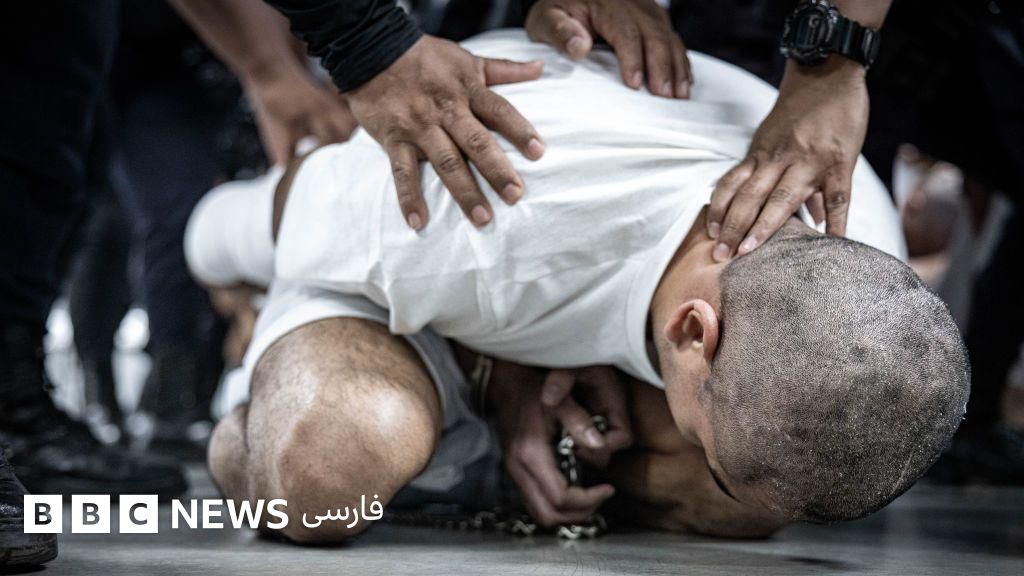
El Salvador's president, Nayib Bukele, has implemented a tough-on-crime approach that has been praised by some as effective in reducing crime and improving public safety, but has also been criticized for its human rights implications.
Imagine you're living in a country where there's a lot of crime and violence. The government wants to make you feel safer, so they build big prisons and lock up a lot of people. But some people think this isn't the right way to solve the problem, because it doesn't address the reasons why people are committing crimes in the first place. It's like trying to fix a leaky pipe by just covering it up with a band-aid, instead of finding the source of the leak and fixing it for good.
Analysis
A $60B Vote of Confidence
The prisons of El Salvador have become a model for right-wing politicians worldwide, with its president, Nayib Bukele, implementing a tough-on-crime approach that has been praised by some as effective in reducing crime and improving public safety. However, this approach has also been criticized for its human rights implications, with many arguing that it has led to the erosion of democratic institutions and the rule of law.
The situation in El Salvador is complex, with a history of violence and crime that has been exacerbated by the country's economic and social challenges. However, the approach taken by President Bukele has been widely criticized for its lack of transparency and accountability, as well as its failure to address the root causes of crime.
Despite these criticisms, the approach has been praised by some as effective in reducing crime and improving public safety. However, this is a short-term solution that does not address the underlying issues driving crime in El Salvador. In the long term, this approach will only exacerbate the problems facing the country, rather than solving them.
Why Cursor?
The approach taken by President Bukele has been widely criticized for its lack of transparency and accountability. The government has been accused of using the prisons as a tool for political repression, rather than as a means of addressing crime. This has led to concerns about the erosion of democratic institutions and the rule of law.
The government's approach has also been criticized for its failure to address the root causes of crime in El Salvador. The country's economic and social challenges, including poverty and inequality, have been exacerbated by the government's policies, leading to a rise in crime and violence.
The Road Ahead
The situation in El Salvador is complex, and the approach taken by President Bukele has significant implications for human rights and democracy. In the long term, this approach will only exacerbate the problems facing the country, rather than solving them. It is essential to address the root causes of crime in El Salvador, rather than relying on short-term solutions that do not address the underlying issues.
Key points
- El Salvador's president, Nayib Bukele, has implemented a tough-on-crime approach that has been praised by some as effective in reducing crime and improving public safety.
- However, this approach has also been criticized for its human rights implications, with many arguing that it has led to the erosion of democratic institutions and the rule of law.
- The approach taken by President Bukele has been widely criticized for its lack of transparency and accountability, as well as its failure to address the root causes of crime in El Salvador.
- The government's approach has also been criticized for its failure to address the economic and social challenges facing the country, including poverty and inequality.
If the approach taken by President Bukele is successful in reducing crime and improving public safety, it could lead to a more stable and secure environment for the people of El Salvador. This could also have positive implications for the country's economy and international relations.
However, if the approach taken by President Bukele is not successful in addressing the root causes of crime, it could lead to further erosion of democratic institutions and the rule of law. This could also have negative implications for human rights and individual freedoms.