Why feeding children vegetables is difficult — and what actually works
A BBC Future explainer draws on nutrition research to outline practical, science-backed strategies for getting young children to eat more vegetables, from repeated exposure to serving greens first.
Intelligence analysis by Llama
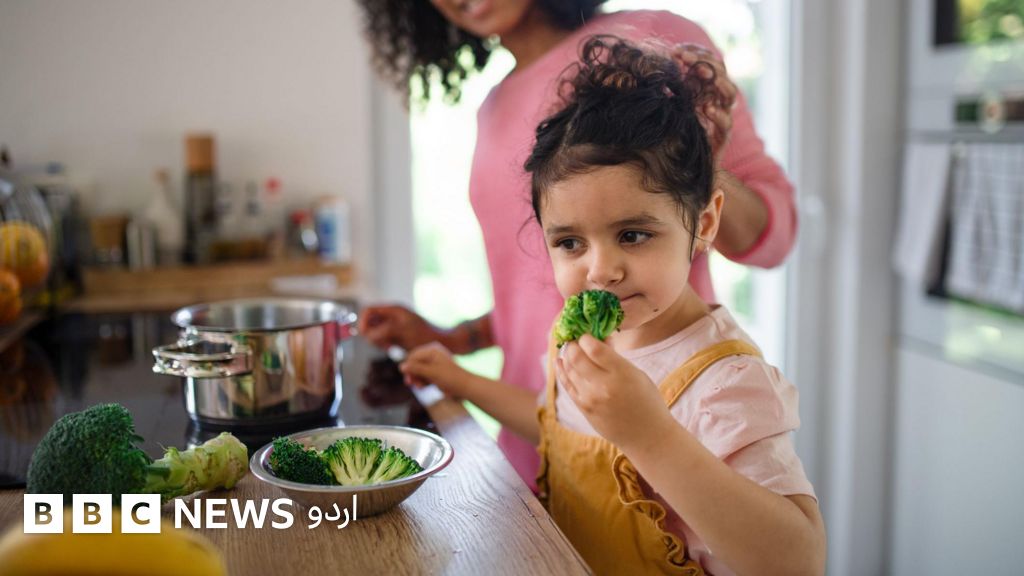
BBC Future reviews the evidence on childhood vegetable avoidance, noting that young children may need 5–15 exposures to accept a new food and that preschool years are the prime window for shaping taste preferences.
Kids love sweet things because milk is sweet, so veggies taste strange to them at first. Scientists found that if parents keep offering the same vegetable many times — sometimes up to 15 — most kids eventually start eating it, especially if veggies come first when they're really hungry.
Analysis
The Biology of Picky Eaters
Children are wired from birth to prefer sweet flavours — breast milk itself contains natural sugars, which is why a floret of broccoli or a spoonful of spinach can feel jarring when a toddler first encounters solid food. The article notes that this biological preference, combined with neophobia (fear of new foods) that peaks between ages three and four, explains why vegetable refusal is so common. Researchers, including bio-psychology professor Marion Hetherington of the University of Leeds, emphasise that the preschool years represent a critical window: if children have not been exposed to a range of vegetables by age five, shifting their preferences later becomes far harder. The piece also points to evidence that flavour exposure begins in the womb, with molecules from a mother's diet passing into amniotic fluid and shaping the infant's later taste preferences.
Exposure Beats Persuasion
The first strategy the article highlights is simple but counter-intuitive: keep offering the same vegetable, again and again, without pressure. Studies cited suggest children may need between five and fifteen exposures before accepting a new food, though the exact number varies by child. A 2023 UK study across eight childcare centres found that when vegetables were served at breakfast — when children were hungriest — they were eaten on more than 60 percent of occasions. The underlying principle is that when a child is most hungry, and before more calorie-dense items compete for attention, acceptance rates climb. Barbara Rolls, a nutrition professor at Penn State, is quoted suggesting that starting a meal with vegetables may also reduce overall overeating.
Reframing the Conversation
Equally important is how vegetables are framed. The article warns that simply telling a child a food is 'healthy' can backfire, because children tend to prefer what is described as 'tasty' over what is described as 'good for them.' This means the messaging, the order of the plate, and the ratio of vegetables to richer foods all matter. If serving vegetables at the start of a meal is impractical, an alternative is to adjust portion ratios — reducing calorie-dense components and increasing the vegetable share, even within familiar dishes like omelettes with mushrooms and spinach. The piece frames these as low-cost, home-based interventions that require patience more than culinary skill.
Key points
- Children may need 5 to 15 exposures to a vegetable before accepting it, with the exact number varying by child
- The preschool years (ages 3–4) are when food neophobia peaks, making them the critical — but difficult — window for shaping taste
- Flavour exposure begins in the womb, as a mother's diet influences amniotic fluid
- Serving vegetables first, when a child is hungriest, significantly increases acceptance — a 2023 UK study reported over 60% uptake at breakfast
- Simply labelling food as 'healthy' can backfire; children respond better to food framed as tasty
If parents in Pakistan and similar settings adopt repeated exposure and front-load vegetables at meals during the preschool years, the article suggests long-term dietary habits could improve significantly, helping reduce childhood obesity and its associated cognitive and academic effects.
The strategies require sustained effort — five to fifteen exposures per food — and the article notes that if the preschool window is missed, changing preferences becomes much harder, leaving a generation of children tethered to processed, calorie-dense foods and the long-term health consequences that follow.