Why Land Power Still Decides Wars in the Age of Drones and Missiles
The article argues that drones and missiles can weaken an enemy, but only ground forces can seize, hold, and control territory. It says that remains especially true for India.
Intelligence analysis by GPT-5.4 Mini
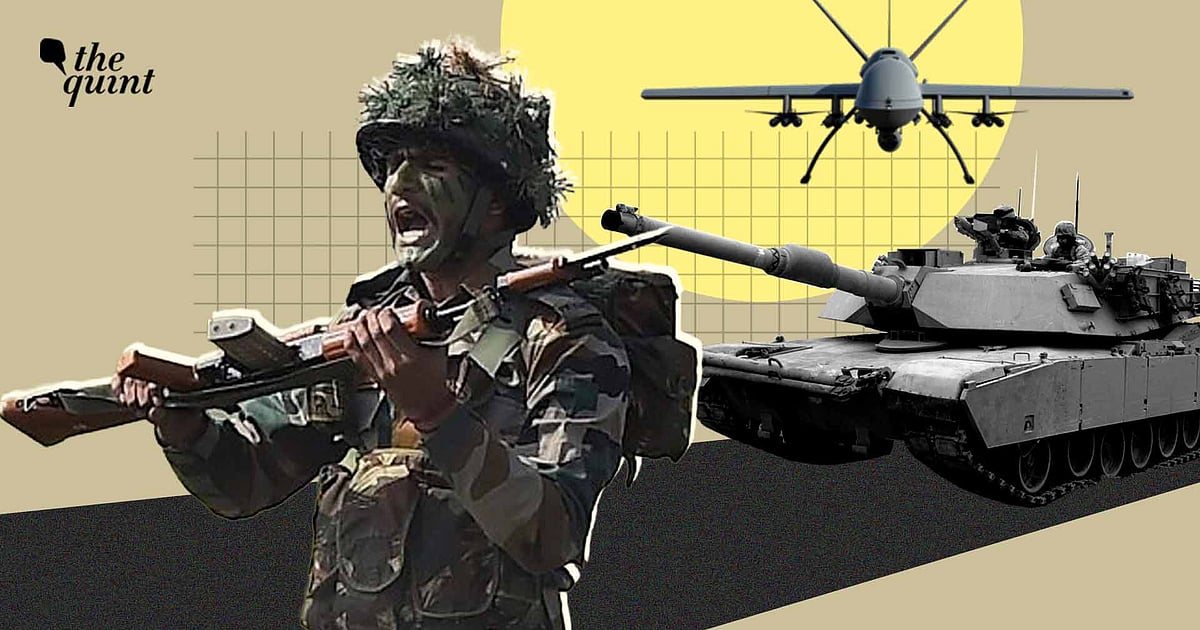
Using the US-Israel strikes on Iran as an example, the piece argues that air and naval power can shape a fight, but they cannot finish it alone. For India, with live borders and territorial disputes, land power still decides the outcome.
The article says war is not won just by throwing things from far away. It is like a game where hitting the other team matters, but someone still has to stand on the field and take the prize area.
Analysis
Core argument
The piece says modern war now includes drones, hypersonic weapons, cyber attacks, precision strikes, and long-range naval operations. Even so, it argues that these tools mainly weaken an opponent, disrupt systems, and create access for the force that will ultimately decide the war on the ground.
The author uses the US-Israel campaign against Iran in February 2026 as the example. According to the article, the strikes were intense and effective in suppressing air defence and missile attacks, but they did not force Iran to concede. The text points to the Strait of Hormuz staying blocked, higher oil prices, and continued escalation risk as evidence that remote strikes alone did not deliver a decisive political result.
India angle
The article then shifts to India and says the lesson is even more relevant because India has unresolved land borders with China along the Line of Actual Control and with Pakistan along the Line of Control. In that setting, remote weapon systems may start a conflict, but meaningful results still require soldiers on the ground.
The author argues that territorial possession still defines sovereignty and political stability, and that losing even a small piece of territory carries deep psychological and strategic weight. Air power and naval power are described as enablers, not substitutes, because they cannot capture or hold terrain.
The piece also makes a narrower point about drones. It treats them as useful force multipliers inside combined arms teams, but not as replacements for armour, infantry, engineers, or artillery. Its bottom line is that India should not rely only on stand-off systems; geography, ground forces, and combined arms remain central to any serious war plan.
Key points
- The article argues that drones and missiles change how wars are fought, but not what finally decides them.
- Air and naval power can weaken an opponent, but they cannot seize or hold territory on their own.
- India's borders with China and Pakistan make geography and ground forces central to any real conflict.
- Drones are described as useful force multipliers, not replacements for infantry, armour, engineers, or artillery.
If India treats drones and missiles as helpers rather than replacements, it could build stronger combined arms forces. The article suggests that better ground troops, backed by air and missile defence, can make India more secure in border conflicts.
If leaders believe stand-off weapons alone can decide a war, they may underprepare for the ground phase. The article warns that this could leave India unable to hold territory or convert battlefield success into a political win.