Why new Maharashtra rules give CM Devendra Fadnavis veto power over any minister
The Maharashtra government has framed new rules empowering the Chief Minister, Devendra Fadnavis, to override a decision taken by any minister, provided that the CM's action is in public interest and the reasons for doing so are recorded in writing.
Intelligence analysis by Llama
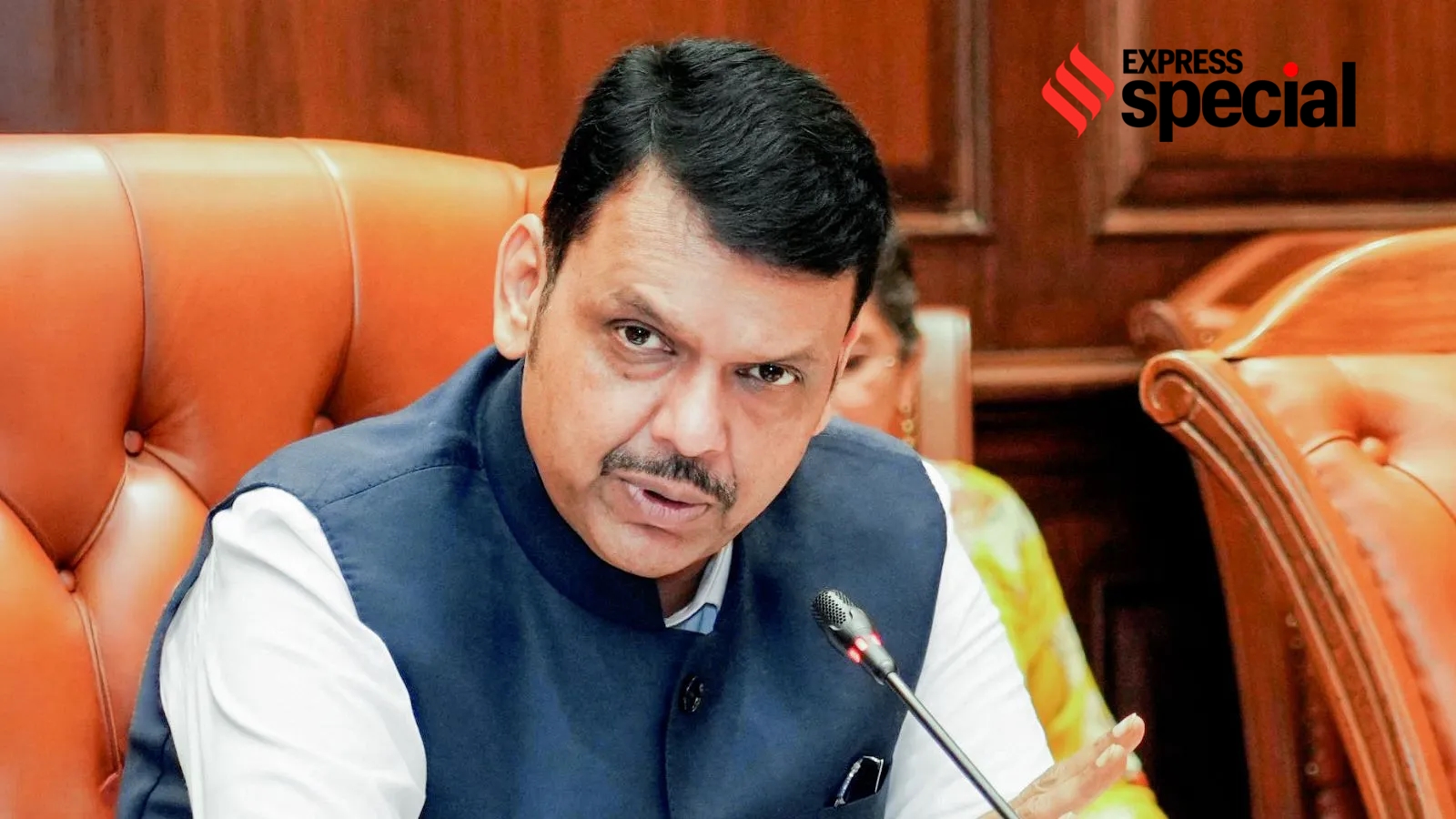
The new business rules equip the CM with several other mechanisms to intervene in the functioning of various departments, including seeking documents from any department and directing cases to be placed before the Cabinet.
Imagine you're in a big team at work, and each team member has their own job to do. But the boss, or the Chief Minister in this case, has the power to overrule any team member's decision if they think it's in the best interest of the team. This can be helpful, but it can also lead to disagreements and power struggles within the team.
Analysis
Devendra Fadnavis's Veto Power: A New Era for Maharashtra's Government Business Rules
The Maharashtra Government Rules of Business, 2026, have been notified by the General Administration Department, replacing the 1975 regulation of government business. This move has significant implications for the functioning of the Maharashtra government and the powers of the Chief Minister, Devendra Fadnavis.
The new business rules empower the CM to override a decision taken by any minister, provided that the CM's action is in public interest and the reasons for doing so are recorded in writing. This provision is part of the Maharashtra Government Rules of Business, 2026, and has been framed under Articles 166(2) and 167(1) of the Constitution.
The Fadnavis government's move has come three years after the Bombay High Court held that the CM had no powers under the government's then existing rules of business to review or modify a decision taken by the minister in charge of a department. In its March 3, 2023 judgment, the Nagpur Bench of the Bombay High Court, while quashing then CM Eknath Shinde's decision to stay an order of the BJP's cooperation minister – which had permitted recruitment in the Chandrapur District Central Cooperative Bank – ruled that the CM had no supervisory power over the decision of the minister concerned as he had no power under the 1975 rules of government business to review or modify a minister's decision.
The amended business rules now specifically provide for such an intervention by the CM in any minister's decision. Under its rule 13(5), the CM can, except in judicial matters, override a decision taken by any minister in public interest and by recording the reasons in writing.
The new business rules also equip the CM with several other mechanisms to intervene in the functioning of various departments. The CM can seek documents relating to any matter from any department, and the minister in charge and the department secretary are required to comply with such a request. The Chief Secretary, too, can seek documents from any department.
The rules provide that the CM can direct cases to be placed before the Cabinet. Matters in the Second Schedule must be brought before the Cabinet, while cases listed in the Third Schedule have to be submitted to the CM before orders are issued. The Second Schedule includes a broad provision covering matters not otherwise specified but which the CM directs to be submitted, cases that acquire special importance because of circumstances, or matters in which the CM has a special interest.
The new rules also allow the Cabinet to decide certain matters through circulation – by sending them to ministers for their views – rather than through discussion at a meeting. If the ministers are unanimous and the CM considers a meeting unnecessary, the matter can be decided without a Cabinet meeting. In cases the CM considers urgent, failure by a minister to communicate an opinion within the specified deadline can be treated as acceptance of the recommendations.
The Chief Secretary's role has also been strengthened in the new business rules. The Chief Secretary can advise the CM or a minister before a final decision if the proposed course of action is contrary to law or government rules, inconsistent with government policy, or involves an important aspect that has not been considered. All cases that are to be placed before the Cabinet are also required to be routed through the Chief Secretary.
Where a matter concerns more than one department, the rules require the departments concerned to be consulted before a decision is taken. No order can be issued until the departments agree or the matter is decided through the Cabinet mechanism. The Finance Department has a similar gatekeeping role for decisions with financial implications. No order involving, among other things, revenue concessions, expenditure, land grants or leases, creation of posts, salaries and allowances, or other financial implications can ordinarily be issued without its prior concurrence.
The Governor's role has also been specified in the new business rules. The CM has to submit 22 categories of matters to the Governor before orders are issued. These include matters affecting the peace and tranquillity of the state, Centre-state relations, ordinances, nominations to the Legislature, summoning or dissolution of the Assembly, appointments to the Maharashtra Public Service Commission, matters affecting Scheduled Areas and certain matters concerning the SCs, STs, OBCs and minorities.
The new business rules have been framed under Articles 166(2) and 167(1) of the Constitution. The move has significant implications for the functioning of the Maharashtra government and the powers of the Chief Minister, potentially leading to increased friction between the Mahayuti allies.
Key points
- The Maharashtra government has framed new rules empowering the Chief Minister to override a decision taken by any minister.
- The new business rules provide for the CM to override a decision taken by any minister in public interest and by recording the reasons in writing.
- The CM can seek documents relating to any matter from any department, and the minister in charge and the department secretary are required to comply with such a request.
- The Chief Secretary's role has been strengthened in the new business rules, and the CM has to submit 22 categories of matters to the Governor before orders are issued.
The new business rules could lead to more efficient decision-making in the Maharashtra government, as the Chief Minister has more power to intervene in departmental matters. This could result in better outcomes for the state and its citizens.
The increased power of the Chief Minister could lead to increased friction between the Mahayuti allies, potentially destabilizing the government. This could result in a power struggle between the Chief Minister and other ministers, leading to delays and inefficiencies in decision-making.