Why Nigeria's one-time political giant may face extinction
Nigeria's Peoples Democratic Party (PDP), once a dominant political force, is on the verge of collapse due to severe internal factional struggles, high-profile defections, and legal battles over its legitimate leadership.
Intelligence analysis by Gemini 2.5 Flash
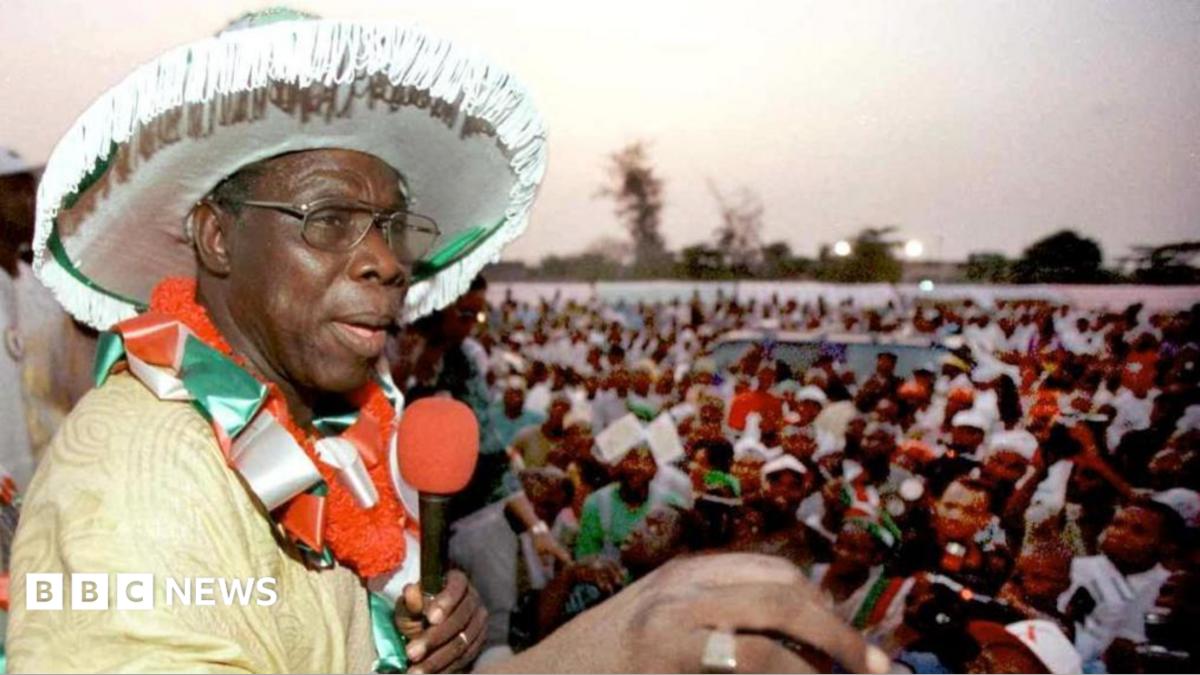
The PDP, which governed Nigeria for 16 years after the return to democracy in 1999, is now facing potential extinction. A bitter leadership tussle, culminating in court rulings favoring one faction, has left the party unable to field its own candidates in upcoming elections, marking a dramatic fall from its former power.
Imagine a really big sports team that used to win almost every game and was the best in the country for a long time. But then, they started fighting a lot among themselves, some of their best players left to join other teams, and they even had arguments about who was in charge. Now, they're in such a mess that they might not even be able to play in the next big championship, and people are wondering if they'll ever be good again.
Analysis
The Peoples Democratic Party (PDP), once an unassailable force in Nigerian politics, is grappling with an existential crisis that threatens to erase its influence. Its journey from a dominant ruling party to its current precarious state is a cautionary tale of political hubris and the challenges of adapting to opposition.
The 2015 Federal Election
The 2015 federal election marked a pivotal turning point for the PDP, delivering a "seismic shock" that ended its 16-year hold on the presidency. The defeat to Muhammadu Buhari and the newly formed All Progressives Congress (APC) thrust the PDP into an unfamiliar role as an opposition party. Political analyst Ishaq Buhari noted that the party, accustomed to the "trappings of federal power," struggled significantly with this new challenge from the outset, indicating a fundamental inability to adapt to a non-governing role.
This initial blow was compounded by a subsequent wave of defections and internal conflicts, particularly in 2025. Several state governors, citing the PDP's declining viability and a desire for better cooperation with the federal government, switched allegiance to the ruling APC. This exodus of key figures and talent, including former Vice-President Atiku Abubakar, severely weakened the party's structure and eroded its grassroots support, leaving its foundations in ruins.
Nyesom Wike's Faction
The crisis intensified dramatically with a debilitating leadership tussle that saw Nyesom Wike emerge as a central, controversial figure. Wike, a prominent PDP member now serving in President Bola Tinubu's APC-led government, heads a rival faction that has been legally recognized as the legitimate party. This legal victory for Wike's faction, despite a contentious national convention in November 2025 that attempted to expel him, has had profound implications for the PDP's future.
Crucially, the legal recognition of Wike's faction means it has been able to submit its slate of presidential and parliamentary candidates to the electoral commission. This leaves the rival, anti-Wike faction, which observers say represents the majority of members, without any representatives on the ballot. This political stand-off has effectively paralyzed the PDP, rendering it incapable of presenting a unified front or even participating meaningfully in the upcoming general election, thereby accelerating its decline towards irrelevance.
Aminu Adamu's Optimism
Despite the overwhelming chaos and the party's dire straits, some die-hard loyalists, such as politician Aminu Adamu, maintain a degree of optimism regarding the PDP's potential for recovery. Adamu, part of the anti-Wike faction, draws parallels with political parties in Thailand and Argentina that have successfully rebounded after extended periods in the political wilderness. He believes that with internal corrections and a concerted effort to "put their house in order," the PDP could re-emerge as a major force by 2032.
This perspective hinges on the belief that the party's historic grassroots network, comprising offices, activists, supporters, and local leaders, remains a vital asset. However, analyst Deji Olarenwaju offers a more pessimistic view, suggesting that by 2032, it may be too late for an independent resurgence. Olarenwaju posits that the only viable path to salvation for the once-mighty party might be an alliance with other significant opposition groups, such as the African Democratic Congress or Peter Obi's Nigeria Democratic Congress, acknowledging that on its own, the PDP is "going nowhere."
Key points
- The Peoples Democratic Party (PDP), once Nigeria's dominant political force for 16 years, is now on the brink of extinction.
- Its decline began with the 2015 federal election loss to the All Progressives Congress (APC) and was exacerbated by widespread defections.
- A bitter leadership tussle, particularly involving Nyesom Wike, has led to a court ruling recognizing his faction as legitimate.
- This legal decision means Wike's faction has submitted candidates for upcoming elections, effectively sidelining the rival faction.
- Some loyalists hope for a comeback by 2032 through internal reforms, but analysts suggest an alliance with other opposition parties may be the only way to survive.
Some loyalists believe the PDP can still recover by putting its internal affairs in order, citing examples of parties in other countries that have bounced back. The party also retains a grassroots network of supporters and activists, which could form a foundation for rebuilding if internal divisions are resolved.
The PDP faces severe challenges, including a legally recognized faction that has submitted candidates, leaving the majority faction without representation on the ballot. This disarray and lack of a unified front are likely to erode voter trust, making a comeback difficult, especially without forming alliances with other opposition groups.

