Why Pradhan's Resignation Is Both A Win And A Warning
Dharmendra Pradhan's resignation is seen as a win for the street, but the question remains what kind of win it actually is and what it says about accountability in India today.
Intelligence analysis by Llama
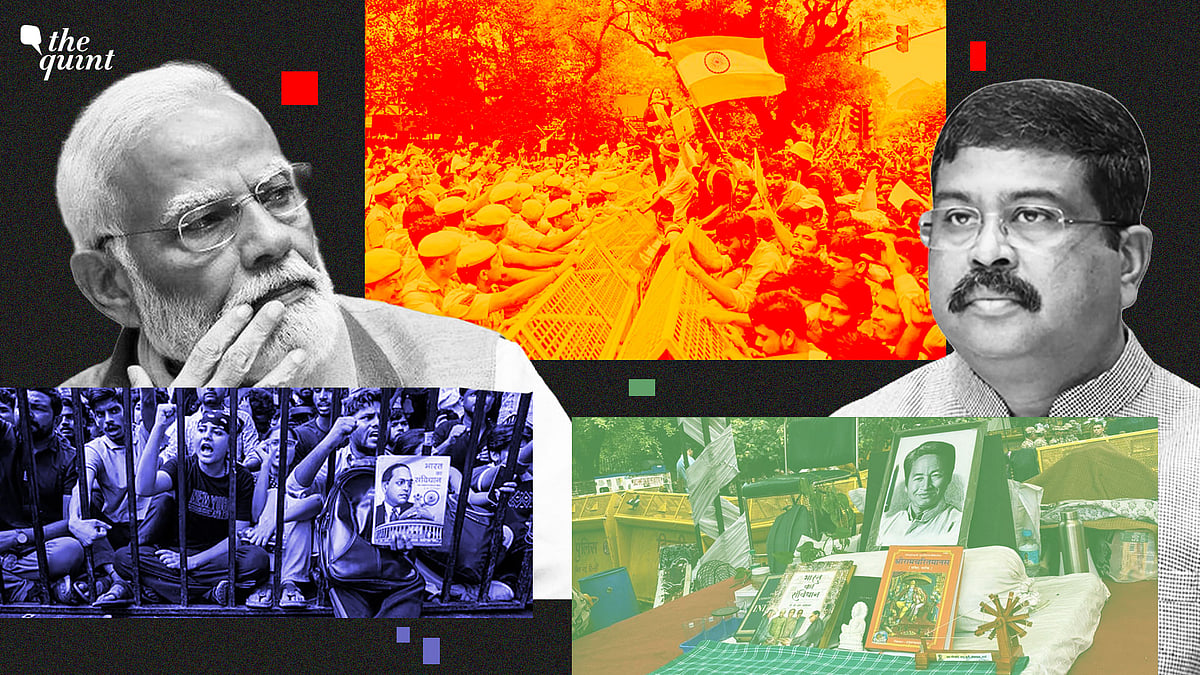
Pradhan's resignation is a partial victory for CJP and the students it represents, but it is also a reminder of India's institutional weakness and the need for structural change.
Imagine a big test where many students take the same exam. But the test is not fair because some students get different answers than others. This makes the students very angry. They protest outside the government building, and eventually, the minister in charge of the test resigns. This is a small victory for the students, but it's not enough to fix the problem. The test system is still broken, and the students will have to keep protesting until it's fixed.
Analysis
A $60B Vote of Confidence
Dharmendra Pradhan's resignation is being read as a win for the street, but the question remains what kind of win it actually is and what it says about accountability in India today. The resignation arrived the same week as a fresh round of negotiations, timed to pre-empt talks rather than follow their conclusion. This suggests a government trying to manage a headline as much as a crisis extracting itself from a news cycle before the optics of tear gas and an intransigent minister could combine into something worse.
Why Cursor?
The examination system that produced the NEET-UG and UGC-NET irregularities, the National Testing Agency (NTA) whose conduct triggered nationwide protests, and the institutional culture that allowed paper leaks to recur across states none of that resigned. Only the minister did. This is the case for reading Pradhan's exit as a genuine, if partial, victory for CJP and the students it represents. A minister who initially offered only 'moral responsibility' and a promised committee, while brushing past Yoga Day events to avoid protesting students, has now paid the one price that Indian politics still reliably extracts: the job itself.
The Road Ahead
But there is a harder argument on the other side, and it deserves at least as much weight. A single resignation, however satisfying, is a strange metric for justice in a scandal that was never really about one man. The National Testing Agency remains standing, its director general merely shunted rather than the institution restructured. The CBI probe into the paper leaks continues along its own slow institutional timeline, disconnected from the political theatre of a minister's exit. If the underlying failures centralised, high-stakes examinations, administered by a body with no meaningful independent oversight, opaque OMR and grading practices, and a pattern of 'irregularities' recurring across multiple exam cycles are not addressed, then Pradhan's replacement inherits the same broken machinery, and the cycle likely repeats with a different name attached to the next scandal.
Key points
- Dharmendra Pradhan's resignation is a win for the street, but the question remains what kind of win it actually is and what it says about accountability in India today.
- The resignation arrived the same week as a fresh round of negotiations, timed to pre-empt talks rather than follow their conclusion.
- The examination system that produced the NEET-UG and UGC-NET irregularities, the National Testing Agency (NTA) whose conduct triggered nationwide protests, and the institutional culture that allowed paper leaks to recur across states none of that resigned.
- A single resignation, however satisfying, is a strange metric for justice in a scandal that was never really about one man.
- The National Testing Agency remains standing, its director general merely shunted rather than the institution restructured.
The resignation of Dharmendra Pradhan is a significant step towards accountability in India. It shows that sustained protest can bring about change, even if it's not perfect. The real test begins now, and it's up to the government to fix the underlying problems with the examination system.
The resignation of Dharmendra Pradhan may be a short-term victory, but it's unlikely to address the deeper issues with the examination system. The National Testing Agency remains intact, and the CBI probe into the paper leaks continues at a slow pace. This suggests that the government is more interested in managing the headlines than in actually fixing the problems.


