Why Sarvesh Kushare’s 2.18m clearance has 1.3 million views in Japan?
Indian high jumper Sarvesh Kushare's 2.18m clearance at the Asian Games went viral on Japanese social media, garnering over 1.3 million views, due to the chaotic circumstances surrounding his jump.
Intelligence analysis by Gemini 2.5 Flash
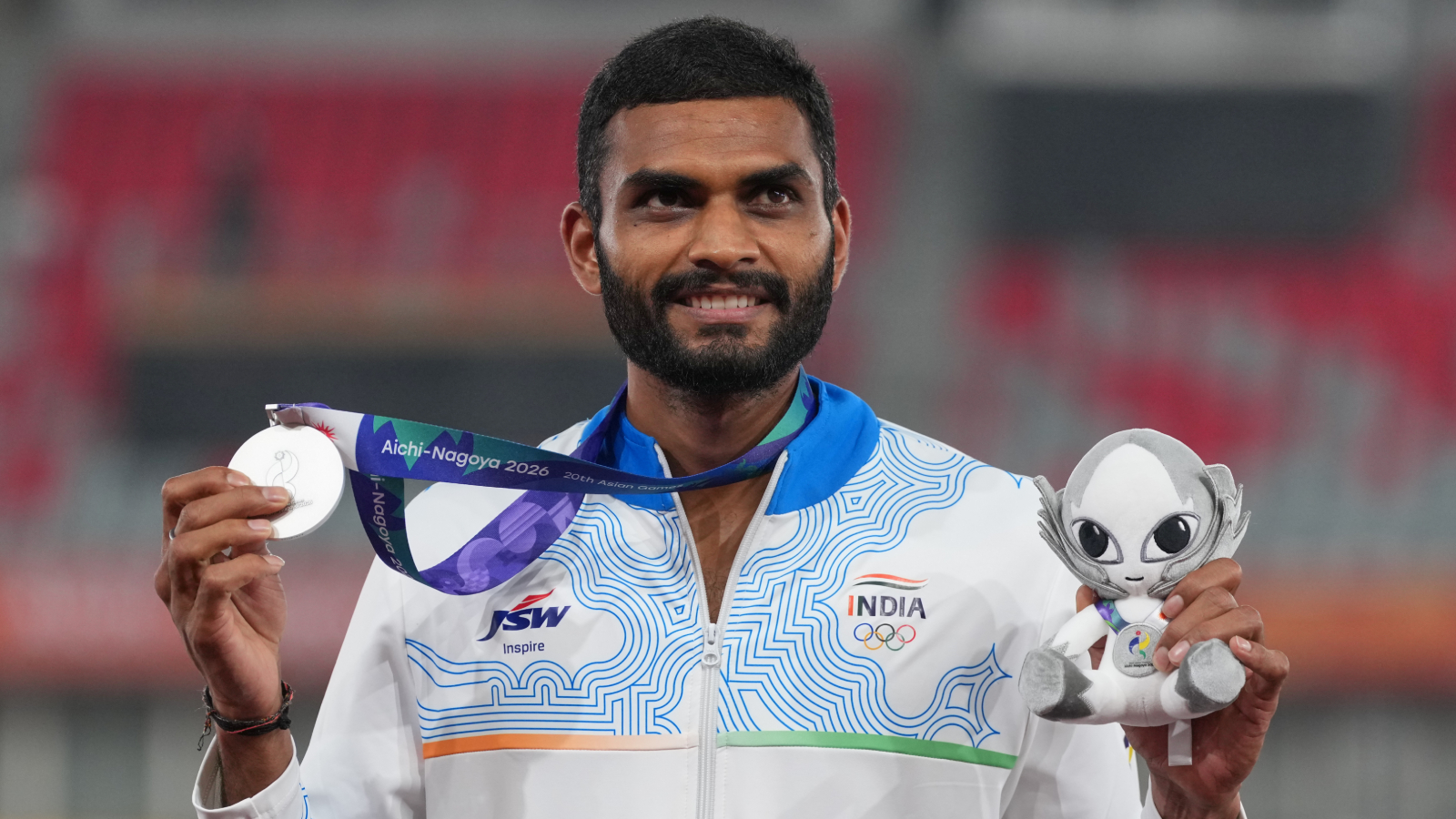
Despite winning a silver medal with a 2.25m jump, it was Sarvesh Kushare's earlier 2.18m clearance that captivated Japanese audiences. A video showed him scrambling out of the waiting area, shedding his warm-up gear in a panic, and rushing his run-up with only five seconds left on the timer, a display of raw instinct that resonated widely.
Imagine you're about to take a big jump in a game, but the referee starts the timer way too early! You have to quickly take off your jacket, run to your spot, and jump all in a few seconds. That's what an Indian high jumper named Sarvesh did, and he still jumped really high! People in Japan loved watching the video because he was so fast and brave, even when things were super messy.
Analysis
The viral video of Sarvesh Kushare's 2.18m clearance at the Asian Games offers a fascinating glimpse into the intersection of athletic performance, event management, and cultural reception. While Kushare ultimately secured a silver medal for India, ending a significant drought in the high jump event, it was this particular moment of frantic improvisation that captured global attention, especially in Japan.
2.18m Clearance
The incident unfolded during the high jump finals, where officials were reportedly starting timers arbitrarily for all jumpers, leading to widespread confusion and mad scrambles. Kushare's specific predicament involved him emerging from the stadium's waiting area to find the timer already well underway, leaving him with mere seconds to prepare. He was forced to quickly shed his warm-up gear on Lane 6, with a volunteer assisting, before sprinting to his takeoff point on Lane 2. This rushed sequence, culminating in a successful 2.18m jump, showcased an extraordinary level of focus and adaptability under immense pressure.
The spontaneous applause and exclamations of "woah!" from the crowd immediately after his clearance underscore the dramatic nature of the moment. It was a testament to his ability to perform despite the chaotic environment, turning a potential disaster into a memorable athletic feat. The article notes that the crowd, initially worried, exhaled in relief and appreciation as he cleared the bar, recognizing the sheer difficulty of what he had just accomplished.
Japanese Social Media
The video's immense popularity on Japanese social media, accumulating over 1.3 million views, is particularly noteworthy. Japanese viewers, described as "hyper-planning," were reportedly in a "tizzy" analyzing Kushare's frame-by-frame scramble. Their detailed commentary focused on his rapid decision-making and the raw instinct he displayed, contrasting with a culture that often emphasizes meticulous preparation.
Commentators on platforms like Twitter gushed over his performance, speculating that the lack of time for overthinking sharpened his senses, allowing him to run on "pure instinct." Phrases like "straight up monstrous" were used to describe his ability to clear the height despite almost missing his time limit. This reaction highlights a cultural appreciation for resilience and spontaneous brilliance, especially when faced with unexpected adversity, making Kushare's chaotic success a compelling narrative for a wide audience.
56 Years
Beyond the viral moment, Sarvesh Kushare's silver medal at the Asian Games holds significant historical importance for Indian athletics. His achievement ended a 56-year wait for a medal in the men's high jump event, a testament to his dedication and skill. The last time India secured a medal in this category was in 1970, making Kushare's performance a landmark moment for the sport in the country.
While the article notes that India was still searching for a gold, the silver medal itself is a substantial accomplishment that breaks a long-standing drought. This historical context adds another layer of significance to Kushare's performance, elevating it beyond just a viral video. It represents a breakthrough for Indian high jump, potentially inspiring a new generation of athletes and bringing much-needed attention and resources to the discipline.
Key points
- Indian high jumper Sarvesh Kushare won a silver medal at the Asian Games, ending a 56-year wait for India in the event.
- A video of Kushare's 2.18m clearance went viral on Japanese social media, accumulating over 1.3 million views.
- The video showed Kushare scrambling to make his jump with only five seconds left on the timer, shedding warm-up gear in a panic.
- Japanese viewers praised his instinct and composure under pressure, contrasting with their 'hyper-planning' culture.
- The incident highlighted chaotic organization during the high jump finals, with officials starting timers arbitrarily.
Sarvesh Kushare's viral moment could significantly boost the profile of high jump and track and field in India, inspiring more young athletes to pursue the sport. The international attention also highlights Indian athletic talent, potentially leading to increased investment and support for sports programs.
The chaotic organization and arbitrary timer starts at the Asian Games, as highlighted by Kushare's experience, raise concerns about athlete welfare and fair competition. Such issues could negatively impact future performances or even lead to injuries if not addressed by event organizers.