Why Shein may need an IPO despite having USD 14.8 billion in cash
Shein, despite holding $14.8 billion in cash and generating $6 billion in operating cash over three years, is pursuing an IPO, primarily driven by the looming redemption rights of its convertible redeemable preferred shares, valued at $17.294 billion.
Intelligence analysis by Gemini 2.5 Flash
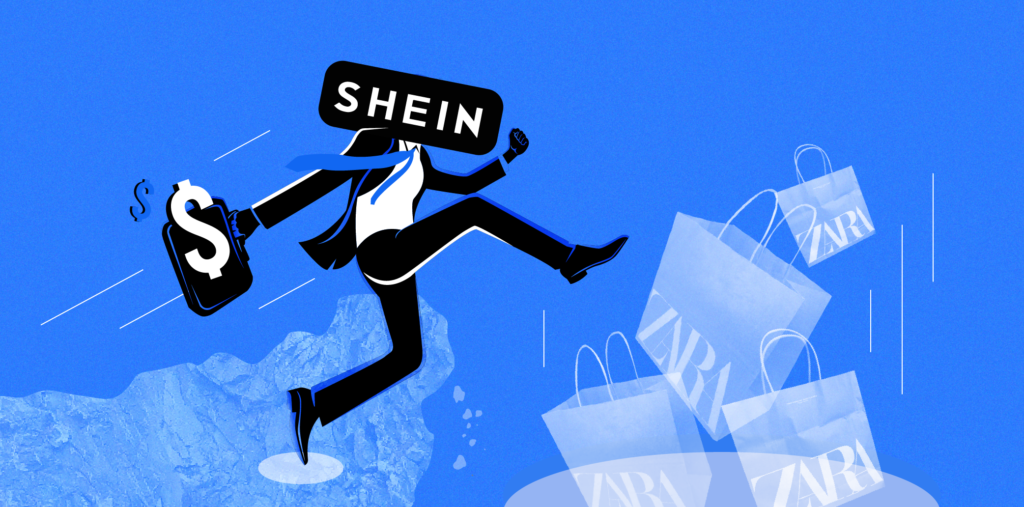
The article explores the paradox of Shein's IPO push, highlighting that the fast-fashion giant, flush with cash from robust operations, isn't seeking public funds for growth. Instead, its motivation stems from a complex 11-year financing history, particularly the ticking clock on its convertible preferred shares, which could trigger significant cash redemptions if the IPO doesn't proc…
Imagine a super-fast clothing company called Shein that has a huge piggy bank full of money, even more than it got from its first investors. But some of those early investors have special "IOU" notes that say if Shein doesn't go public by a certain time, they can ask for a lot of their money back, plus extra. So, even though Shein has lots of cash, it needs to go public to make sure everyone gets their fair share and keeps the company running smoothly.
Analysis
Shein's decision to pursue an IPO, despite its substantial cash reserves of USD 14.8 billion and impressive operating cash generation of USD 6 billion over three years, is a nuanced financial maneuver. The company's robust working capital model, where customers pay upfront and inventory turnover is a mere 36 days, further reduces its need for external financing. However, the primary driver for its public listing is not a lack of funds but rather the intricate terms associated with its convertible redeemable preferred shares.
USD 17.294 billion
The most compelling reason for Shein's IPO push is the USD 17.294 billion carrying amount of its convertible redeemable preferred shares as of March 31. These shares come with specific redemption clauses that act as a ticking clock for the company. The cash return rate for pre-Series D, Series D, and Series D+ investors notably increased from 8% to 12% on March 5, adding pressure.
Crucially, if Shein withdraws its IPO, has its application rejected, or allows it to lapse without refiling within 12 months, suspended redemption rights can be restored. This contractual obligation means that a successful IPO is essential to provide liquidity for these early investors and prevent a potentially massive cash outflow that could significantly strain Shein's financial health, despite its current strong cash position.
Series D+
Shein's financing journey reveals a dramatic fluctuation in its valuation, particularly around the Series D and Series D+ rounds. The company's pre-money valuation soared from USD 5 billion in the Series C+ round to USD 60.5 billion in the pre-Series D round, and then peaked at USD 98.2 billion in Series D. This rapid escalation occurred even as customer growth initially outpaced valuation increases in earlier stages.
However, a significant valuation reset occurred, with the Series D+ round settling in May 2023 at a pre-money valuation of USD 64 billion, a substantial 35% drop from the Series D valuation. This adjustment, while not unusual in global private markets during 2022 and 2023, is notable given Shein's continued operational growth. The company saw increases in total order volume, active customers, and its network of contract manufacturers during this period.
Despite the operational expansion, the pace of revenue growth moderated significantly, from 41.1% to 8%, and then to a mere 1.1% in the first quarter of 2026. Furthermore, US revenue, a key market, declined by 3.5% in 2025 and a further 14.3% year-on-year in Q1 2026. This slowing growth likely contributed to the valuation adjustment, indicating that the market anticipated a deceleration in Shein's hyper-growth phase.
Sky Xu
Shein's origins trace back to its incorporation in the Cayman Islands on May 12, 2014, with its initial shares issued at par value to entities controlled by its four founders, including Sky Xu. Xu's entity received 49.6792 million shares, providing a foundational stake in the company. The Series A round in February 2015 saw the company raise USD 5 million at a pre-money valuation of USD 53 million, implying a staggering paper increase of over 1,200 times to its current USD 64 billion valuation.
The company's financing history also highlights the protracted settlement of its Series B investment, which took years to finalize. This early complexity underscores the long-term nature of its investor relationships. The rapid expansion of Shein's customer base was a key factor in its early valuation jumps, with active customers surpassing 10 million by Series C and 50 million by Series C+, initially leading to a decreasing implied valuation per customer as growth outpaced valuation increases.
The subsequent dramatic valuation surge to USD 98.2 billion in Series D, representing about 4.3 times its 2022 sales, marked a peak before the market correction. This trajectory, from humble beginnings to a multi-billion dollar valuation, illustrates the immense growth potential and investor confidence Shein commanded, even as it now navigates the complexities of its maturing financial structure.
Key points
- Shein holds $14.8 billion in cash and generated $6 billion in operating cash over three years.
- Its IPO is primarily driven by $17.294 billion in convertible redeemable preferred shares with looming redemption deadlines.
- The cash return rate for pre-Series D, Series D, and Series D+ investors increased from 8% to 12% on March 5.
- Shein's valuation dropped from $98.2 billion in Series D to $64 billion in Series D+ by May 2023.
- Revenue growth has moderated, and US revenue declined in 2025 and Q1 2026.
A successful IPO would allow Shein to satisfy its early investors by providing a liquidity event for their convertible preferred shares, removing a significant financial obligation and potentially stabilizing its valuation. This could also provide a clearer path for future growth and market expansion without the pressure of impending redemptions.
If Shein's IPO application is rejected or lapses, the company faces the restoration of redemption rights for its $17.294 billion in preferred shares, potentially leading to substantial cash outflows that could strain its financial resources despite its current cash reserves. This could also further depress its valuation and complicate future fundraising efforts.