Why the economics makes this the craziest world cup ever
The 2026 World Cup is being shaped by war, trade tensions and unusually high costs for fans.
Intelligence analysis by GPT-5.4 Mini
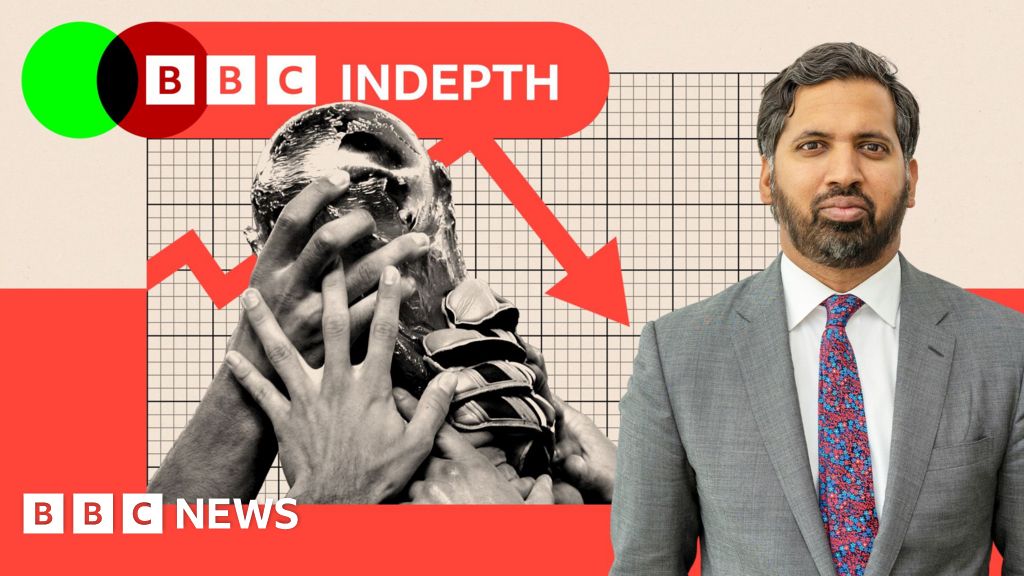
BBC Economics editor Faisal Islam argues the 2026 World Cup sits at the intersection of geopolitics, energy shocks and football's changing business model. He says fans are paying more while FIFA is turning the event into a much bigger revenue machine.
This World Cup is like a giant show where the tickets, travel and business deals all cost a lot more than before. At the same time, world fights and trade tensions are nearby, so the game could also affect things like energy prices.
Analysis
A tournament with economic baggage
Faisal Islam argues that the 2026 World Cup is unusual not just for its scale, but for the economic and political conditions surrounding it. The US, Canada and Mexico are hosting it while also dealing with an "epic trade war," and the article says the three countries will be renegotiating USMCA during the tournament period.
The story also places the World Cup against a backdrop of conflict between Iran and Israel, with Donald Trump pressing for an end to attacks. Islam says any de-escalation that follows could matter well beyond football, because lower tensions could affect energy prices, supply conditions and the wider world economy.
Fans pay more, FIFA earns more
The second major point is the pricing model. Islam says fans will face unusually high costs, including expensive match tickets and even sharply marked-up commuter rail fares, such as a New Jersey Transit ticket rising from a normal $12.90 return to $100 for the tournament.
He frames this as a case study in a K-shaped economy: some people and businesses move upward, while others move downward. In his telling, FIFA is benefiting from a pricing revolution that values a certain kind of fan more than before. FIFA, however, argues that the larger ticket revenues will be redistributed to support football in poorer countries.
The article also notes that this is the biggest World Cup ever by several measures: 48 teams instead of 32, more matches, huge stadiums, and a vast geographic spread from Vancouver to Mexico City. Islam says that makes it a major economic event, but not in the usual feel-good sense of boosting host economies through broad-based spending.
Key points
- The 2026 World Cup is being hosted during a period of war and major trade tension.
- The article says the US, Canada and Mexico are in the middle of renegotiating USMCA.
- Fans are facing unusually high prices for tickets and even basic transport to stadiums.
- Islam frames the event as an example of a K-shaped economy, with winners and losers moving in opposite directions.
- FIFA says the bigger revenues will be shared to support football in poorer countries.
If tensions ease during the tournament, the article says that could have a real effect on energy prices, supplies and the wider world economy. FIFA also says the extra money from ticket sales will be redistributed to help football in poorer countries.
If conflicts and trade tensions continue, the World Cup could sit inside a larger global economic shock rather than soften it. The article also suggests many fans will be priced out by expensive tickets and transport, turning the event into a symbol of inequality.